
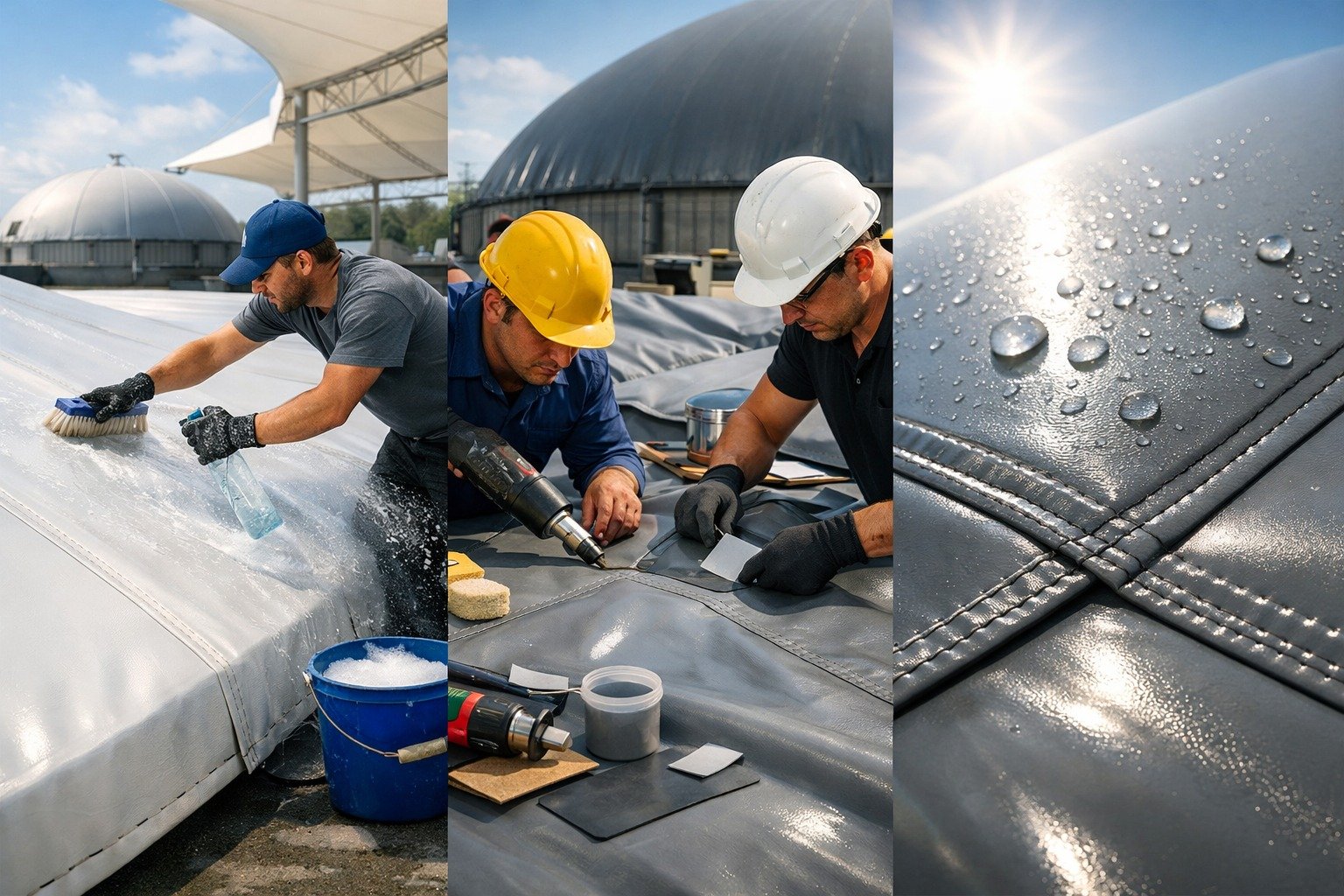
Maintenance Tips for PVC Coated Fabrics: Longevity, Cleaning & Repair Guidelines
Maintenance Tips for PVC Coated Fabrics: Longevity, Cleaning & Repair Guidelines
PVC coated fabrics are widely used across industries due to their strength, flexibility, and resistance to environmental exposure. From tensile fabric roofs and awnings to biogas balloon fabric, shelters, covers, and industrial membranes, PVC fabrics are an essential asset in modern engineering and design. However, to ensure long service life and optimal performance, proper maintenance is crucial.
As India’s trusted technical textile manufacturer, LUCKY-TECH MEMBRANES, in exclusive partnership with SIOEN Industries Belgium, supplies premium-grade PVC fabric engineered for tensile architecture, environmental storage, and industrial applications. In this blog, we share practical maintenance tips to help you extend the durability and functionality of your PVC coated fabric products.
Table Of Contents:
- Why Maintenance Matters for PVC Fabrics
- Conclusion
Why Maintenance Matters for PVC Fabrics
While PVC fabric is designed to withstand UV exposure, humidity, mechanical stress, and chemical interactions, regular cleaning and preventive care help:
✔ Minimize surface degradation
✔ Prevent fungal & microbial growth
✔ Maintain tensile strength
✔ Improve aesthetics and color retention
✔ Reduce long-term repair expenses
Whether installed as a tensile fabric roof or used as biogas balloon fabric, scheduled maintenance can significantly increase its operational lifespan.
1. Routine Cleaning for Better Longevity
Cleaning your PVC coated fabric not only enhances appearance but also prevents dirt buildup that may cause abrasion or microbial damage.
Cleaning Recommendations:
Use mild soap or neutral detergents
Avoid chlorine, bleach, acidic or petroleum-based cleaners
Apply soft brushes or microfiber cloths
Rinse thoroughly with clean water
Cleaning Frequency:
Outdoor tensile structures exposed to pollution or organic debris should be cleaned every 3–6 months. Industrial installations like biogas balloons may require more frequent inspections due to gas emissions and moisture.
2. Protection from Sharp Objects & Structural Stress
PVC fabrics are strong but can be damaged by sharp edges, poorly finished metal frames, or friction.
Preventive Tips:
Round off metal corners during installation
Use protective padding where the membrane contacts steel frames
Avoid dragging the fabric on rough surfaces
Check tie-down points and anchors regularly
Maintaining proper tension is especially important for tensile fabric applications, as sagging surfaces can collect dirt and rainwater, increasing load stress.
3. Mold & Fungus Prevention
PVC fabric has inherent resistance to microbial growth, but stagnant water and pollution can still cause surface stains.
To prevent this:
Ensure proper drainage
Remove accumulated leaves or organic matter
Maintain air circulation where possible
Clean surfaces as soon as spotting appears
This is particularly relevant for biogas balloon fabric, where moisture and organic emissions are common.
4. Handling Repairs & Damage
Despite proper care, accidental punctures or seam issues can occur. Early detection prevents further deterioration.
Repair Guidelines:
Small cuts or punctures can be patched with adhesive-backed PVC repair kits
Seam failures should be professionally heat-welded
Avoid stitching as it compromises air-tightness
For biogas balloon fabric, airtight sealing is essential to avoid gas leakage and pressure loss.
5. Storage & Transportation Best Practices
When storing PVC fabrics:
Roll, don’t fold (avoids crease marks)
Store in dry, shaded areas
Avoid contact with solvents or oils
Use protective wrapping during transport
This ensures the membrane retains surface uniformity and prevents micro-cracks.
Conclusion
PVC coated fabrics are durable, versatile, and engineered for performance — but like any valuable infrastructure component, they benefit from proper care. Whether you're maintaining tensile fabric roofing, industrial covers, or specializedbiogas balloon fabric, these preventive measures help maximize lifespan and maintain structural integrity.
For premium-quality PVC coated products built to last, trust LUCKY-TECH MEMBRANES.
Get Your Free Quote Today!