
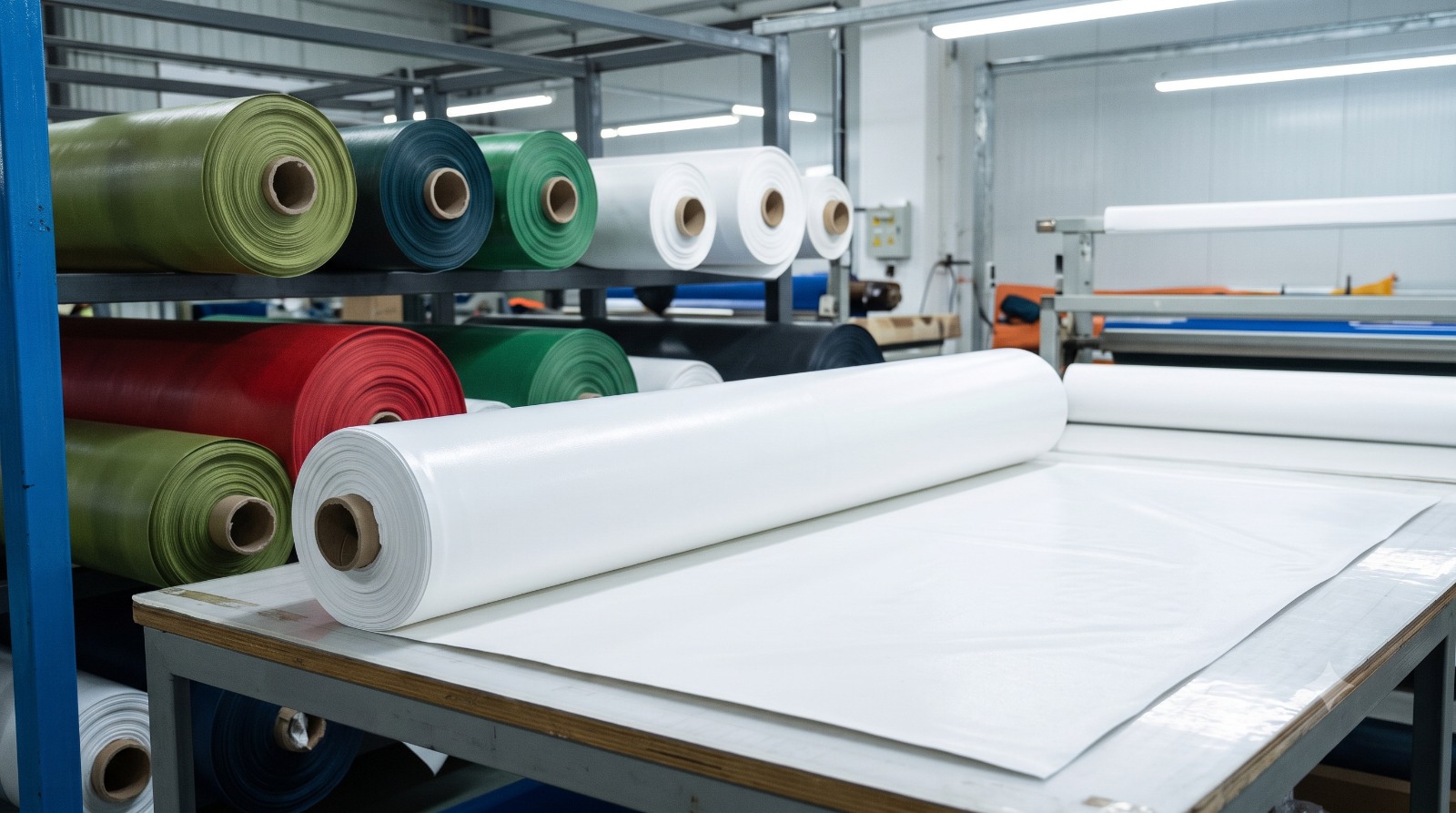
What is PVC Coated Fabric? A Complete Guide to Composition, Coating & Uses
What is PVC Coated Fabric? A Complete Guide to Composition, Coating & Uses
If you've spent any time around tents, truck covers, banners, or industrial tarpaulins, you've almost certainly touched PVC coated fabric without giving it a second thought. It's one of those materials that quietly does its job in the background keeping rain out, holding shape under wind, surviving years of sun exposure until you actually need to understand what it's made of and why it works so well.
So let's break it down properly: what PVC coated fabric actually is, how it's built layer by layer, the different coating methods manufacturers use, and where you'll find it doing real work across industries.
Get In TouchWhat Exactly Is PVC Coated Fabric?
At its core, PVC coated fabric is a composite material — a woven textile base (usually polyester, sometimes nylon) that's been coated on one or both sides with polyvinyl chloride, better known as PVC. The fabric gives the material its strength and tear resistance, while the PVC coating adds waterproofing, UV resistance, chemical resistance, and flexibility.
Think of it as combining the best of two worlds: the structural integrity of a woven textile with the protective, weatherproof qualities of a synthetic polymer skin. Neither one alone would do the job as well.
Breaking Down the Composition
A typical PVC coated fabric is built in three parts:
1. The base fabric (scrim) This is the woven core, most commonly high-tenacity polyester yarn woven in a plain or basket weave. The weave pattern and yarn density directly affect tensile strength, tear resistance, and how the finished material handles stress and load.
2. The PVC coating layers PVC is applied to both faces of the fabric, often in multiple layers, to build up thickness and durability. This coating is what actually blocks water, resists abrasion, and protects the fabric underneath from UV degradation.
3. Surface finish and additives Manufacturers add plasticizers for flexibility, UV stabilizers to prevent the material from becoming brittle in sunlight, flame retardants where required, and sometimes a top lacquer coat for extra dirt resistance and easier cleaning.
The exact ratio and formulation of these layers change depending on what the fabric needs to do — a lightweight banner material and a heavy-duty truck tarpaulin start from the same basic idea but end up with very different specifications.
How the Coating Process Actually Works
There are a few established methods for applying PVC to the base fabric, and each affects the final product's texture, weight, and performance:
- Calendering — Molten PVC is pressed onto the fabric using heated rollers, producing a smooth, even coating. This is widely used for high-volume production of tarpaulins and truck covers.
- Knife-over-roll coating — Liquid PVC paste is spread over the fabric using a precision blade, allowing tight control over coating thickness. This method is common for architectural and technical fabrics where consistency really matters.
- Lamination — Pre-formed PVC film is bonded to the fabric under heat and pressure, often used when a very specific surface finish or extra layer is needed.
Each method has its place, and the choice usually comes down to the end application — a structural membrane needs different handling than a simple protective cover.
Why PVC Coated Fabric Performs So Well
A few properties explain why this material has stayed a go-to choice across so many industries for decades:
- Waterproof and weather resistant — the PVC layer seals the fabric completely, making it ideal for outdoor and all-weather use
- UV and weathering resistance — stabilized formulations hold up under years of direct sun without cracking or yellowing prematurely
- Flexible yet strong — it can be folded, rolled, and shaped without losing structural strength
- Chemical and abrasion resistant — resists oils, mild acids, and general wear from handling
- Easy to clean and maintain — the smooth coated surface doesn't hold dirt the way raw textile would
- Customizable — can be produced in different weights, colors, and finishes depending on the application
Where PVC Coated Fabric Is Used
This is where the versatility really shows. Some of the most common applications include:
- Truck and tipper covers, tarpaulins, and cargo protection
- Tents, canopies, and event structures
- Industrial curtains, dust and welding screens
- Banners, signage, and outdoor advertising material
- Inflatable structures and covers
- Biogas dome and floating cover membranes
- Awnings, pergola covers, and architectural shading
- Pool and pond liners
Because the material can be engineered for different strength-to-weight ratios and coating thicknesses, it adapts well whether the job needs something lightweight and flexible or something rugged enough to survive years outdoors.
Choosing the Right PVC Coated Fabric Manufacturer
Not all coated fabric is made equal, and this is where working with an experienced supplier actually matters. Coating consistency, base fabric quality, seam strength, and UV stabilization all vary between manufacturers and those differences show up in how long the material actually lasts in the field.
When you're sourcing from fabrics manufacturers and supplier in India, it's worth looking at a few things: whether they control the coating process in-house, what quality checks they run on tensile strength and adhesion, and whether they can customize weight, width, and finish for your specific application rather than offering a one-size-fits-all roll.
At Lucky-Tech Membranes, this is exactly the kind of detail we focus on being one of the PVC & PVDF coated fabric manufacturers that builds material to spec rather than just off a standard catalog, so it actually holds up in the application it's made for.
Frequently Asked Questions
Is PVC coated fabric waterproof?
Yes. The PVC coating fully seals the base fabric, making it waterproof rather than just water-resistant, which is why it's used so widely for outdoor covers and structures.
How long does PVC coated fabric last outdoors?
With proper UV stabilization and good manufacturing quality, PVC coated fabric commonly lasts several years in continuous outdoor use, though lifespan depends on coating thickness, climate, and how it's maintained.
Can PVC coated fabric be custom made?
Yes. Weight, thickness, color, width, and finish can all be adjusted based on the application, which is why working directly with a manufacturer rather than a generic supplier usually gets better results.
Is PVC coated fabric different from PVDF coated fabric?
Both start from a similar woven base, but PVDF coatings generally offer stronger long-term weathering and self-cleaning properties, often used for more demanding architectural or long-life applications.
Get Your Free Quote Today!