
What Are Tensile Membrane Structures? Materials & Design
What Are Tensile Membrane Structures? Materials & Design
What Are Tensile Membrane Structures? Materials, Design & Engineering Basics
If you have ever walked under a stadium roof that curves like a sail, you have already seen a tensile membrane structure in action.
These structures look effortless. But behind that light, airy appearance is a science of fabric, tension, and geometry.
This blog is written for architects, fabricators, and contractors who are new to tensile technology. It covers the fundamentals before you specify a design or source the fabric.
Get In TouchWhat Is a Tensile Membrane Structure?
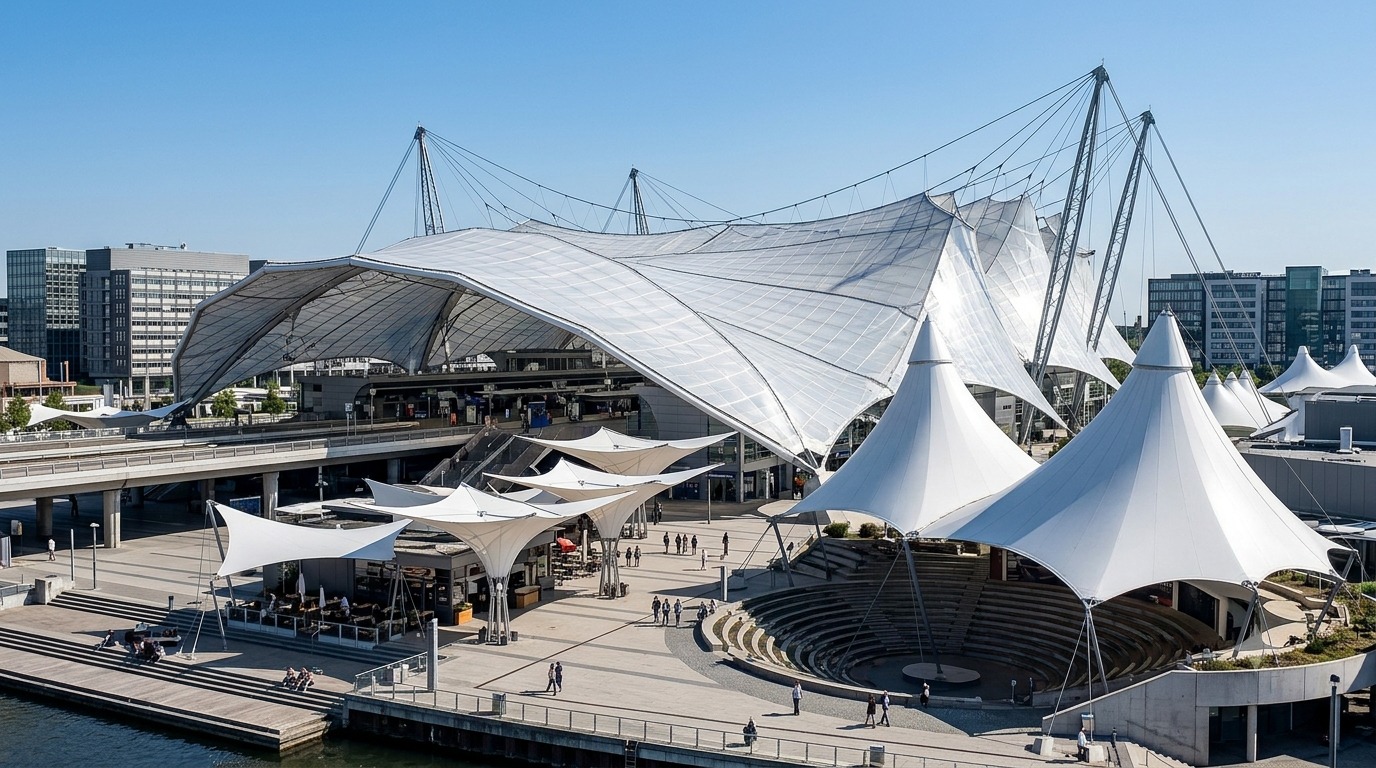
A tensile membrane structure is a roof or canopy made from strong, flexible fabric.
The fabric is stretched tight between supports such as steel cables, masts, or rigid frames. It holds its shape purely through tension, not weight.
A traditional roof pushes weight down onto beams and columns. A tensile fabric roof works the opposite way. The fabric is pulled taut in multiple directions until it becomes stiff enough to resist wind, rain, and its own weight.
Think of a trampoline. A loose sheet of fabric sags and flaps. Stretch that same fabric tight, and it becomes strong enough to hold real weight.
This is why tensile fabric architecture India wide has grown so popular. Malls, temples, schools, farmhouses, and industrial sheds all use it for large, column-free covered spaces at a lower cost than concrete or steel.
How Do Tensile Membrane Structures Work?
Why Does Double Curvature Matter in Tensile Structures?
Every tensile membrane structure survives on one core idea: double curvature.
This means the fabric curves in two opposite directions at once, like a saddle or a Pringle chip. One curve carries the load. The other curve resists it. Together they create a stable, self-balancing shape.
A flat sheet of fabric cannot handle load. It needs this double-curved shape to stay taut under wind and rain.
Why Is the Curve Shape Never Flat?
The curved shape also controls water drainage. Rain flows off a curved surface instead of pooling on it.
Engineers calculate this shape before cutting any fabric. This step is called form-finding. It decides the exact tension needed in each part of the membrane so the structure stays stable for 15 to 25 years or longer.
What Materials Are Used in Tensile Membrane Structures?
What Is PVC-Coated Polyester Fabric?
This is the most common and cost-effective option. A polyester yarn base is coated with PVC for waterproofing and UV resistance.
It works well for canopies, entrance structures, parking sheds, and mid-sized projects. This material also supports good membrane fabric design flexibility for curved and complex shapes.
What Is PVDF-Coated Fabric?
PVDF stands for polyvinylidene fluoride. It is applied as a top layer over PVC fabric.
It improves resistance to dirt, pollution, and UV damage. Structures with a PVDF top coat stay cleaner and hold their colour longer, which matters in high-pollution Indian cities.
What Are PTFE and ETFE Membranes?
These are premium materials used in large stadiums, airports, and landmark buildings.
PTFE (Teflon-coated fibreglass) offers a lifespan of 30 years or more with strong fire resistance. ETFE is a lightweight, transparent film often used for skylights and facades.
Both cost more and are used less often in standard commercial projects. For most Indian projects, PVC and PVDF-coated polyester fabric offer the best balance of cost, strength, and appearance. This falls under core lightweight structure engineering practice used across the industry today.
What Should Architects and Fabricators Consider When Designing Tensile Structures?
Designing a tensile structure is not the same as designing a normal roof. A few points need special attention.
How Do You Manage Wind Load and Drainage?
Wind uplift and water pooling are the two biggest risks for lightweight fabric. The curved shape must always guide water toward a defined drainage point.
How Should the Support Structure Be Designed?
Masts, cables, and anchor points carry heavy tension loads. These must be designed together with the fabric shape, not after it.
How Are Fabric Seams and Welding Done?
Membrane panels are joined using high-frequency welding, not stitching. A stitched seam would leak. Seam placement also affects the final appearance.
What Are Pre-Stress Levels and Why Do They Matter?
The fabric must be stretched to a specific tension during installation. Too little tension causes flutter and early wear. Too much tension can overstress the material or the supports.
How Does Climate Affect Material Choice?
Coastal projects need stronger UV and salt resistance. High-pollution cities benefit from PVDF top coats that resist grime.
Where Are Tensile Membrane Structures Used?
- Stadium and sports facility roofing.
- Airport terminal canopies and walkways.
- Shopping mall entrances and food courts.
- Parking sheds and vehicle canopies.
- Temple and religious gathering spaces.
- Farmhouse and resort canopies.
- Industrial shed roofing.
- Temporary event and exhibition structures.
- Biogas and waste-water covers using specialised PVC or PVDF membranes.
Why Does Sourcing the Right Fabric Matter?
A tensile structure is only as good as the fabric behind it. Even a strong design underperforms if the membrane has weak coating adhesion or inconsistent tensile strength.
This is why architects and contractors increasingly work with established tensile membranes fabrics manufacturers in india rather than unverified imports.
Look for a supplier who can show fabric test certificates for tensile strength, tear strength, and UV resistance. Consistent roll width and coating quality also matter.
Many of the Top manufacturers in this space, including several based in Mumbai, supply fabric for architectural canopies as well as industrial and biogas membrane applications. Lucky-Tech Membranes is one such Mumbai-based manufacturer working across both segments. If you are searching for the Best Fabrics Manufacturers and Supplier in India, ask whether the supplier has experience across multiple use cases, not just one.
Final Thoughts
Tensile membrane structures combine simple physics with careful engineering. The result is a roof that is light, strong, and visually striking.
Architects gain freedom to design flowing, sculptural shapes. Fabricators and contractors gain a system that installs faster and travels lighter than conventional roofing.
None of this works without the right fabric and the right manufacturer. Have a technical conversation early, before the design is finalised, with a supplier who understands both material science and on-site fabrication.
FAQs
What is a tensile membrane structure in simple words?
It is a roof or canopy made from strong fabric that is stretched tight between supports, holding its shape through tension instead of weight.
What material is used in tensile membrane structures?
The most common materials are PVC-coated polyester, PVDF-coated fabric, and premium options like PTFE and ETFE for large landmark projects.
Why do tensile structures always have a curved shape?
The curve, called double curvature, keeps the fabric stable under load and lets rainwater drain instead of pooling on the surface.
How long does a tensile membrane structure last?
A PVC or PVDF membrane typically lasts 15 to 25 years, while PTFE membranes can last 30 years or more with proper maintenance.
How do I choose a tensile membrane fabric manufacturer in India?
Check for fabric test certificates, consistent coating quality, experience across architectural and industrial applications, and support from design stage through fabrication.
Get Your Free Quote Today!