
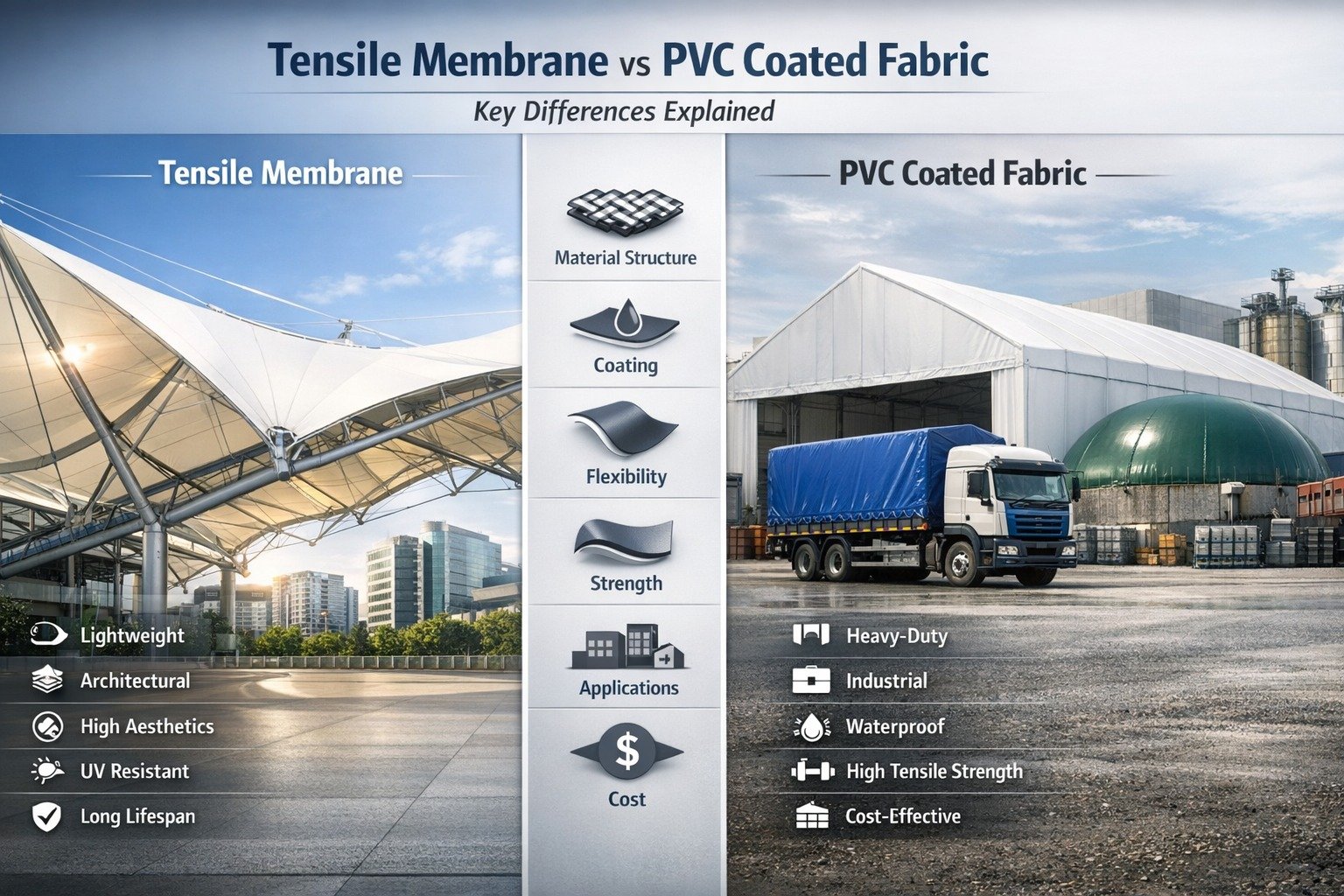
Tensile Membrane vs PVC Coated Fabric: Key Differences Explained
Tensile Membrane vs PVC Coated Fabric: Key Differences Explained
If you work in tensile structures, industrial covers, or architectural roofing, you’ve probably heard the terms tensile membrane and PVC coated fabric used interchangeably. Many buyers assume they are the same thing. But there are differences—especially when it comes to performance, application, lifespan, and the quality standards required for long-term outdoor use.
In this blog, we’ll explain the difference between tensile membranes and PVC coated fabric in a simple way and help you choose the right material for your next project.
Table Of Contents:
- What Is PVC Coated Fabric?
- What Is a Tensile Membrane?
- Why This Difference Matters
- Tensile Membrane vs PVC Coated Fabric: Key Differences
- Where Each Material Is Best Used
- How to Choose the Right Material
- Final Thoughts
What Is PVC Coated Fabric?
PVC coated fabric is a technical textile made by coating a strong woven base fabric (usually polyester) with PVC. This coating improves the material’s:
waterproofing
UV resistance
flexibility
weldability
surface durability
PVC coated fabric is widely used across industries because it is cost-effective, easy to fabricate, and strong enough for many demanding environments.
Common applications include:
truck tarpaulins
industrial curtains
temporary shelters
agricultural covers
outdoor canopies
inflatable structures
biogas balloons
What Is a Tensile Membrane?
A tensile membrane is not just a fabric—it is a performance category. Tensile membranes are engineered specifically for tensile structures where the material remains under constant tension for years.
In most cases, a tensile membrane is still based on PVC coated fabric, but it includes higher engineering and finishing standards such as:
higher tensile strength
better dimensional stability
long-term UV protection
advanced top coatings (lacquer, PVDF, etc.)
improved anti-fungal and dirt resistance
consistent thickness and coating quality
So the easiest way to understand it is:
✅ PVC coated fabric is the base material
✅ Tensile membrane is a higher-grade PVC coated fabric designed for tensile structures
Why This Difference Matters
The difference matters because tensile structures are not “temporary covers.” They are long-term architectural or industrial installations. In these projects, the fabric must handle:
constant tension
high wind loads
continuous sun exposure
rainwater drainage
thermal expansion and contraction
pollution and dirt build-up
A regular PVC coated fabric may perform well in tarpaulins or short-term shelters, but may not last as long in a permanent tensile membrane roof.
Tensile Membrane vs PVC Coated Fabric: Key Differences
1) Tensile Strength
Tensile membranes are designed for high load-bearing and long-span applications. Standard PVC coated fabric may have lower tensile values depending on the grade.
2) Seam Welding Performance
Both materials can be welded, but tensile membranes are manufactured for stronger, long-lasting seams—critical for tensile structures.
3) Weather & UV Resistance
Tensile membranes usually come with stronger UV-resistant coatings and protective top finishes for outdoor life.
4) Surface Finish
A tensile membrane typically has a smoother surface that resists dirt, algae, and fungus—important for clean architectural structures.
5) Lifespan
Standard PVC coated fabric is often selected for short-to-medium term use. Tensile membranes are chosen for long-term projects where performance consistency matters.
Where Each Material Is Best Used
PVC Coated Fabric Is Ideal For:
tarpaulins and truck covers
temporary tents and shelters
industrial curtains
biogas balloon fabric
inflatable structures
Tensile Membranes Are Ideal For:
tensile structures (stadiums, walkways, canopies)
warehouse roofing
permanent shade structures
large-span architectural roofs
How to Choose the Right Material
If your project is expected to last for many years under sunlight and weather exposure, you should select a tensile membrane grade.
If the project is more functional, short-term, or mobile, PVC coated fabric may be the better fit.
At LUCKY-TECH MEMBRANES, we manufacture premium PVC coated fabrics in India for industrial and architectural applications. We also maintain an exclusive partnership with Sioen Industries, Belgium, ensuring consistent quality, reliable coating standards, and strong performance in real outdoor conditions.
Final Thoughts
The difference between tensile membranes and PVC coated fabric comes down to performance level and application. Both are valuable materials—but selecting the correct grade is what determines lifespan, safety, and long-term project success.
If you’re planning a tensile structure, always choose fabric engineered specifically for tension-based architecture.
📞 Contact LUCKY-TECH MEMBRANES
For inquiries, samples, or technical specifications:
LUCKY-TECH MEMBRANES
📱 Phone: +91-86553 57854 / +91-9820325057
📧 Email: info@luckytech.in
🌐 Website: https://luckytech.in/
Get Your Free Quote Today!