
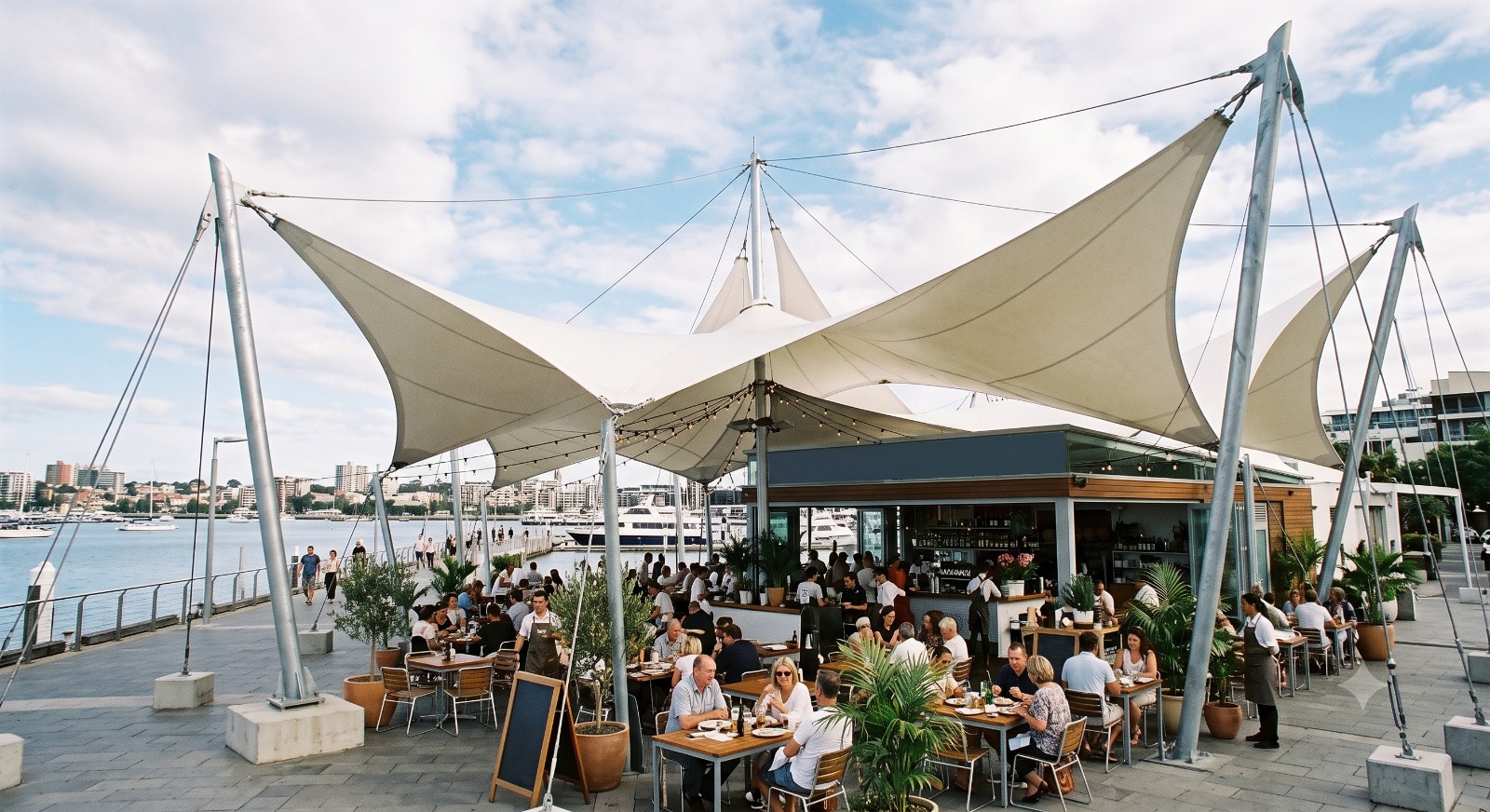
Tensile Membrane Structures: How Coated Fabric Shapes Modern Architecture
Tensile Membrane Structures: How Coated Fabric Shapes Modern Architecture
Walk past any modern stadium, airport terminal, or shopping plaza today, and there's a good chance you'll spot a sweeping, curved roof that looks nothing like traditional concrete or steel construction. That's a tensile membrane structure and behind almost every one of them is a fabric that's doing far more work than most people realize.
At LUCKY-TECH MEMBRANES, we spend our days thinking about this fabric — how it's made, how it performs, and why it's quietly becoming one of the most practical materials in construction today.
Get In TouchWhat Makes Tensile Membrane Structures Different
Unlike a conventional roof that pushes weight downward onto columns and beams, a tensile membrane structure works by pulling. The fabric is stretched tight across a frame of cables or steel supports, and that tension is what gives it strength. It's the same basic idea as a drum skin — pull it tight enough, and it becomes remarkably strong and stable.
This design approach has a few real advantages:
- It covers large open spans without needing rows of interior columns
- It's significantly lighter than concrete or metal roofing
- It lets in natural daylight, cutting down on lighting costs
- It can be shaped into curves and forms that rigid materials simply can't match
None of this works, though, without the right fabric. And that's where the material science actually gets interesting.
The Role of PVC & PVDF Coated Fabric Manufacturers in Modern Design
The base cloth used in these structures is usually a woven polyester or fiberglass yarn, but on its own, that cloth wouldn't survive outdoors for long. It needs a protective coating — and this is exactly the job of PVC & PVDF coated fabric manufacturers.
A PVC coating gives the fabric its flexibility, waterproofing, and resistance to everyday wear. A PVDF top layer goes a step further, adding protection against UV exposure, pollution, and fungal growth, which matters a great deal in India's mix of intense sun, monsoon humidity, and dust.
The coating isn't just a surface finish. It determines how long the structure lasts, how it handles temperature swings, and how much maintenance it will need over the years. A well-coated fabric can hold up for two, sometimes three decades with basic upkeep — which is a big part of why architects keep specifying it.
Why Architects Are Choosing a Tensile Fabric Manufacturer Over Traditional Builders
More architects and structural consultants are now looping in a tensile fabric manufacturer early in the design process, rather than treating fabric as an afterthought once the frame is finalized.
There's a practical reason for this. Fabric behaves differently than steel or glass — it needs to be engineered for tension patterns, patterned and cut with precision, and fabricated to exact tolerances before it ever reaches the site. Getting this wrong means sagging panels, uneven stress points, or a roof that simply doesn't hold its shape.
Working directly with a manufacturer who understands both the material and the structural engineering side means fewer surprises during installation — and a finished structure that actually performs the way it was designed to.
LUCKY-TECH MEMBRANES — A Name Among Fabrics Manufacturers and Supplier in India
We've built our place among Fabrics Manufacturers and Supplier in India by focusing on one thing consistently: the fabric itself. Not just selling a product off a shelf, but understanding what a canopy in Rajasthan's heat needs versus what a coastal structure in Gujarat has to withstand.
Our coated fabrics go into stadium roofs, food courts, parking canopies, industrial covers, and large public spaces across the country. What we hear most often from architects, contractors, and dealers who come back to us isn't about price — it's about consistency. The same roll of fabric behaving the same way, batch after batch, project after project.
That kind of reliability is what makes a fabric supplier worth trusting on a large architectural project, where there's no room for the material to underperform once it's twenty feet in the air.
Applications of Tensile Membrane Structures Across India
You'll find these structures doing quiet, useful work in more places than you'd expect:
- Stadiums and sports arenas — covering seating areas without blocking sightlines
- Airports and transit hubs — creating bright, open terminals with fewer support columns
- Shopping and food courts — shading large gathering spaces affordably
- Industrial and warehouse covers — protecting goods and equipment at a fraction of the cost of a permanent roof
- Parking canopies — shielding vehicles while still letting the space feel open
Each of these uses places different demands on the fabric — some need higher fire ratings, others need extra UV resistance, others need to handle heavy monsoon loads. This is why fabric selection really is a project-by-project decision, not a one-size-fits-all choice.
Choosing the Right Coated Fabric for Your Project
If you're evaluating options for an upcoming project, a few things are worth checking with any supplier:
- What coating type (PVC or PVDF) suits your climate and exposure level
- The fabric's tensile strength and tear resistance ratings
- Fire safety certification, especially for public buildings
- Warranty terms and expected lifespan
- Whether the manufacturer can support custom fabrication, not just standard rolls
A good tensile fabric manufacturer will walk you through these questions rather than just quoting a price per square meter.
Frequently Asked Questions
Q: How long does a coated fabric roof typically last?
With proper PVC or PVDF coating, most tensile membrane fabrics last 15–25 years with routine cleaning and inspection.
Q: Is PVDF coating necessary, or is PVC enough?
PVC works well for many standard applications. PVDF is better suited to areas with heavy UV exposure or pollution, since it resists surface degradation for longer.
Q: Can tensile fabric structures handle heavy rain and wind?
Yes. When engineered correctly, the tensioned fabric sheds water efficiently and flexes safely under wind load instead of resisting it rigidly.
Q: Are these structures more affordable than a conventional roof?
Generally yes, especially for large spans, since they need less structural steel and less foundation work.
Get Your Free Quote Today!