
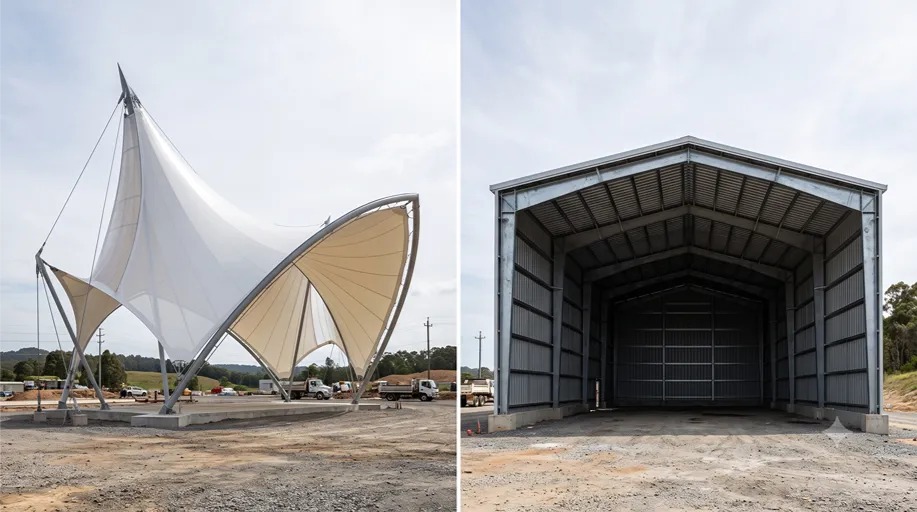
Tensile Fabric Structures vs Steel: Which Is Easier to Maintain?
Tensile Fabric Structures vs Steel: Which Is Easier to Maintain?
When you plan a roof, a canopy, a shed or a large covered area, the build is only the start. The real question is what it takes to keep the structure in good shape after it is up. Upkeep affects how often you stop work, how many people you need on site, and how long the structure looks and works as new.
Steel has been the default choice for a long time. Tensile fabric structures are now a strong alternative, mainly because of how the fabric behaves. Here is a plain look at how the two compare on maintenance.
Get In TouchWhat Is a Tensile Fabric Structure?
A tensile fabric structure uses a tough coated fabric stretched over a support system. The fabric carries the load and also forms the roof or cover. You see these in walkways, parking shades, stadium roofs, tents, hangars, industrial sheds and many other places.
The fabric is the star of the show. Most of the time it is a PVC or PVDF coated fabric. A good PVC and PVDF coated fabric is made to handle sun, rain, wind and dust without fuss. If you want to know how easy a tensile structure is to maintain, you need to look at how good the fabric is.
The Maintenance Story of Steel
Steel is strong, but it has one big enemy: moisture. Rain, humidity, sea air and industrial fumes all push steel toward rust. Once rust starts, it spreads under the paint and keeps working even when the surface looks fine.
Because of this, a steel roof or frame needs regular attention:
- Repainting and coating. Protective layers wear out and must be renewed again and again.
- Rust checks. Joints, bolts and cut edges need to be inspected often, since these are the first places to corrode.
- Sheet and joint repair. Steel sheets can loosen, leak at the seams or warp over time.
- Heavy work. Fixing a large steel part often needs lifting equipment, scaffolding and a bigger crew.
- Downtime. Work areas often need to be cleared while repairs are done.
None of this means steel is a bad material. It simply asks for steady, hands-on care, especially in coastal or damp areas.
The Maintenance Story of Tensile Fabric
A quality coated fabric works very differently. It does not rust, so the biggest problem of steel is gone from the start. The surface is made to stay clean and handle the weather.
Here is what upkeep usually looks like.
1. Simple cleaning. Dust and dirt settle on any roof. With fabric, a wash with water and a mild cleaner is usually enough. A smooth coated surface makes it hard for dirt to stick, so cleaning is quick.
2. No repainting. The colour is part of the coated fabric. You do not need to paint it again to keep it looking fresh.
3. Weather and UV resistance. PVC and PVDF coatings are built to face strong sunlight. PVDF in particular is known for holding its colour and staying cleaner for longer, which means less effort in routine care.
4. Light weight. Fabric is far lighter than steel sheets. If a small section ever needs attention, the work is easier to plan and carry out.
5. Easy spot repairs. Coated fabric can be patched and welded. A small repair does not mean replacing the whole roof.
6. Fewer joints to worry about. Large fabric panels are welded into one piece, so there are fewer seams and fixings that can loosen or rust.
Side-by-Side Look
| Maintenance factor | Steel | Tensile fabric |
|---|---|---|
| Rust | A constant risk | Not an issue |
| Repainting | Needed regularly | Not needed |
| Cleaning | Needed, along with rust checks | Simple wash |
| Repairs | Heavy and slow | Light, patch-based |
| Weight of parts | Very heavy | Light |
| Effect of humid or coastal air | High | Low |
| Effort for upkeep | High and ongoing | Low and routine |
Where Fabric Really Shines
Coastal and humid regions. Salt and moisture attack steel quickly. Coated fabric is not affected the same way, so upkeep stays light.
Chemical and industrial zones. Fumes and splashes can damage steel finishes. A suitable PVDF coated fabric handles these conditions well.
Large open spans. A steel roof over a wide area has many joints and fixings to inspect. A tensile roof has far fewer.
Sites that cannot stop. If your area must stay in use, quick and light maintenance is a big plus. Fabric work usually disturbs operations less.
Tips to Keep a Tensile Fabric Structure in Great Shape
Even though fabric needs less care, a little routine helps it perform at its best.
- Wash the surface now and then with water and a soft brush or sponge.
- Use mild cleaners. Avoid harsh chemicals and sharp tools.
- Look over seams, edges and fixing points during regular checks.
- Remove leaves and debris so water does not collect.
- Fix small marks early with a proper patch before they grow.
These are small jobs. They are very different from the repaint-and-rust cycle that steel often brings.
The Fabric Matters Most
The easy upkeep of a tensile structure comes down to the quality of the fabric. A well-made coated fabric with good welding quality stays clean, strong and stable. A weak one will not. That is why choosing the right PVC Fabrics Manufacturers and Supplier is one of the most important steps in the whole project. When you choose a trusted Tensile fabric manufacturer, you are choosing a fabric that is built for easy care from the very beginning.
Why Choose LUCKY-TECH Membranes
LUCKY-TECH Membranes works with PVC and PVDF coated fabrics made for demanding outdoor use. The base coated textile is engineered by SIOEN Industries of Belgium, a name known worldwide in technical textiles. LUCKY-TECH Membranes then designs, cuts and welds this fabric in-house to match your requirement.
What this means for you:
- A fabric chosen for weather, UV and dust resistance
- Welded seams made for a clean finish and strong hold
- Fabric made to order for your size, shape and use
- Support for dealers, vendors and businesses that need a dependable fabric partner
If you are planning a project and want a fabric that stays easy to look after, you can talk to the LUCKY-TECH Membranes team about the right PVC or PVDF option.
Frequently Asked Questions
Does tensile fabric need repainting?
No. The colour is built into the coated fabric, so repainting is not part of upkeep.
Can a tensile fabric roof rust?
The fabric itself cannot rust. This is a key reason it needs less care than steel.
How do you clean a tensile fabric surface?
Use water, a soft brush and a mild cleaner. Rinse well and let it dry.
Can small damage be repaired?
Yes. Coated fabric can be patched or welded, so you do not have to replace the full panel.
Is PVC or PVDF better for easy upkeep?
Both are made for outdoor use. PVDF adds extra surface protection that helps the fabric stay cleaner and hold its colour.
Get Your Free Quote Today!