
What Materials Are Used in Tensile Fabric Structures?
What Materials Are Used in Tensile Fabric Structures?
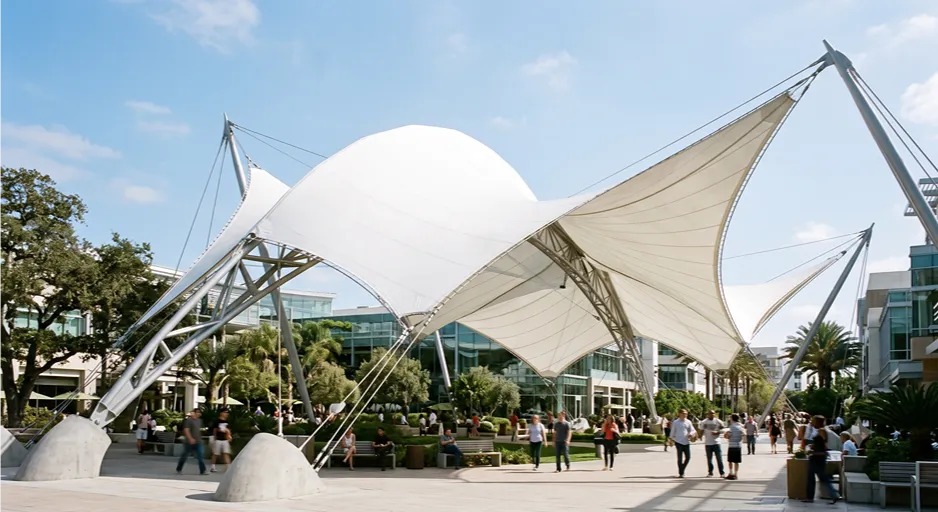
Tensile fabric structures are everywhere now. You see them over stadium stands, airport walkways, car parking shades, entrance canopies, and open-air event spaces. They look light and graceful, but there is a lot of engineering in the fabric that holds them up.
If you are planning one, the first question is simple: what material is used? The fabric you pick decides how long the roof lasts, how it handles sun and rain, and how easy it is to maintain. Let's go through it in plain words.
Get In TouchHow a Tensile Fabric Structure Works
A tensile structure holds its shape by tension. The fabric is stretched tight between steel or aluminium supports, cables, and anchor points. Because the fabric is pulled evenly, it forms smooth curves that shed wind and rain well.
This means the fabric is not just a cover. It is the main part of the roof, and it carries real load. So the material must be strong, flexible, and built for outdoor weather.
What Is Inside a Tensile Roof Fabric?
Most tensile roof fabrics have three basic layers:
- Base cloth: A strong woven polyester fabric. This gives the tensile strength and the tear resistance.
- Coating: A layer of PVC or PVDF-treated PVC on both sides. This makes the fabric waterproof and protects the base cloth.
- Top finish: A surface lacquer that keeps the fabric clean, resists dirt, and handles sunlight.
Together, these layers make a fabric that is tough, waterproof, and easy to weld into large panels.
Different Types of Fabrics Used in Tensile Structures Are:
1. PVC Coated Fabric
PVC coated polyester is the most common material for tensile roofs. It is popular for good reasons.
- Strong and flexible: It handles tension well and does not crack easily when stretched.
- Waterproof: The coating blocks water completely, so it works well in heavy rain.
- Easy to weld: PVC panels can be joined with heat or high-frequency welding. This gives clean, strong seams, even on large roofs.
- Wide colour choice: It comes in many colours, so designers can match any building or brand.
- Good value: It gives a great balance of performance and cost for most projects.
PVC fabric is a good choice for canopies, car parking shades, walkway covers, tents, hangars, awnings, and many other roofs.
2. PVDF Coated Fabric
PVDF coated fabric is PVC fabric with an extra PVDF lacquer on the surface. This top layer gives the fabric more protection against the outdoors.
- Self-cleaning surface: The smooth finish does not hold dirt easily. Rain washes most of it off, so the fabric looks fresh.
- Strong weather protection: It handles strong sun, UV light, and humidity very well.
- Colour stays bright: The surface helps the fabric keep its look in harsh sun.
- Less upkeep: A cleaner surface means less cleaning work for building owners.
PVDF fabric is a smart pick for large, high-visibility roofs such as stadiums, airport terminals, malls, and public spaces, where the roof needs to look good for a long time.
Why the Right Fabric Matters
Two roofs can look the same on the first day. The difference shows over time. A good fabric stays smooth, keeps its colour, and keeps its strength through sun, rain, and wind. A poor one can sag, fade, or leak at the seams.
Here is what to check before you choose a fabric:
- Strength: The fabric should carry the tension load of your design.
- Weldability: Clean seams are what keep a roof watertight.
- UV and weather protection: Important for roofs in hot, sunny, or rainy areas.
- Colour consistency: Matters when many panels are joined together.
- Surface finish: Decides how easy the roof is to clean.
Choosing a Tensile Roof Fabric Manufacturer
The fabric is only as good as the people behind it. A reliable tensile roof fabric manufacturer gives you steady quality from the first roll to the last, clear technical details, and support when you need it.
When you talk to a supplier, ask about the fabric source, the coating type, and the testing the fabric goes through. Ask whether panels can be cut and welded to your drawings. A good partner answers these clearly.
Why Choose LUCKY-TECH Membranes
LUCKY-TECH Membranes works with PVC and PVDF coated fabrics for tensile roofs and many other uses. Our coated textiles are engineered by SIOEN Industries of Belgium, a trusted name in technical textiles. We then cut and weld the fabric in-house to your size and design.
For architects, dealers, and project teams, this means:
- A consistent, dependable fabric for every order
- Panels made to your drawings and measurements
- Both PVC and PVDF options for different project needs
- Clear support from enquiry to delivery
Whether you need fabric for a small canopy or a large public roof, our team can help you find the right fit. As an experienced PVC Fabrics Manufacturers and Supplier, we also work with dealers and businesses who need steady supply for their own projects.
Quick Tips for Fabric Care
A tensile roof does not need much care, but a little routine goes a long way.
- Rinse the fabric with clean water and a soft brush now and then.
- Use mild soap only. Avoid harsh chemicals and hard scrubbing.
- Check the seams and edges after heavy storms.
- Keep trees and sharp objects away from the roof surface.
Frequently Asked Questions
1. What is the most common material used in tensile fabric structures?
PVC coated polyester fabric is the most common. It is strong, waterproof, easy to weld, and available in many colours.
2. What is the difference between PVC and PVDF fabric?
PVDF fabric has an extra surface lacquer on top of the PVC coating. This layer gives it better dirt resistance and a cleaner look over time.
3. Can tensile roof fabric be made in custom sizes and colours?
Yes. Fabric panels can be cut and welded to your drawings, and many colour options are available.
4. How do I choose the right tensile roof fabric manufacturer?
Look for a manufacturer with a trusted fabric source, steady quality, clear technical details, and good support from enquiry to delivery.
Get Your Free Quote Today!