Common Mistakes to Avoid When Choosing Tensile Fabric for Large Structures
Common Mistakes to Avoid When Choosing Tensile Fabric for Large Structures
Tensile architecture has reshaped how modern buildings are designed—especially in public, commercial, and industrial environments. Whether it’s a stadium roof, airport terminal, walkway canopy, car parking shade, or outdoor event space, a
tensile structure adelivers both architectural flexibility and aesthetic appeal. However, the performance and longevity of these structures depend heavily on one critical factor: the tensile fabric used.
Selecting the wrong material can lead to premature wear, structural issues, or expensive repairs. In this blog, we highlight the most common mistakes companies make when choosingtensile membranes for large-scale projects, and how you can avoid them.
Table Of Contents:
- Mistake #1: Choosing Fabric Without Understanding Climate Conditions
- Mistake #2: Ignoring Tensile Strength & Mechanical Properties
- Mistake #3: Using Non-Fire-Retardant or Unsafe Materials
- Mistake #4: Focusing Only on Aesthetics Instead of Durability
- Mistake #5: Not Considering Maintenance Requirements
- Mistake #6: Choosing the Cheapest Material Without Lifecycle Cost Analysis
- Mistake #7: Ignoring Fabric Certifications & Manufacturing Standards
- Mistake #8: Selecting Suppliers Without Technical Expertise
- How LUCKY-TECH MEMBRANES Helps You Avoid These Mistakes
- Conclusion
Mistake #1: Choosing Fabric Without Understanding Climate Conditions
A fabric that works well in Europe may not perform optimally in India’s climate. Temperature extremes, UV exposure, monsoon rains, humidity, and air pollution directly impact tensile membrane performance.
For Indian conditions, factors such as:
UV resistance
Fungus and mold resistance
Waterproofing
Heat stability
are extremely important. Many clients select a fabric based purely on cost or aesthetics, ignoring real environmental needs, which significantly reduces lifespan.
Mistake #2: Ignoring Tensile Strength & Mechanical Properties
A tensile structure amust handle constant tension, wind loads, flexing, vibration, and periodic cleaning. If the fabric lacks sufficient tensile strength, it may:
Tear under stress
Deform over time
Fail during high winds
Require frequent maintenance
Premium tensile fabrics include specifications for tensile strength, tear resistance, and seam weldability—these should always be evaluated before purchase.
Mistake #3: Using Non-Fire-Retardant or Unsafe Materials
Large public installations such as stadiums, airports, malls, and industrial parks often have strict fire safety requirements. Choosing non-fire-retardant tensile membranes can lead to:
Safety hazards
Regulatory compliance failures
Delays in project approvals
High-quality PVC coated fabrics come with fire-retardant treatments and international certifications, making them suitable for public and commercial structures.
Mistake #4: Focusing Only on Aesthetics Instead of Durability
Architects and clients may get attracted to how a membrane looks—its color, texture, or translucency—while overlooking its outdoor durability.
Large tensile structures remain exposed to the elements for 10–20 years. Aesthetic appeal must be balanced with performance factors such as:
Coating quality
UV stability
Lacquering
Dirt resistance
Fabric thickness (GSM)
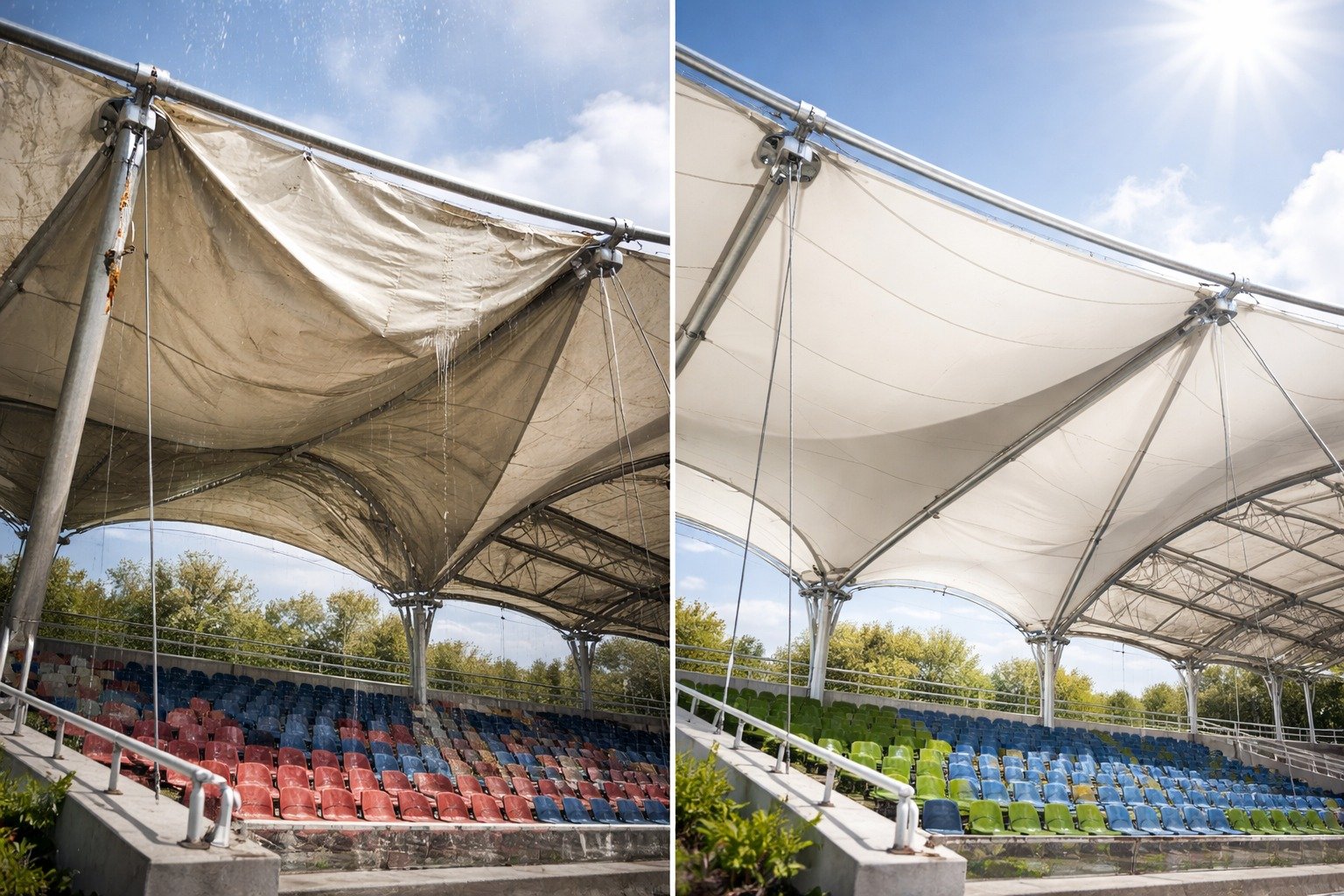
Overlooking these can lead to fading, staining, and faster material deterioration.
Mistake #5: Not Considering Maintenance Requirements
Every tensile membrane has its own cleaning and upkeep needs. Some fabrics accumulate dust, pollution, and bird droppings faster, while others require specialized cleaning agents or labour.
Low-quality materials may demand frequent cleaning, leading to:
Higher operational costs
Shorter service life
Increased downtime
Premium membranes with anti-dust and self-cleaning lacquers significantly reduce maintenance efforts—making them ideal for large structures.
Mistake #6: Choosing the Cheapest Material Without Lifecycle Cost Analysis
Cost-cutting is common, especially in large projects. However, selecting the cheapest tensile fabric often results in higher long-term expenses due to:
Frequent repairs
Material replacements
Higher cleaning costs
Reduced lifespan
Lifecycle cost analysis considers:
Material cost
Installation
Maintenance
Replacement intervals
Often, a slightly higher-grade membrane offers better value over 10–20 years compared to cheaper alternatives.
Mistake #7: Ignoring Fabric Certifications & Manufacturing Standards
Not all tensile membranes are manufactured to global standards. Reputable suppliers provide:
UV testing data
Fire certifications
Weather performance reports
Mechanical strength parameters
Warranty coverage
Skipping certification checks increases risk, especially for large public structures where failure can be costly or dangerous.
Mistake #8: Selecting Suppliers Without Technical Expertise
A tensile structure is not just a roof—it is an engineered system. Many project failures occur because fabric suppliers lack technical understanding of installation and application.
A knowledgeable membrane supplier such as LUCKY-TECH MEMBRANES offers:
Fabric technical data
Application support
Material recommendations
Specification guidance
Working with experienced partners ensures your tensile structure performs safely and efficiently for years.
How LUCKY-TECH MEMBRANES Helps You Avoid These Mistakes
As a leading manufacturer in India, LUCKY-TECH MEMBRANES provides high-performance PVC coated tensile membranes engineered for demanding conditions.
With an exclusive partnership with Sioen Industries (Belgium), , our materials combine European innovation with suitability for Indian climates.
Why Choose LUCKY-TECH MEMBRANES?
✔ High UV resistance and outdoor durability
✔ Fire-retardant and weather-resistant membranes
✔ Certified tensile performance and strength
✔ Anti-fungal and anti-dust lacquer options
✔ Multiple GSM, colors, and translucency levels
✔ Technical support for tensile structure projects
Whether you are developing a stadium, airport walkway, parking canopy, or large commercial tensile structure, choosing the right membrane is mission-critical—and we help you get it right.
Conclusion
Selecting the right tensile fabric is not just a design decision—it is a structural, safety, and economic one.
By avoiding the common mistakes outlined above, architects, contractors, and developers can ensure their tensile membranes deliver long-term performance, reduced maintenance costs, and architectural elegance.
With the right material partner, a tensile structure becomes a durable and iconic asset for decades.
Need Assistance Choosing the Right Tensile Material?
Contact LUCKY-TECH MEMBRANES for expert guidance and premium tensile membrane materials.
📞 Call: +91-86553 57854 / +91-9820325057
🌐 Website: https://luckytech.in/
📧 Email: info@luckytech.in
Get Your Free Quote Today!