
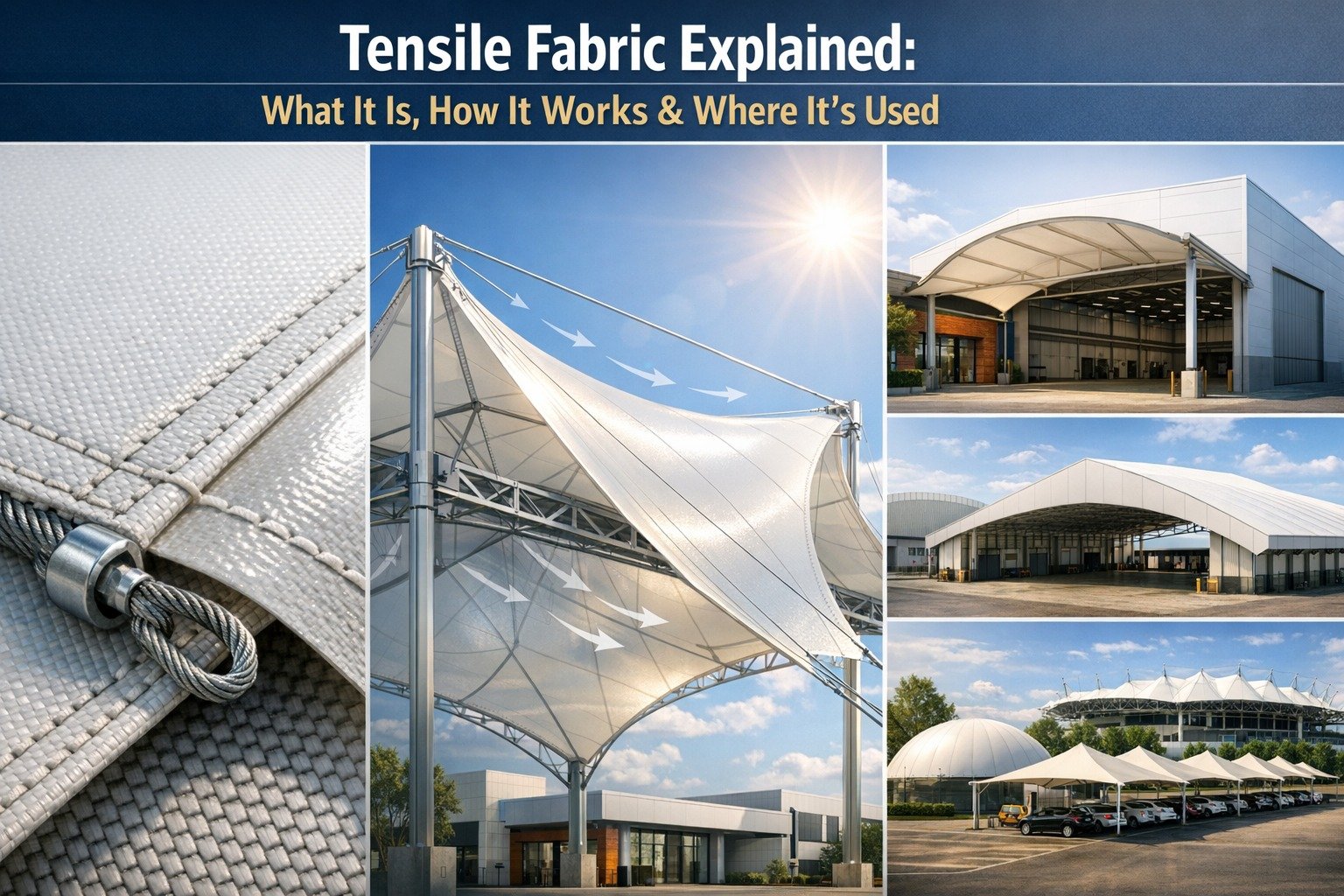
Tensile Fabric Explained | Tensile Membranes & Tensile Structures in India
Tensile Fabric Explained | Tensile Membranes & Tensile Structures in India
Tensile fabric has become one of the most trusted modern materials in architecture and industrial infrastructure. From large-span tensile structures like stadium canopies to industrial warehouse roofing, this material offers a rare combination of strength, flexibility, durability, and design freedom. In India, where weather conditions range from harsh sun and heavy rain to humidity and pollution, choosing the right tensile fabric plays a major role in how long a structure lasts.
So what exactly is tensile fabric, how does it work, and where is it used? Let’s break it down in a simple, practical way.
Table Of Contents:
- What Is Tensile Fabric?
- How Tensile Membranes Work
- Why Tensile Structures Are Growing Fast in India
- Where Tensile Fabric Is Used (Real Applications)
- What Makes a High-Quality Tensile Fabric?
- Final Thoughts
What Is Tensile Fabric?
Tensile fabric is a high-strength, engineered membrane material designed to work under tension. Unlike traditional building materials that rely on heavy support beams, tensile fabric is stretched tightly and supported using cables, steel frames, or structural arches. This tension creates a stable surface that can span large areas without needing multiple columns.
Most high-performance tensile fabric used in tensile membranes is made using a strong polyester base cloth coated with PVC. This coating improves weather resistance, UV stability, waterproofing, and weldability.
How Tensile Membranes Work
Tensile membranes work on a simple principle: tension distributes load efficiently. When the membrane is stretched correctly, it forms a surface that resists wind loads, rainwater accumulation, and structural movement.
The membrane is not just “hanging fabric.” It is carefully engineered with:
High tensile strength
Tear resistance
Dimensional stability
Weatherproof coatings
Strong welded seams
This is why tensile structures can remain stable for years even in demanding outdoor environments.
Why Tensile Structures Are Growing Fast in India
The demand for tensile structures is rising rapidly in India because they offer benefits that traditional construction struggles to match:
Fast installation
Lightweight design
Lower construction cost
Large clear-span coverage
Modern architectural appearance
Weather resistance and long life
Industries prefer tensile fabric because it gives strong performance without heavy civil construction.
Where Tensile Fabric Is Used (Real Applications)
One of the best things about stadium is how versatile it is. Today, tensile membranes are used in both architectural and industrial environments.
1) Tensile Canopies & Walkway Shades
Shopping complexes, metro stations, school campuses, and public entrances often use tensile fabric canopies for shade and rain protection.
2) Warehouse Roofing & Industrial Sheds
Large-span industrial sheds and warehouses use tensile structures to reduce steel consumption and improve daylighting.
3) Parking Shades
Tensile fabric is widely used in car parking structures because it is quick to install and provides UV protection.
4) Stadium Roofs & Event Structures
Sports stadiums and event venues use tensile membranes for modern design and wide-area coverage.
5) Industrial Covers & Protective Membranes
PVC-coated tensile fabric is also used for:
truck covers
temporary shelters
machinery covers
agricultural storage covers
What Makes a High-Quality Tensile Fabric?
Not all tensile fabric is equal. If the coating quality is poor, the membrane may crack, fade, or delaminate within a few seasons.
A high-quality tensile membrane should have:
UV resistance for Indian sunlight
anti-fungal and anti-microbial protection
strong seam weld compatibility
consistent coating thickness
long-term flexibility
At LUCKY-TECH MEMBRANES, we manufacture premium PVC coated fabrics in India and maintain an exclusive partnership with Sioen Industries, Belgium, ensuring performance aligned with global standards.
Final Thoughts
Whether you’re planning a canopy, warehouse, tensile structure, or industrial cover, tensile fabric is a smart and proven solution. The key is choosing the right tensile membrane grade based on climate, application, and lifespan expectations.
📞 Contact LUCKY-TECH MEMBRANES
For inquiries, samples, or technical specifications:
LUCKY-TECH MEMBRANES
📱 Phone: +91-86553 57854 / +91-9820325057
📧 Email: info@luckytech.in
🌐 Website: https://luckytech.in/
Get Your Free Quote Today!