
Roll-Up Door Fabric: Why Coated Textiles Outperform Metal Shutters in Warehouses
Roll-Up Door Fabric: Why Coated Textiles Outperform Metal Shutters in Warehouses
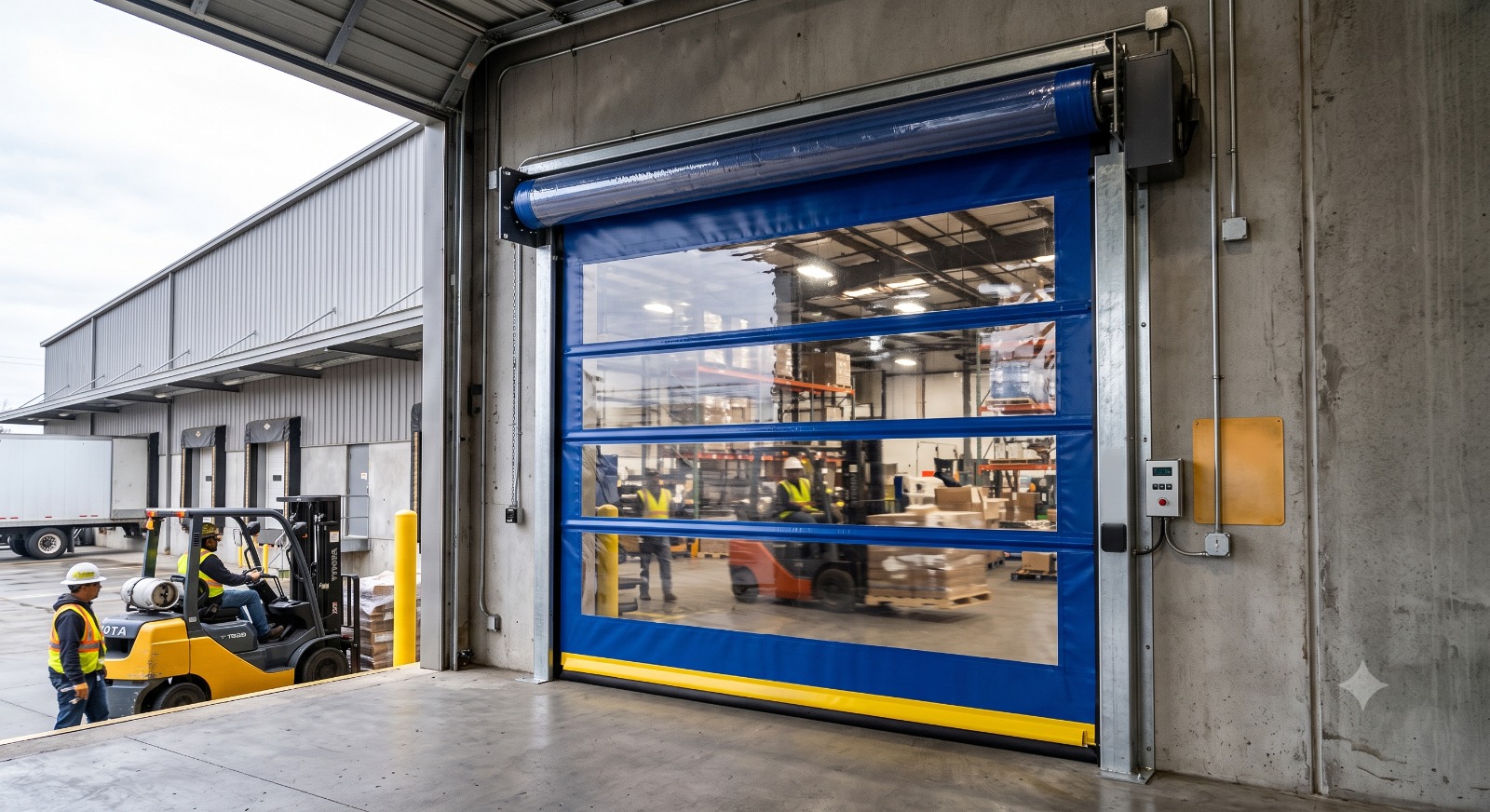
Walk into any warehouse that's been retrofitted in the last few years, and you'll probably notice something: the old steel roller shutters are disappearing. In their place is a softer-looking, brightly coloured curtain that rolls up in seconds. That's roll-up door fabric — a heavy-duty PVC or PVDF coated textile engineered to do everything a metal shutter does, without most of its drawbacks.
If you're weighing fabric doors against traditional metal shutters for a warehouse, loading bay, or cold storage facility, here's what actually separates the two.
Get In TouchSpeed Is Where Fabric Doors Win First
Metal shutters are built in interlocking slats, and every one of those joints adds friction and weight. A typical steel shutter opens at a fraction of the speed of a coated fabric door, which is built as a single flexible sheet reinforced with a rigid bottom bar and side guides. In a busy loading dock, that speed difference adds up less time with the door open means less conditioned air escaping and fewer dust or insect intrusions.
Coated Fabric Takes the Impact, Not the Frame
Forklifts clip doors. It happens in almost every warehouse eventually. A metal shutter that takes a hit usually buckles a bent slat jams the track, and the whole door needs a technician before it can be used again. A PVC or PVDF coated fabric curtain, by contrast, is designed to flex on impact and pop back into its guides rather than deform. The coated textile itself is built to absorb this kind of stress cycle after cycle, which is the entire point of using a reinforced, weather-resistant fabric rather than a rigid metal sheet in the first place.
Noise and Vibration
Anyone who has worked near a steel shutter knows the sound a loud mechanical clatter every time it opens or closes. Coated fabric doors operate almost silently. For facilities near residential zones, or ones running multiple loading bays close together, that's a real difference in the working environment.
Insulation and Climate Control
Metal is a poor insulator; it conducts heat and cold straight through. A quality coated fabric, especially one engineered with a multi-layer PVC or PVDF coating, holds up far better thermally, which matters directly for cold storage, food processing, and pharma warehouses where temperature swings at the door threshold translate into real energy costs. Manufacturers also build reinforced fabric doors with UV-stable and weatherproof coatings, so the fabric doesn't crack or lose flexibility from constant sun and temperature cycling the way painted steel eventually corrodes.
Corrosion Is Not a Factor
Steel shutters, however well galvanized, will eventually rust — especially in coastal regions, chemical plants, or anywhere with high humidity. Coated fabric doesn't corrode. A PVC or PVDF coated textile is chemically stable, resists moisture, and won't develop the rust streaks and pitting that eventually force a metal shutter replacement.
Lighter Structural Load
A steel rolling shutter is heavy, and that weight has to be supported by the building's header and side frame. Fabric roll-up doors are dramatically lighter for the same opening size, which means less structural reinforcement is needed a real advantage for pre-engineered buildings, tensile structures, and warehouses where the frame wasn't originally designed to carry a heavy steel curtain.
Where the Fabric Itself Matters Most
None of these advantages exist without the base material doing its job. A roll-up door is only as good as the coated fabric it's made from the coating has to resist abrasion, tearing, UV degradation, and repeated flexing at the fold line without cracking. This is exactly the kind of technical textile that a dedicated coated fabric manufacturer focuses on: getting the base weave, the coating formulation, and the lamination right so the finished door performs for years, not months.
That's the piece that's easy to overlook when comparing "fabric vs metal" — the outcome depends entirely on the quality of the fabric supplier behind the door. Businesses sourcing roll-up door fabric in bulk, whether for their own manufacturing or for onward supply, are really choosing a fabric partner as much as a product.
LUCKY-TECH MEMBRANES works as a coated fabric manufacturer and supplier in India, producing PVC and PVDF coated technical textiles used in roll-up door fabric and a wider range of industrial fabric applications. For fabricators, dealers, and businesses looking for a consistent PVC roll-up door fabric manufacturer, that base material quality is the actual differentiator.
FAQs
Is PVC coated fabric strong enough for large warehouse door openings?
Yes — reinforced PVC and PVDF coated fabrics used in roll-up doors are built with high-tenacity base weaves specifically to handle wide spans without sagging or stretching.
How long does a coated fabric roll-up door typically last?
With a good quality coating and proper installation, coated fabric doors commonly perform for many years, with the coating itself being the main factor in long-term durability.
Can coated fabric doors be used in cold storage?
Yes, PVC and PVDF coated fabrics are widely used in cold storage and food processing environments due to their insulation properties and resistance to moisture and temperature cycling.
Do fabric roll-up doors need less maintenance than metal shutters?
Generally yes — without slats, tracks prone to jamming, or a corrosion-prone surface, coated fabric doors typically need less recurring maintenance than metal shutters.
Get Your Free Quote Today!