
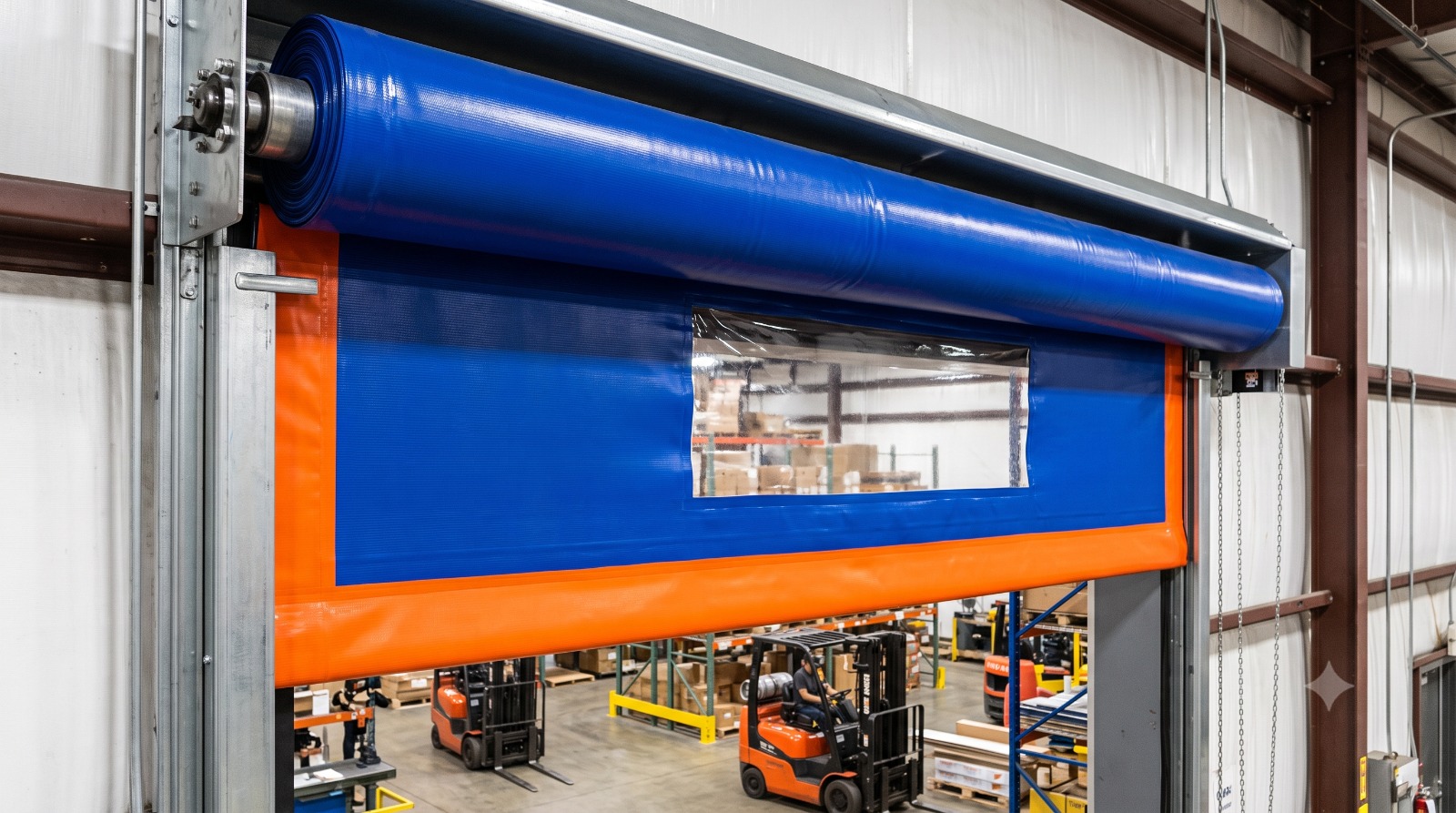
PVC Roll-Up Door Fabric: Construction, Coating & Properties
PVC Roll-Up Door Fabric: Construction, Coating & Properties
PVC Roll Up Door Fabric: Construction, Coatings and Technical Properties
Industrial roll up doors look simple from the outside. A curtain rolls up, a curtain rolls down. But the fabric behind that curtain is doing a lot of work. It has to flex thousands of times a year, resist tearing, block dust, and sometimes hold back cold air or fire. If you manufacture or fabricate roll up doors, the fabric you choose decides how long that door survives on site.
This post breaks down what PVC roll up door fabric is actually made of, how it is coated, and what technical properties matter when you are sourcing it.
Get In TouchWhat Is PVC Roll Up Door Fabric?
PVC roll up door fabric is a flexible membrane made by coating a woven base cloth, usually polyester, with layers of PVC (polyvinyl chloride) compound. The base gives the fabric its tensile strength. The coating gives it weather resistance, flexibility, and surface protection.
This is different from a rigid shutter or a metal sectional door. The fabric needs to fold and roll around a barrel hundreds of times without cracking. That single requirement shapes almost every decision in how the material is built.
How Is the Fabric Constructed?
Most industrial roll up door membranes follow a layered structure.
The base fabric
A high tenacity polyester yarn is woven into a scrim. This is what actually carries the load when the door is under wind pressure or being pulled up and down.
The coating layers
PVC paste is applied to both sides of the scrim, usually in multiple passes. Each pass builds thickness and evens out the surface. Some manufacturers add a plasticizer blend at this stage to keep the fabric flexible in cold weather.
The top finish
A lacquer or PVDF top coat is often added last. This layer resists dirt, UV yellowing, and chemical exposure. It is thin, but it is what keeps the door looking clean years after installation.
Ask any fabricator who has dealt with a poorly coated fabric, and they will tell you the top layer is where cheap material fails first. It cracks, peels, or turns brittle within a season.
What Coatings Actually Matter for Roll Up Door Membranes?
Not all PVC coatings are equal. A few properties are worth checking before you finalize a supplier.
- Tensile strength: How much load the fabric can take before tearing. This matters most for large door openings.
- Tear propagation resistance: Once a small cut or puncture happens, does it spread easily? Good fabric shutter technology stops a tear from running.
- Cold crack resistance: Can the fabric flex in low temperatures without cracking? This is critical for cold storage and food processing facilities.
- UV and weathering resistance: Outdoor doors face sun exposure daily. Coating quality decides whether the fabric fades or stiffens over time.
- Flame retardancy: Many industrial sites require fabric that meets fire safety standards, especially in warehouses and factories.
Why Does Fabric Shutter Technology Matter for High Speed Doors?
High speed doors open and close far more often than standard roll up doors, sometimes hundreds of times a day. The fabric on these doors goes through constant flex cycles.
If the coating is too rigid, it cracks along the fold lines. If the base fabric is too weak, repeated stress causes the weave to loosen. High speed door fabric needs a balance: strong enough to handle wind load, flexible enough to survive constant motion.
This is why fabric shutter technology has moved toward multi layer coatings with reinforced edges and stitched or welded seams, rather than a single uniform sheet.
What Makes a Good Insulated Roll Up Door Material?
Not every application needs insulation, but for cold storage, pharma, and food industries, it is often required.
An insulated roll up door material usually combines the PVC membrane with a foam or air gap core, sandwiched between two fabric layers. The goal is to slow heat transfer without adding so much weight that the door struggles to roll smoothly.
A few things to check with insulated fabric:
Does it maintain flexibility at low temperatures? Is the seam sealing airtight enough to stop condensation? Does the insulation layer add excessive weight to the roll mechanism?
Getting these details wrong leads to doors that either don't insulate well or wear out the motor from added strain.
How Do Manufacturers Test Roll Up Door Fabric Quality?
Reliable suppliers test fabric on a few standard parameters before it ships.
Tensile and tear strength tests confirm the fabric can handle the rated load. Cold flex tests simulate winter conditions to check for cracking. Adhesion tests check if the coating bonds properly to the base fabric. Accelerated weathering tests expose samples to UV lamps to predict how the fabric will hold up outdoors over years.
If a supplier cannot share this kind of test data, that is usually a sign to look elsewhere.
Where Can You Source PVC Roll Up Door Fabric in India?
India has a growing base of fabric manufacturers producing PVC coated membranes for industrial doors, tents, and covers. For door manufacturers and fabricators, working with a supplier that understands roll up door specific requirements, rather than a general tarpaulin supplier, makes a real difference in product life.
LUCKY-TECH MEMBRANES works in this space as one of theFabrics Manufacturers and Supplier in India , producing PVC and PVDF coated fabric built for demanding industrial use. For fabricators looking for a dependableRollupdoors Manufacturers and Supplier in India , sourcing directly from a company that controls its own coating process usually means more consistent batches and fewer surprises on site.
Over the years, Lucky-Tech Membranes has supplied fabric for a wide range of roll up door and shutter projects across different industries, from cold storage units to large warehouse installations. That kind of repeat business is usually the clearest sign of trust in this line of work. Manufacturers don't come back to a supplier unless the fabric holds up on site, batch after batch.
FAQs
What is the difference between PVC and PVDF coated roll up door fabric?
PVC coating is cost effective and works well for most standard industrial applications. PVDF adds a top layer that resists UV and chemical exposure better, so it is often used where the door faces heavy sun or outdoor weathering.
How long does industrial roll up door fabric usually last?
With good coating quality and proper installation, most fabric membranes last between 7 to 10 years, depending on usage frequency and environment.
Can roll up door fabric be repaired if it tears?
Yes. PVC fabric can usually be patched or welded using heat sealing methods, as long as the tear is caught early and doesn't spread across a large area.
Is insulated roll up door fabric heavier than standard fabric?
Slightly, yes. The added core layer increases weight, so the door motor and track system need to be rated for the extra load.
What thickness is standard for industrial roll up door fabric?
Thickness varies by application, but most industrial doors use fabric in the range of 0.9mm to 1.5mm, with heavier gauges used for larger openings or high wind zones.
Get Your Free Quote Today!