
PVC & PVDF Coated Tensile Membrane Fabric: A Complete Guide
PVC & PVDF Coated Tensile Membrane Fabric: A Complete Guide
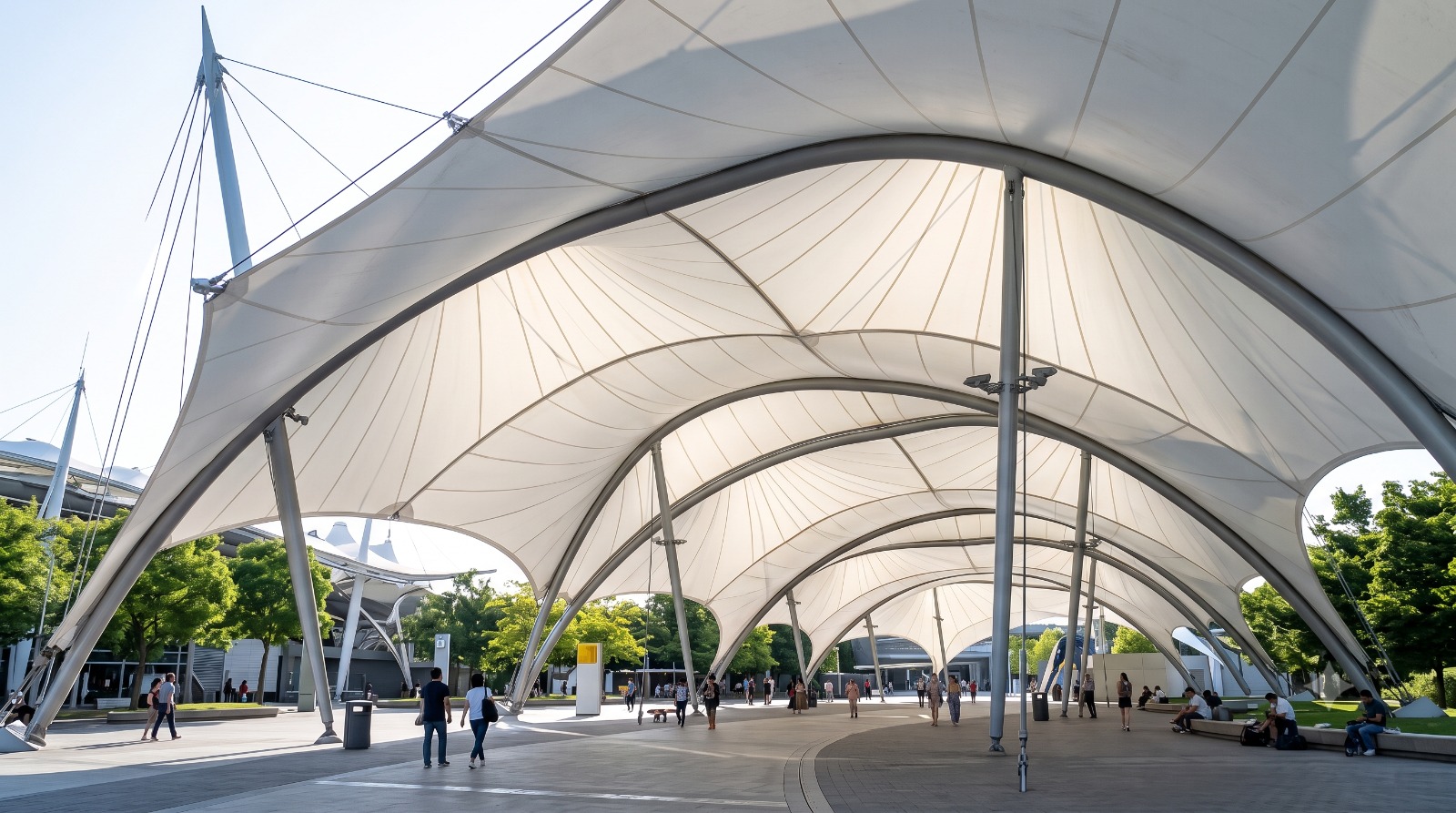
If you've ever walked under the curved white roof of an airport terminal, a stadium canopy, or a shaded parking area, chances are you were standing under a tensile membrane structure. What holds these structures together isn't steel or concrete — it's fabric. And not just any fabric. It's engineered, coated fabric built to carry tension, resist weather, and still look good after years of sun and rain.
Get In TouchThis guide breaks down what PVC and PVDF coated tensile membrane fabric actually is, why it matters, and what to look for when you're sourcing it from a reliable PVC & PVDF coated fabric manufacturer.
What Makes Tensile Membrane Fabric Different
A tensile structure works by stretching fabric tight across a frame of cables or steel supports. There's no compression, no bending — just pure tension. Because the fabric itself is doing the structural work (not just sitting on top of a frame like a regular roof), the quality of that fabric decides how well the whole structure performs.
This is why architects and contractors spend so much time picking the right fabric. A poor-quality fabric will sag, discolour, or tear. A well-engineered one will stay taut, clean, and strong for a long time.
PVC Coating: The Base Layer
Most tensile membrane fabric starts as a woven polyester base, coated on both sides with PVC (Polyvinyl Chloride). This coating is what gives the fabric its strength, flexibility, and waterproofing. It also makes the fabric weldable — meaning large panels can be joined together with heat instead of stitching, which keeps the seams strong and leak-free.
PVDF Lacquering: The Protective Topcoat
On top of the PVC layer, a thin PVDF (Polyvinylidene Fluoride) lacquer is often applied. Think of it as a protective shield. It helps the fabric resist UV rays, dust, and industrial grime, and keeps the surface easier to clean — a simple wash with detergent and water is usually enough to keep it looking fresh. Both layers work together: the PVC gives the fabric its body and strength, while the PVDF keeps the surface protected and easy to maintain.
Where This Fabric Is Used
Tensile membrane fabric shows up in more places than most people realise:
- Stadiums and sports arenas
- Airport terminals and walkways
- Shopping malls and atriums
- Car parking shades
- Swimming pool covers
- Hotel entrances and event spaces
- Exhibition halls and gaming arenas
Because the fabric is lightweight, it can cover large open areas without needing heavy internal support — which is exactly why it's become such a popular choice for modern architecture.
Sourced from SIOEN
Fabric quality starts long before it reaches a project site. LUCKY-TECH Membranes works with PVC and PVDF coated fabric engineered by SIOEN Industries, a Belgium-based name known worldwide for technical coated textiles. This fabric is manufactured at SIOEN's plants in Belgium and France, using strict quality control and advanced coating technology.
From there, LUCKY-TECH takes this engineered fabric and designs, cuts, and welds it to match each project's exact specifications — shaping raw material into a finished tensile membrane solution. So when you work with LUCKY-TECH, you're getting the reliability of an internationally trusted fabric source, combined with fabrication that's tailored to your project.
What to Look for in Good Tensile Fabric
Not all coated fabric performs the same way. When you're evaluating fabric for a project, here's what actually matters:
- Strength and flexibility – it needs to handle tension without stretching out of shape
- UV and flame resistance – especially important for outdoor, high-traffic structures
- Weldability – clean, strong seams matter more than people expect
- Translucency – good fabric lets natural light through while still providing shade
- Ease of cleaning – a coating that resists dirt buildup saves a lot of maintenance hassle
- Recyclability – increasingly important for projects with sustainability goals
Choosing a Fabric Manufacturer and Supplier
This is where a lot of projects go wrong — people focus on the design and forget to vet the fabric source. A good tensile membrane fabric manufacturer should be able to tell you exactly where the base fabric comes from, how it's coated, and back it with proper documentation, not just marketing claims.
LUCKY-TECH Membranes works with this exact focus, as one of the trusted PVC fabrics manufacturers and supplier in India, supplying engineered PVC and PVDF coated fabric for tensile membrane structures, tents, and other architectural applications. If you're an architect, contractor, or fabricator looking for a reliable tensile fabric partner, it's worth talking to a team that understands the fabric side of the project as closely as the design side.
FAQ
Does tensile fabric need regular maintenance?
Yes. Periodic checks for tears, dirt buildup, or wear help keep the structure looking good and performing well. Most of this is simple cleaning, not heavy repair work.
Can tensile fabric structures be customised?
Yes. Fabric can be engineered and cut to match different shapes, spans, and design requirements, using specialised structural software.
Is the pvc fabric waterproof?
Yes, PVC coated fabric is waterproof by design, which is one of the reasons it works so well for outdoor roofing and canopy applications.
Why is fabric choice so important in tensile design?
Because the fabric carries the structural load directly — unlike a normal roof, there's no separate support layer doing the heavy lifting. The fabric's quality directly affects the durability and safety of the whole structure.
Get Your Free Quote Today!