
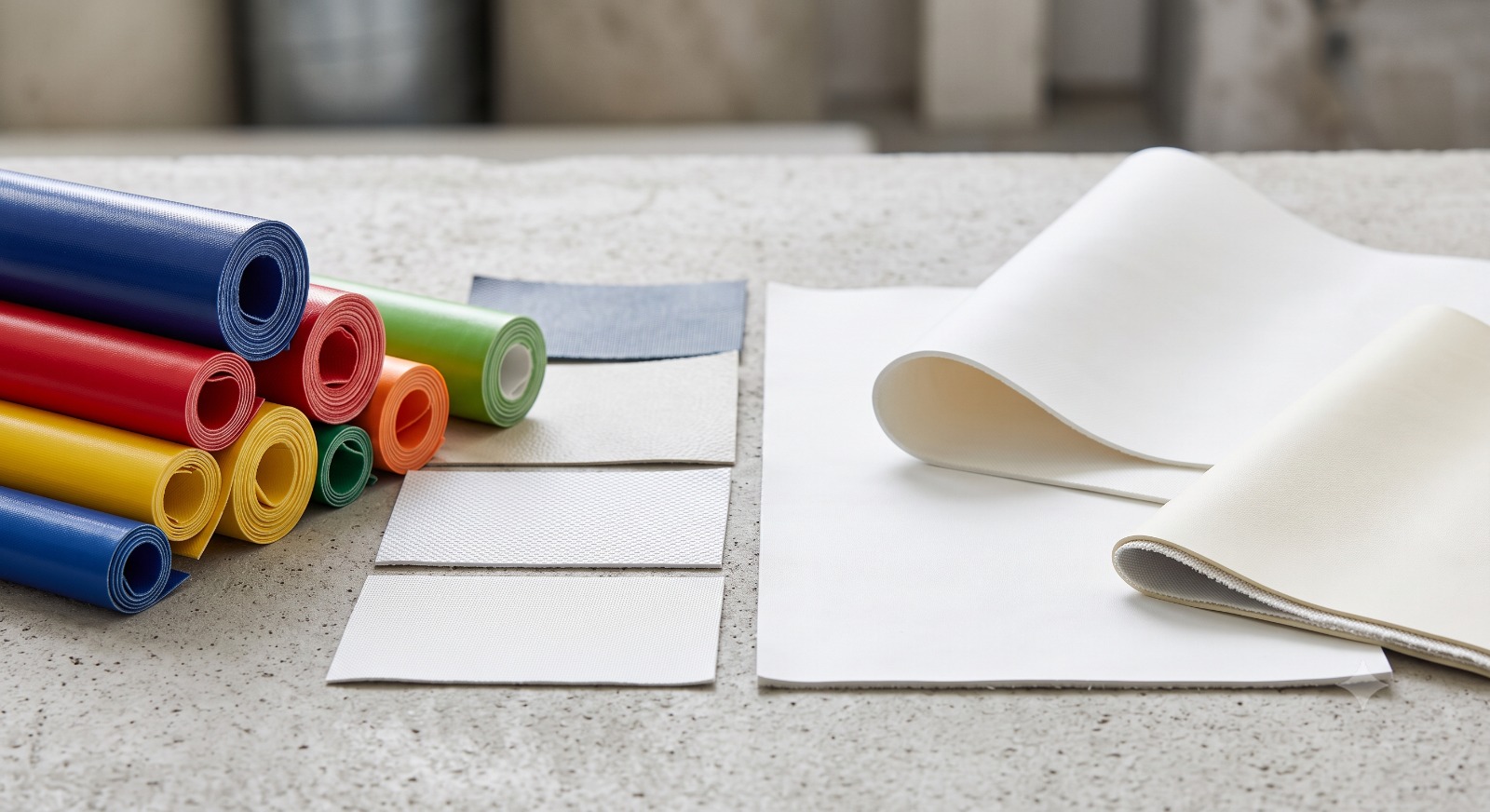
PVC and PVDF Coated Fabrics: Composition, Process, Properties
PVC and PVDF Coated Fabrics: Composition, Process, Properties
Understanding PVC PVDF Coated Fabric Properties and Technical Textile Composition
If you work with technical textiles, you already know that not all coated fabrics are made the same way. Two rolls can look almost identical off the shelf, yet perform completely differently once they are out in the field, facing sun, rain, chemicals and constant flexing. The difference usually comes down to one thing: what is happening underneath the surface, in the PVC PVDF coated fabric properties that most buyers never think to ask about.
This blog breaks down how these fabrics are actually built, layer by layer, so manufacturers, dealers and fabricators can make an informed choice before they commit to a raw material.
Get In TouchWhat Is a PVC Coated Fabric, Really?
At its core, a PVC coated fabric is a woven base cloth, usually polyester, that has been laminated or coated with layers of PVC compound. But the finished roll is far more engineered than that simple description suggests.
A few things define its true character:
- The strength of the base fabric, measured through polyester base fabric GSM, which decides tensile strength and tear resistance
- The number of PVC layers applied, since single dip and multi layer coatings behave very differently under stress
- The additives mixed into the PVC compound, such as plasticizers, UV stabilizers and flame retardants
- The final lacquer or top coat, which protects the PVC layer from dirt, abrasion and weathering
None of these elements work alone. It is the combination that decides whether a fabric will last five years or fifteen.
Understanding Technical Textile Composition
When people talk about technical textile composition, they are really talking about a system, not a single material.
The Layer by Layer Structure
A typical coated fabric follows this build:
- Base fabric, usually high tenacity polyester yarn woven into a grid
- Adhesive or tie coat layer, which bonds the base fabric to the PVC
- PVC compound layer, applied through calendering or spread coating
- Top lacquer, often a PVDF lacquer coating, applied as the final protective skin
Each layer has a job. The base fabric carries the load. The PVC layer provides waterproofing, flexibility and body. The lacquer on top is what actually meets the outside world every single day.
How PVC Coated Fabric Manufacturing Works in India
PVC coated fabric manufacturing India has grown into a fairly mature industry, and the process generally follows a few consistent stages across most serious producers:
- Yarn selection and weaving of the polyester base fabric to the required GSM
- Pre treatment of the fabric to improve adhesion before coating
- Calendering, where hot PVC film is pressed onto the fabric under controlled temperature and pressure
- Cooling and curing to stabilize the coating
- Application of a top lacquer for UV, chemical or fire resistance
- Quality checks for thickness, adhesion strength, tensile strength and colour consistency
Because the demand for tarpaulins, truck covers, tensile structures, banners and industrial curtains keeps rising, many Indian manufacturers have invested heavily in calendering lines and lacquer coating setups over the past decade. That has pushed quality up across the board, though the gap between an average fabric and a genuinely engineered one is still wide.
Why PVDF Lacquer Coating Matters So Much
If PVC gives the fabric its body, the lacquer is what gives it its patience. A PVDF lacquer coating is applied as a thin final layer, and it is responsible for:
- Resisting UV degradation so the fabric does not turn brittle or chalky in the sun
- Repelling dirt and dust, which keeps architectural fabrics looking clean for years
- Adding chemical and pollution resistance in industrial environments
- Improving fire retardancy in combination with the PVC compound
- Extending overall service life, sometimes by several years compared to fabric without a lacquer finish
This is the layer that separates a fabric meant for a short term tarpaulin from one meant for a long span tensile roof.
Why Polyester Base Fabric GSM Cannot Be Ignored
A lot of buyers focus only on the PVC coating weight and forget the base cloth underneath. But polyester base fabric GSM is where the real strength story begins.
Here is why it matters:
- Higher GSM generally means higher tensile and tear strength
- The weave density affects how well the PVC bonds to the fabric
- A mismatched base fabric can cause premature delamination, even if the PVC coating itself is good quality
- GSM also affects weight, which matters for structures like tents, awnings and stadium roofs where every kilogram counts
A fabric is only as strong as its weakest layer, and very often that weak layer is an underspecified base cloth hiding behind a decent looking coating.
What Manufacturers and Dealers Should Actually Check
Before stocking or specifying a coated fabric as raw material, it helps to look past the surface finish and ask a few direct questions:
- What is the base fabric GSM and yarn denier
- Is the lacquer PVDF based or a cheaper acrylic alternative
- What is the adhesion strength between the PVC layer and the base fabric
- Has the fabric been tested for UV resistance and cold crack performance
- What is the flame retardancy rating, especially for indoor or public use applications
These questions take five minutes to ask but can save years of warranty headaches later.
A Quick Word on Sourcing in India
For anyone searching for Fabrics Manufacturers and Supplier in India , the market is crowded, but genuine technical capability is not as common as the number of listings suggests. It pays to visit the calendering setup in person if possible, check batch consistency across rolls, and ask for test reports rather than just marketing brochures.
Conclusion
PVC and PVDF coated fabrics are not just plastic sheets glued to cloth. They are engineered systems where the base fabric, the coating and the lacquer all have to work together for the material to perform in real conditions, whether that is a truck cover on a highway or a tensile roof over a stadium. Understanding this composition helps manufacturers, dealers and fabricators make better sourcing decisions instead of choosing purely on price.
At Lucky Tech Membranes, this is exactly the kind of technical depth we build into every roll we produce. Our focus on Premium PVC Fabric & PVDF Coated Fabrics in India comes from paying close attention to base fabric quality, coating consistency and lacquer performance, so that what leaves our facility holds up long after it reaches the field.
Frequently Asked Questions
What is the main difference between PVC coated fabric and PVDF coated fabric?
PVC coated fabric refers to the base polyester cloth coated with a PVC compound, while PVDF usually refers to the top lacquer layer applied over the PVC for added UV, dirt and chemical resistance. Most high performance fabrics actually combine both.
Does a higher polyester base fabric GSM always mean a better fabric?
Not always. Higher GSM improves strength, but the coating quality, adhesion and lacquer finish matter just as much. A high GSM fabric with a poor coating can still fail early.
How long does a good PVDF lacquer coated fabric usually last?
With proper manufacturing and a genuine PVDF top coat, these fabrics can perform well for many years outdoors, though actual life depends on climate, usage and maintenance.
Is PVC coated fabric manufacturing in India suitable for export quality projects?
Yes, several manufacturers in India now operate modern calendering and lacquer coating lines that meet international standards, though it is important to check test certifications before finalizing a supplier.
What should a dealer check before stocking a new coated fabric?
A dealer should check base fabric GSM, coating adhesion strength, lacquer type, UV and fire test reports, and ask for sample rolls to verify consistency across batches before committing to bulk stock.
Get Your Free Quote Today!