
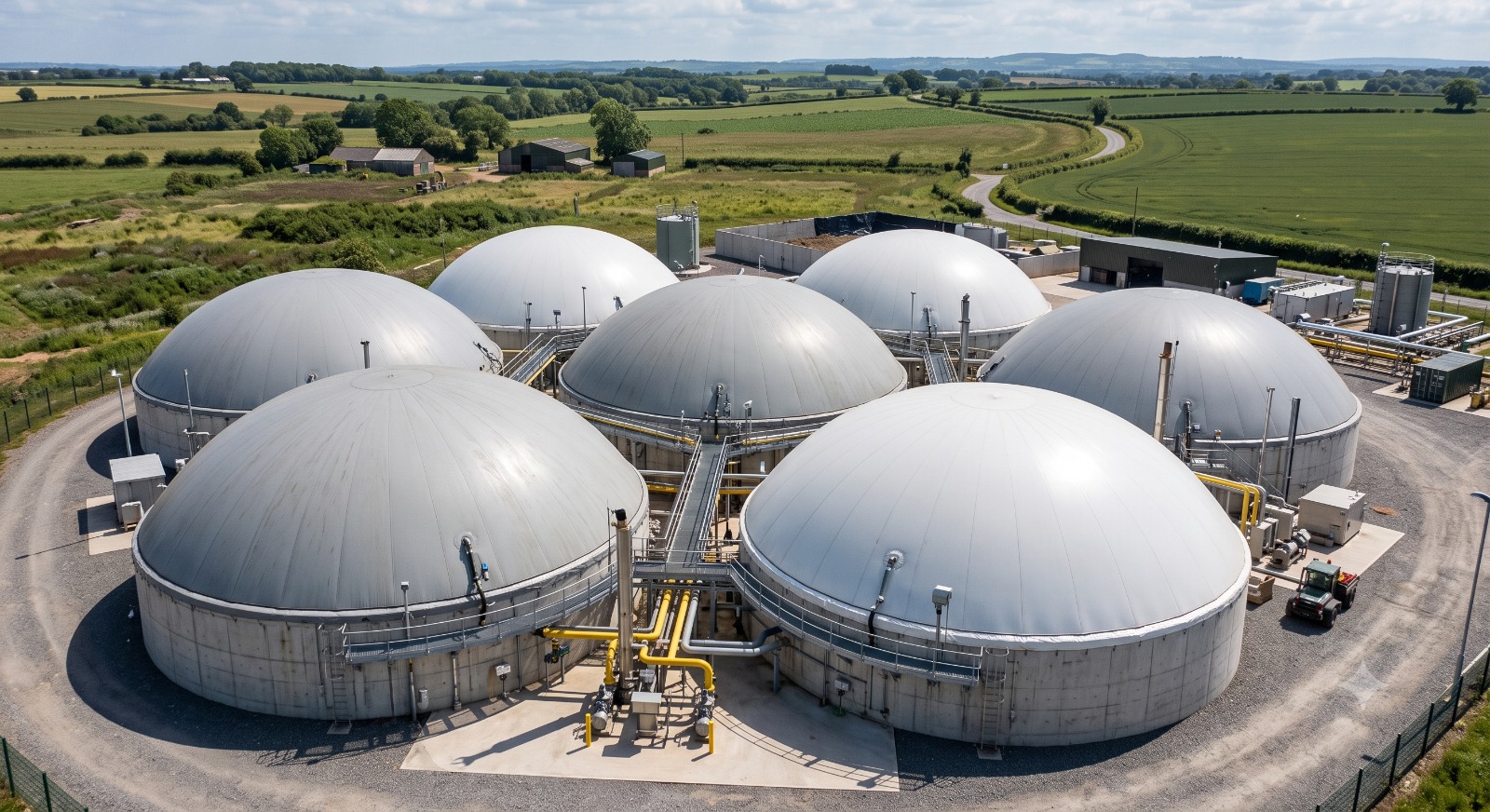
How PVC/PVDF Coated Fabric Enables Long-Lasting Biogas Dome Covers
How PVC/PVDF Coated Fabric Enables Long-Lasting Biogas Dome Covers
A biogas dome lives a hard life. It sits outdoors around the clock, holds pressurised gas, flexes with every fill-and-release cycle, and takes on sun, rain, and slurry fumes without a break. The fabric wrapped around that dome is what decides whether the system stays trouble-free or turns into a recurring maintenance job. That's why PVC and PVDF coated fabric has become the material of choice for biogas dome covers, and why more plant owners now specifically look for a coated fabric for biogas dome covers instead of settling for generic tarpaulin.
Get In TouchWhy the Fabric Matters More Than People Expect
It's easy to assume a biogas cover is "just a big bag." In reality, the fabric is doing several jobs at once: holding gas without leaking, resisting UV breakdown, staying flexible through thousands of expansion cycles, and shrugging off the corrosive, moisture-heavy environment around a digester. A weak fabric shows its limits fast — cracking, stiffening, or losing its seal within a season. A properly engineered coated fabric is built to handle all of this together, which is the whole point of choosing the right base material in the first place.
What Makes PVC and PVDF Coated Fabric Work So Well
Both PVC and PVDF coated fabrics are built the same basic way: a strong woven polyester base, coated on both sides to create a continuous, gas tight fabric layer. That coating is what gives biogas covers their key properties:
- Airtight by design – the coating seals the weave completely, so pressurised gas doesn't escape through the fabric itself, which is the core requirement for any dependable biogas plant material.
- UV and weather resistant – outdoor domes face constant sun exposure, and the coated surface is formulated to resist UV degradation rather than turning brittle.
- Chemical and moisture resistant – slurry, condensation, and ambient moisture don't compromise the coating the way they would an uncoated fabric.
- Flexible under repeated movement – a dome expands and contracts as gas volume changes, and the coated fabric is engineered to flex through that cycle without cracking at the seams.
- PVDF for extra surface protection – where a project needs added resistance to weathering and surface soiling, a PVDF top layer gives the fabric an additional edge over standard PVC alone.
Put together, this is what turns a length of coated textile into a genuinely durable dome fabric rather than a short-term fix.
From Fabric to Finished Dome Cover
The performance of a biogas cover isn't only about the base material — it's also about how that fabric is engineered into the finished panel. Individual widths of coated fabric are welded into large seamless panels using high-frequency or hot-air welding, so the joins are as gas tight as the fabric itself. At LUCKY-TECH Membranes, this fabrication is carried out in-house, using PVC and PVDF coated textiles engineered by SIOEN Industries, Belgium, and cut and welded to the exact dimensions each biogas project needs. That combination of a proven coated fabric base and precise, in-house fabrication is what gives biogas dome covers their long service life in the field.
What to Look for in a Biogas Cover Fabric Supplier
If you're sourcing fabric for a biogas project, a few things are worth checking before you commit. As Fabrics Manufacturers and Supplier, LUCKY-TECH Membranes is regularly approached by clients looking for reliable Biogas Dome fabric Manufacturers, and the same checklist applies whoever you choose to work with:
- Confirm the coating type (PVC or PVDF) and make sure it matches your site's exposure conditions.
- Ask how the panels are welded together, since seam quality affects gas retention as much as the fabric itself.
- Look for a supplier who can fabricate to your specific dome dimensions rather than offering only standard sizes.
- Check that the supplier can produce reliably at scale, so large digester projects aren't held up by fabric availability.
Working with an established biogas cover fabric supplier means fewer surprises during installation and a cover that performs consistently once it's in service.
Where This Fabric Is Used
PVC and PVDF coated fabric isn't limited to one type of biogas structure. The same material properties — gas tightness, flexibility, and weather resistance — make it suitable across:
- Floating and fixed biogas dome covers
- Anaerobic digester gas holders
- Biogas plant gas storage bags and balloons
- Larger-scale municipal and industrial biogas installations
Wherever gas needs to be held safely and reliably outdoors, the same coated fabric fundamentals apply.
FAQs
What's the difference between PVC and PVDF coated fabric for biogas covers?
PVC coated fabric offers strong all-round gas tightness and flexibility at a lower cost, while PVDF adds an extra top layer of weathering and soiling resistance for projects that need added surface protection.
Is the fabric fully gas tight?
Yes. The coating seals the woven base completely, and welded seams keep the joins just as airtight as the fabric itself.
Can the fabric be made to custom dome sizes?
Yes. Coated fabric panels are welded and fabricated to the exact dimensions of each biogas dome, rather than supplied only in fixed sizes.
Does the fabric need special maintenance?
No special maintenance is required beyond routine visual checks; the coating is designed to handle outdoor exposure and slurry-side conditions without added upkeep.
Get Your Free Quote Today!