PVC and PVDF Coated Fabric: A Buyer's Guide to Choosing Right
PVC and PVDF Coated Fabric: A Buyer's Guide to Choosing Right
PVC Coated Fabric vs PVDF Coated Fabric: How the Two Layers Work Together
If you've spent any time sourcing technical textile fabric for a project, you've probably run into two terms that get thrown around a lot: PVC coated fabric and PVDF coated fabric. On paper they sound like competing products. In practice, they're not rivals at all — they're two layers of the same membrane, built to work together.
Understanding how they fit together isn't just a technical detail. It changes how long your fabric lasts, how much maintenance it needs, and ultimately what you should be paying for it. This guide walks through what each material actually does, how they combine, and how to pick the right option for your budget and application.
Get In TouchWhat Is PVC Coated Fabric?
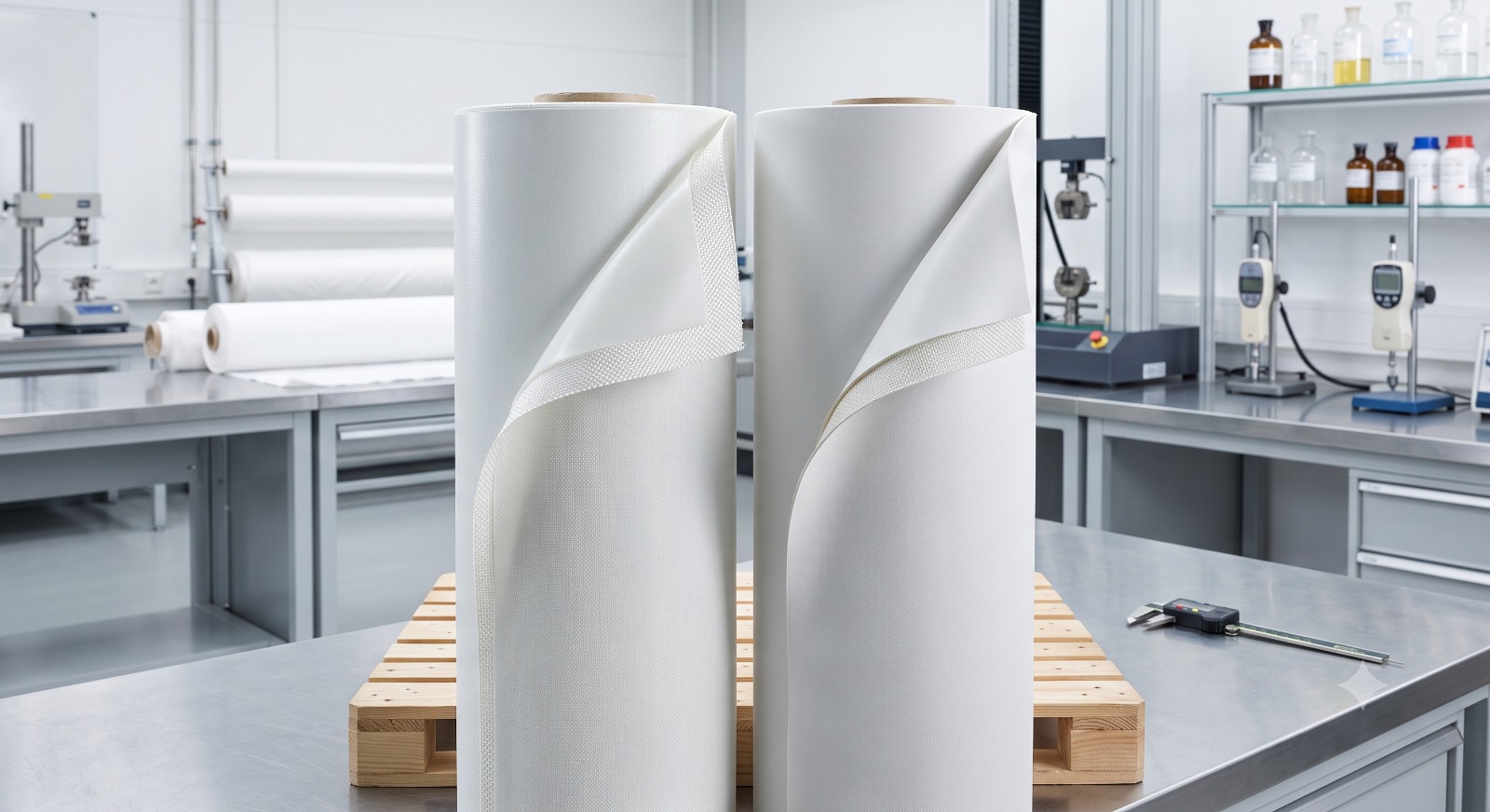
PVC (polyvinyl chloride) coated fabric is the workhorse layer of most coated fabric structures. A woven polyester or nylon base fabric gets coated on both sides with a PVC compound, which gives the material its strength, flexibility, and waterproofing.
This is what does the heavy lifting structurally. It's what allows the fabric to be welded into large panels, hold tension in a membrane structure, resist tearing, and stay flexible in a wide range of temperatures. On its own, PVC-coated fabric is a durable, cost-effective material used across tents, tarpaulins, truck covers, and biogas covers.
But PVC has one well-known limitation: UV exposure. Left unprotected, sunlight gradually breaks down the surface of the PVC layer. Over years of outdoor use, this shows up as fading, chalking, and a slow loss of surface strength.
What Is a PVDF Topcoat, and Why Does It Matter?
This is where PVDF (polyvinylidene fluoride) comes in — not as a replacement for PVC, but as a protective finish applied on top of it.
A PVDF lacquer topcoat is a thin, high-performance layer applied over the base PVC coating. Think of it less like a second fabric and more like a shield. It doesn't add structural strength the way PVC does — that's not its job. Its job is protection.
The main PVDF topcoat benefits include:
- Superior UV resistance — PVDF is far more resistant to ultraviolet degradation than raw PVC, which significantly slows down fading and surface breakdown
- Better dirt and stain resistance — the smoother, denser surface sheds dust, grime, and pollutants more easily, so structures stay cleaner for longer with less washing
- Improved chemical resistance — PVDF holds up better against pollution, mild acids, and industrial fumes, which matters for fabric used near roads or industrial zones
- Longer color retention — coated panels keep their original shade for a much longer stretch instead of yellowing or dulling within a couple of seasons
- Extended service life — by slowing down surface wear, a PVDF topcoat can meaningfully stretch the usable lifespan of the whole membrane
How PVC and PVDF Work Together in One Membrane
Here's the part that trips people up: PVC and PVDF aren't sold as two separate product lines you choose between. In a proper PVC & PVDF Coated Fabrics membrane, they're layered — PVC underneath doing the structural work, PVDF on top doing the protective work.
Picture it in three parts:
- Base fabric — the woven polyester scrim that gives the material its tensile strength
- PVC coating — applied on both sides, this is what makes the fabric waterproof, weldable, and flexible
- PVDF topcoat — a final finishing lacquer applied over the PVC, sealing and protecting the surface from the elements
Remove the PVDF layer and you still have a perfectly usable coated fabric — it just won't hold up as well under years of direct sun and weather. Remove the PVC layer and there's nothing left to protect; PVDF alone isn't a structural coating. Each layer is doing a job the other one can't.
This is why, when people talk about coated fabric durability, the honest answer is: it depends on which combination you're buying. A PVC-only fabric and a PVC-with-PVDF-topcoat fabric can look almost identical off the roll, but they age very differently once installed outdoors.
A Buyer's Guide: Which One Fits Your Project?
Not every application needs the extra protection of a PVDF topcoat, and that's fine — it's a genuine budget decision, not just an upsell. Here's a practical way to think about it.
Choose standard PVC coated fabric when:
- The structure is temporary, seasonal, or short-term (event tents, temporary covers)
- The fabric will be indoors or shaded most of the time
- Budget is the primary constraint and the project has a shorter expected lifespan
- The application doesn't demand a pristine, long-term appearance
Choose PVC fabric with a PVDF topcoat when:
- The structure is permanent or semi-permanent and stays outdoors year-round
- It's installed in a high-UV, high-pollution, or coastal environment
- Appearance matters over time — visible facades, architectural structures, branded covers
- You want to minimize maintenance and cleaning cycles over the fabric's lifetime
- Long-term cost per year of service matters more than the lowest upfront price
A simple way to frame it: PVC decides how strong and flexible the fabric is. PVDF decides how well that strength survives contact with the outside world for years on end.
Where This Combination Is Used
Across the different membrane fabric types in use today, PVC-PVDF combinations show up in:
- Biogas and digester covers exposed to sun and outdoor conditions for years
- Tensile architecture and canopy structures
- Industrial tank and roof covers
- Truck tarpaulins and heavy-duty covers
- Awnings, facades, and long-life outdoor structures
If you're comparing quotes from different Fabrics Manufacturers and Supplier in India, it's worth asking specifically whether the fabric on offer is plain PVC or PVC with a PVDF topcoat — the difference isn't always obvious from a spec sheet alone, but it shows up clearly in how the material performs five or ten years down the line.
Why Buyers Choose Lucky-Tech Membranes
This is exactly the kind of decision that depends on who's manufacturing your fabric, not just which coating you pick off a spec sheet. Lucky-Tech Membranes, based in Mumbai, is the exclusive Indian channel partner for Belgium-based SIOEN Industries, bringing European-grade PVC & PVDF Coated Fabrics to the Indian market with the kind of quality control that's hard to find locally.
A few things set them apart when you're sourcing PVC Fabric & PVDF Coated Fabrics in India:
- Decades of experience as one of the established Fabrics Manufacturers and Supplier in India, with over 2,200 satisfied clients and 45,000+ projects completed across the country
- A team of 300+ experts in advanced technical textiles, covering everything from initial design to on-site installation
- Every membrane is designed and engineered to individual client needs, rather than sold off a fixed catalogue
- A product range that goes well beyond a single application — tensile membrane structures, biogas domes, truck covers and tarpaulins, awnings and canopies, pond liners, flexi tanks, aluminium hangers and tent structures, and more, all built on the same PVC/PVDF technology
- 45+ industry awards and a project list spanning universities, airports, botanical gardens, and large-scale commercial installations across India and internationally
Whether you're a fabric dealer, a project contractor, or an end-user comparing suppliers, Lucky-Tech's combination of a global technology partner and local manufacturing means you're not choosing between quality and turnaround time — you get both. You can view their full product range and request a quote directly on luckytech.in.
FAQ
Is PVDF coated fabric better than PVC coated fabric?
Not exactly — they're not competing products. PVDF is a protective topcoat applied over PVC, not a standalone alternative. A PVC-PVDF combination is generally more durable outdoors than PVC alone, but it also costs more, so "better" depends on where and how long the fabric will be used.
How long does PVC coated fabric last outdoors?
Plain PVC coated fabric typically holds up well for several years, but UV exposure gradually fades and weakens the surface over time. Adding a PVDF topcoat slows this degradation considerably and extends the fabric's usable outdoor life.
Does a PVDF topcoat make the fabric heavier or stiffer?
No. A PVDF topcoat is a thin lacquer layer, not an additional structural coating. It doesn't meaningfully change the weight or flexibility of the fabric — it only changes how the surface holds up over time.
Can PVC coated fabric be recoated with PVDF later?
In most cases, the PVDF topcoat needs to be applied during manufacturing for proper adhesion and performance. It's not typically something added after the fact in the field, which is why it's worth deciding on the coating type at the sourcing stage.
Is PVC-PVDF coated fabric suitable for coastal or industrial areas?
Yes, and this is actually one of the settings where a PVDF topcoat earns its cost. Its resistance to chemical exposure, pollution, and salt air makes it a better fit than plain PVC for coastal or industrial installations.
Who supplies genuine European-grade PVC/PVDF coated fabric in India?
Lucky-Tech Membranes, based in Mumbai, is the exclusive Indian channel partner for Belgium-based SIOEN Industries, giving Indian buyers access to European-standard PVC and PVDF coated fabrics along with local manufacturing, custom engineering, and installation support.
Get Your Free Quote Today!