PVC Coated Fabric vs Other Industrial Fabrics: Strength, Durability & Cost Comparison
PVC Coated Fabric vs Other Industrial Fabrics: Strength, Durability & Cost Comparison
Industrial applications across agriculture, logistics, renewable energy, and architecture depend heavily on high-performance technical textiles. Among them, PVC coated fabric has become one of the most versatile and in-demand materials due to its strength, flexibility, and long-term weather resistance. Whether it’s used as biogas balloon fabric,
tensile membranes, truck covers, or industrial enclosures, PVC coated fabrics deliver reliable performance at a competitive cost.
In this article, we compare PVC coated fabric with other commonly used industrial fabrics in India to understand differences in durability, strength, usability, and overall value. This comparison is especially useful for procurement managers, architects, contractors, and renewable energy consultants who are trying to select the right material for their projects.
Table Of Contents:
- What is PVC Coated Fabric?
- Comparison With Other Industrial Fabrics
- PVC Coated Fabric vs Canvas Fabric
- PVC Coated Fabric vs Polyethylene (PE) Fabrics
- PVC Coated Fabric vs Rubber-Coated Fabrics
- Why PVC Coated Fabric Offers Better Strength & Durability
- Cost Efficiency & Market Value
- Why Choose LUCKY-TECH Membranes?
- Final Thoughts
What is PVC Coated Fabric?
PVC coated fabric is a polyester textile that is coated with Polyvinyl Chloride (PVC) to enhance mechanical strength and environmental resistance. This coating gives the fabric a smooth surface, improved waterproofing, and resistance to chemicals, UV rays, and fungus making it suitable for outdoor industrial applications.
Common uses of PVC coated fabric include:
✔ Biogas balloon and biogas holder systems
✔ Tensile fabric roofing and tensile membranes
✔ Truck tarpaulins and truck side covers
✔ Industrial partitions and temporary structures
✔ Pond liners, shade nets, and agricultural enclosures
✔ Inflatable domes, tanks, and protective covers
Because PVC-coated textiles are flexible yet strong, they are widely preferred for both architectural and industrial environments.
Comparison With Other Industrial Fabrics
There are several alternative fabrics used in the industrial sector, including canvas, PE (polyethylene), uncoated polyester, and rubber-coated fabrics. Let’s examine how they compare to PVC coated fabrics.
PVC Coated Fabric vs Canvas Fabric
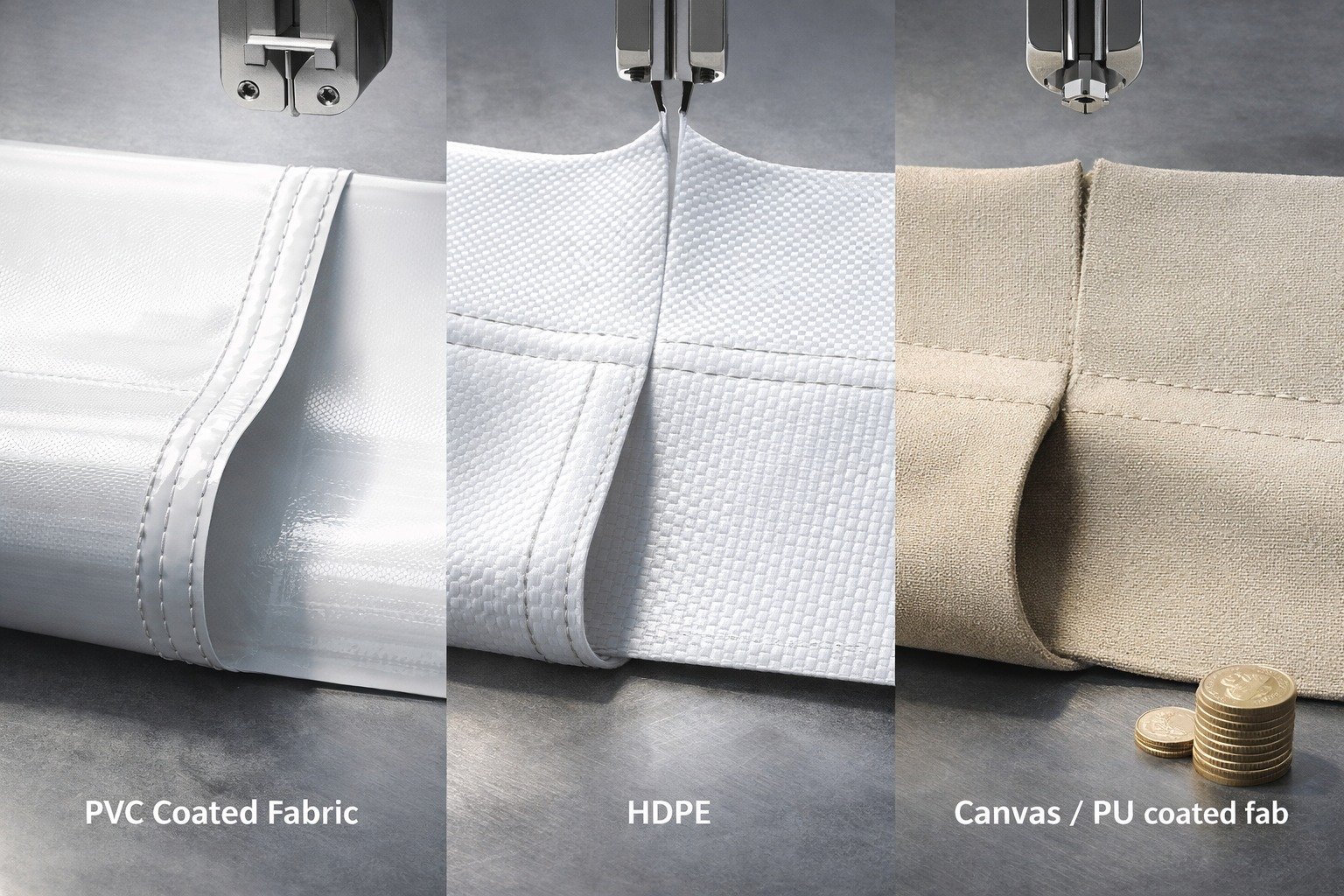
Canvas has been used for decades for tarpaulins, tents, and coverings. While canvas is breathable and affordable, it has major drawbacks in environments requiring moisture resistance or long-term outdoor exposure.
Canvas absorbs water, which leads to fungal growth, discoloration, and faster breakdown. It does not perform well in environments involving chemicals, gases, or continuous UV exposure. For industries like biogas, canvas is not suitable because it cannot hold gas pressure and degrades quickly.
PVC coated fabrics, on the other hand, are 100% waterproof, resistant to UV rays, and easy to clean. They retain shape, strength, and safety properties for years. This makes PVC a far superior choice for biogas balloons, truck covers, tensile roofing, and industrial protection.
PVC Coated Fabric vs Polyethylene (PE) Fabrics
PE tarpaulins are widely used in the low-cost segment. They are lightweight and inexpensive, which makes them popular for basic temporary covering and agricultural uses. However, PE fabrics tear easily under mechanical stress and lack the structural strength needed for heavy-duty applications.
PE fabrics also deteriorate faster under sunlight and typically last much shorter outdoors compared to PVC coated membranes. In contrast, PVC coated fabrics offer much higher tensile and tear strength, making them the preferred choice for truck covers, logistics, and architectural tensile membranes.
PVC Coated Fabric vs Polyester (Uncoated)
Uncoated polyester does not offer waterproofing, UV protection, gas sealing, or chemical resistance. In industrial environments, especially where weather exposure is continuous, uncoated polyester fails to retain its strength and often becomes brittle over time.
PVC coated polyester solves all these limitations by offering:
✔ Full waterproof surface
✔ Excellent weldability for airtight seams
✔ Outdoor UV resistance
✔ Stable mechanical performance
This is why PVC coated fabric is used for biogas balloon fabric, industrial curtains, tensile architecture, and transportation coverings, while plain polyester is rarely chosen for long-term outdoor performance.
PVC Coated Fabric vs Rubber-Coated Fabrics
Rubber-coated fabrics are extremely flexible and have strong gas barrier properties. However, they are much heavier, more expensive, and harder to install. Rubber coatings also make the material less suitable for tensile architecture due to its elasticity and weight.
PVC coated fabric offers the best balance between cost, durability, and workability. Its weldability using heat sealing makes it ideal for airtight biogas storage systems, inflatable domes, and flexible tank applications. For most industrial and architectural markets, PVC coated textiles provide superior value.
Why PVC Coated Fabric Offers Better Strength & Durability
PVC coated materials provide a unique combination of mechanical strength, light weight, and long service life. They are engineered to withstand:
✔ UV exposure
✔ Rain & moisture
✔ Temperature fluctuations
✔ Gas pressure (in biogas balloons)
✔ Flexing & mechanical wear
✔ Fungus and bacteria
These properties allow PVC textiles to function in demanding environments where other fabrics break down too quickly or require frequent replacements.
Cost Efficiency & Market Value
When comparing performance versus cost, PVC coated fabrics clearly stand out. Although they may cost slightly more than PE tarpaulins, the longer lifespan and reduced replacement cycles make PVC the economical choice for industries such as:
✔ Biogas energy
✔ Architecture & tensile structures
✔ Transportation & logistics
✔ Agriculture & aquaculture
This balance of performance and affordability is a major reason PVC is the leading choice worldwide.
Why Choose LUCKY-TECH Membranes?
LUCKY-TECH Membranes manufactures premium PVC coated fabrics in India and is the exclusive partner of Sioen Industries Belgium, a global leader in coated technical textiles.
Our PVC fabrics are engineered for:
✔ High tensile strength
✔ Superior UV & weather resistance
✔ Anti-fungal surface protection
✔ Long-term outdoor durability
✔ Gas sealing for biogas balloon fabric
✔ Smooth and printable membrane surfaces
Whether you need tensile fabric, truck tarpaulins, or biogas dome membranes, LUCKY-TECH Membranes delivers certified and internationally backed performance.
Final Thoughts
PVC coated fabrics outperform canvas, PE, polyester, and rubber-coated fabrics in terms of strength, durability, versatility, and long-term cost efficiency. For industries seeking reliable and long-lasting technical textile solutions, PVC remains the most balanced and practical choice.
Contact LUCKY-TECH Membranes Today
📞 Call: +91-86553 57854 / +91-9820325057
🌐 Website: https://luckytech.in/
📧 Email: info@luckytech.in
Get Your Free Quote Today!