
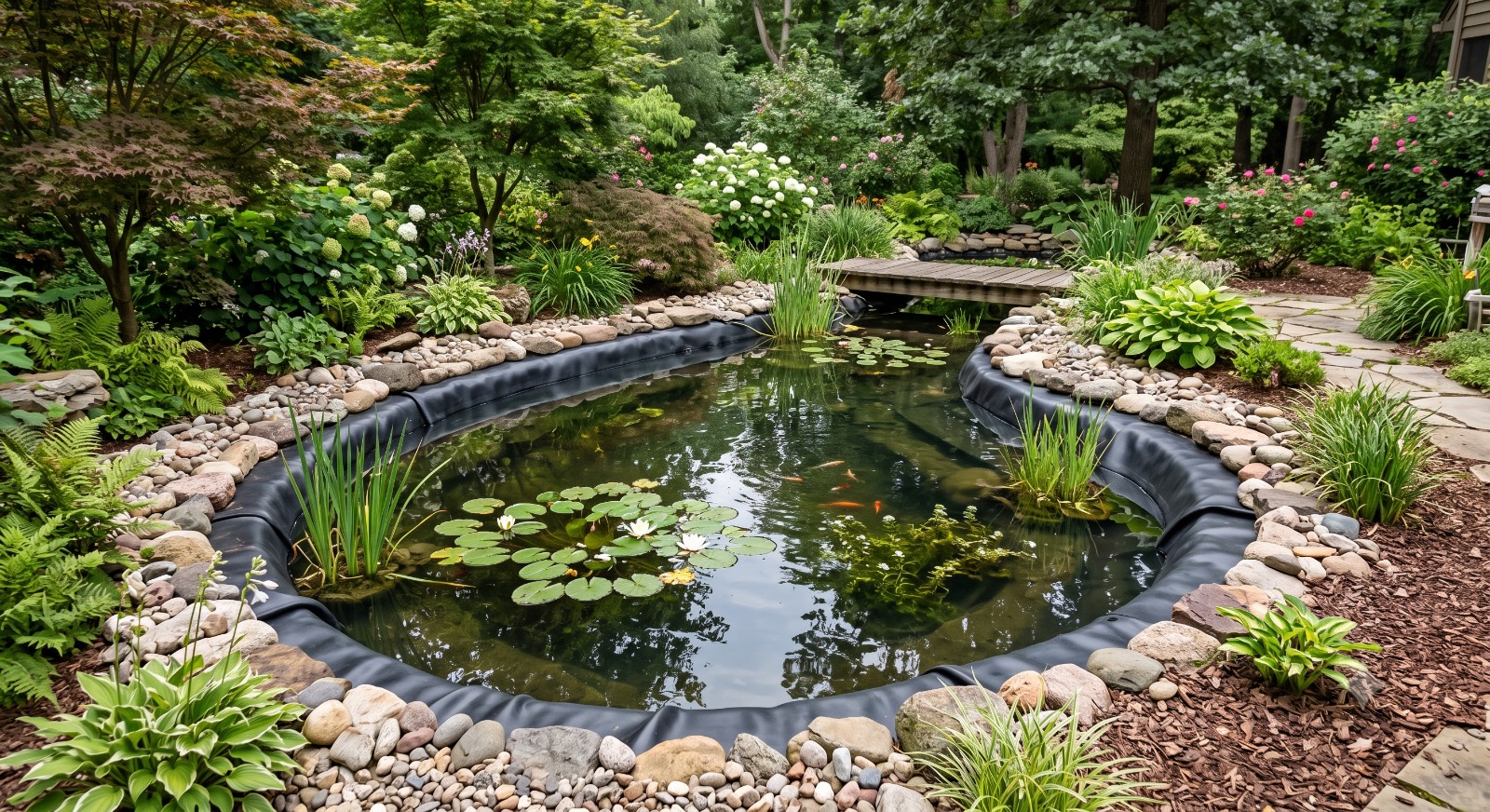
Choosing the Right Fabric Thickness for Long-Term Pond Liner Durability
Choosing the Right Fabric Thickness for Long-Term Pond Liner Durability
Most pond liner failures don't happen because the material was "bad." They happen because someone picked a thickness that was fine for a display pond and used it for something that saw real pressure — heavier water loads, sharp substrate, constant sun, or years of use nobody planned for. Thickness (measured in GSM for coated technical fabrics) is the single biggest lever you have over how long a liner actually lasts, and it's the one spec that gets the least attention until something tears.
If you're specifying or sourcing a pond liner and want it to still be watertight long after installation, not just for the first season or two, here's what actually matters.
Get In TouchWhat Fabric Thickness Really Means for Pond Liners
Coated fabrics used for pond liners aren't a single sheet of plastic they're built in layers: a woven polyester or nylon base (the scrim, which gives tensile strength) sandwiched or coated with PVC or PVDF resin (which gives waterproofing, UV resistance, and chemical resistance). When people talk about "thickness," they're usually referring to GSM grams per square metre — which reflects the total weight of the base fabric plus coating per unit area.
A higher GSM generally means:
- More coating material protecting the scrim from abrasion and UV
- Better puncture and tear resistance against roots, stones, and debris
- More weld strength at seams, since there's more material to bond
- Greater resistance to stretching under sustained water pressure
Lower GSM fabric isn't automatically "poor quality" it's simply built for lighter-duty applications where flexibility and cost matter more than raw toughness. The mistake is using a light-duty fabric where a heavy-duty one was needed, or the reverse: over-speccing a small ornamental pond with fabric so stiff it's a pain to install.
Why Getting This Wrong Costs More Than the Fabric
A pond liner that's too thin for its application usually doesn't fail all at once. It fails slowly a pinhole near a root, a stress crack at a fold, a seam that starts weeping after a few seasons of UV exposure. By the time it's visible, you're draining the pond, finding the leak, and either patching or replacing the whole liner. For aquaculture ponds, irrigation reservoirs, or commercial water features, that downtime and water loss adds up fast, and it's almost always cheaper to have specified the right GSM upfront.
Factors That Should Drive Your Thickness Decision
Pond size and depth Larger and deeper ponds put more hydrostatic pressure on the liner and its seams. A shallow garden pond can work well with a lighter fabric; a deep irrigation or aquaculture pond needs a heavier GSM to handle the load without stretching thin at pressure points.
Substrate conditions If the base has rocks, roots, or uneven ground, thickness becomes your main defence against punctures from below. Smooth, well-prepared subgrade is more forgiving; rough or reclaimed land calls for a heavier fabric even if the pond itself is modest in size.
Exposure to sunlight Fully exposed liners age faster from UV than liners with a layer of water or soil covering them most of the time. If your pond runs low in dry seasons and exposes lining to direct sun for extended periods, a thicker, well-coated fabric with strong UV stabilisation holds colour and flexibility far longer than a thin one.
Water chemistry and use case Aquaculture ponds, effluent lagoons, and chemical containment ponds all put different demands on a liner than a decorative koi pond does. Fabric coated for chemical resistance and biological stability matters as much as raw thickness here.
Wildlife and biological pressure Ponds that see foot traffic from livestock, wildlife, or heavy fish activity benefit from a tougher, higher-GSM fabric simply because there's more physical contact over the liner's life.
Fabrication and weld quality Thickness only pays off if the seams match it. A liner welded with proper overlap and consistent heat/pressure settings for that specific GSM will hold up far longer than one where the seam was an afterthought.
A Practical Way to Think About GSM Selection
Rather than chasing one "correct" number, it helps to think in terms of duty level:
- Light duty — small ornamental or garden ponds, short-term or temporary water features, smooth prepared subgrade
- Medium duty — mid-sized ponds, farm ponds, decorative water bodies with moderate foot or wildlife traffic
- Heavy duty — aquaculture ponds, irrigation reservoirs, large water storage, ponds on rough or reclaimed subgrade, and anywhere long-term reliability with minimal maintenance is the priority
The right GSM selection for a pond liner comes down to matching the fabric's build to the harshest condition it will realistically face over its lifetime not the average condition, the worst one. A pond that's usually calm but occasionally floods hard still needs to survive that one event.
Getting Fabric Thickness Right From the Start
Working with a pond liner fabric manufacturer that actually asks about your site depth, substrate, sun exposure, water use before recommending a GSM is worth more than picking a number off a spec sheet. LUCKY-TECH Membranes, among the established PVC & PVDF Coated Fabric Manufacturers serving pond, containment, and waterproofing projects, supplies and fabricates coated fabric to custom specifications for pond liners and similar applications, sized and welded to the project rather than sold off a generic roll. AsAs Fabrics Manufacturers and Supplier for this kind of application, that site-first approach is what separates "durable lining material" on paper from a liner that keeps holding up in the field. Fabrics Manufacturers and Supplier for this kind of application, that site-first approach is what separates "durable lining material" on paper from a liner that keeps holding up in the field.
Frequently Asked Questions
What GSM is best for a pond liner?
It depends on pond size, substrate, and exposure — there's no single best GSM. Small, sheltered ponds do fine with lighter fabric, while deep, exposed, or heavily used ponds need a higher-GSM coated fabric for long-term durability.
Does a thicker pond liner always last longer?
Generally yes for puncture and tear resistance, but thickness alone doesn't guarantee performance. Coating quality, UV stabilisation, and seam welding all affect how long a liner actually lasts.
Can I use a lighter fabric under a protective underlayment?
A geotextile underlayment reduces puncture risk from below and can let you use a somewhat lighter liner fabric safely, but it doesn't replace the need for adequate GSM against pressure, UV, and seam stress from above.
How long should a well-specified pond liner last?
With the right fabric thickness for the application and properly welded seams, coated fabric pond liners are built to perform reliably over the long term, though the exact lifespan depends on exposure conditions and maintenance.
Is PVC or PVDF coated fabric better for pond liners?
Both are proven waterproofing fabrics with long service records; the right choice depends on the specific exposure, chemical, and budget requirements of your project rather than one being universally superior.
Get Your Free Quote Today!