
Pond Liner Fabric Guide: Preventing Seepage in Agricultural & Industrial Ponds
Pond Liner Fabric Guide: Preventing Seepage in Agricultural & Industrial Ponds
If you've ever walked past a farm pond that's lost water for no obvious reason, you already know the problem isn't always what's above the surface. It's what's underneath. Seepage is quiet. It doesn't announce itself with a leak you can point to it just shows up as a lower waterline, a soggier patch of ground nearby, and a slow, creeping loss that adds up over time.
For anyone managing agricultural ponds, effluent treatment ponds, fish farms, or industrial storage lagoons, this is more than a nuisance. Water is the whole point of digging the pond in the first place. Lose it to the soil, and you're paying for it twice once to fill the pond, and again in whatever crop, livestock, or process depended on it.
This is where pond liner fabric earns its keep.
Get In TouchWhy Soil Alone Doesn't Cut It
Most native soils, even clay-heavy ones, aren't built to hold water indefinitely. Clay can crack when it dries out. Sandy or loamy soil barely slows water down at all. Add in burrowing animals, root systems, and seasonal freeze-thaw cycles, and you've got a pond bed that's constantly working against you.
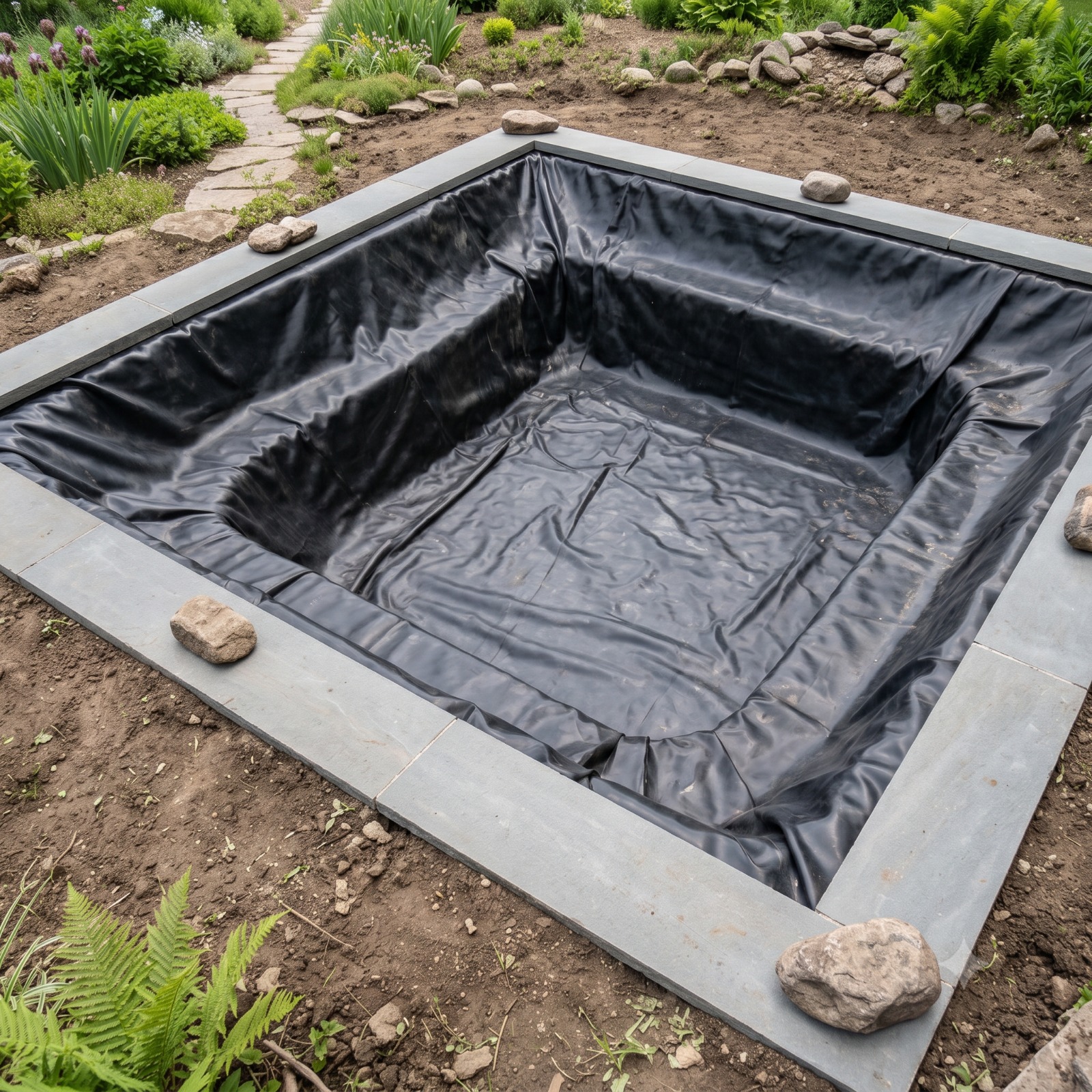
A properly installed liner interrupts that process. It gives the pond a continuous, impermeable barrier between the water and the ground, so seepage isn't something you're fighting every season — it's a problem that's solved once, at installation.
What Actually Makes a Good Pond Liner
Not all liner fabric is created equal, and this is usually where people get caught out. A liner that looks fine on a spec sheet can still fail in the field if a few basics aren't right.
- Puncture and tear resistance. Pond beds are rarely perfectly smooth. Roots, stones, and debris are common, and a liner has to handle that contact without weakening over time.
- UV stability. Exposed liner edges and shallow-water sections sit in direct sun for long stretches. A fabric that degrades under UV exposure will get brittle and crack long before the pond's working life is over.
- Chemical resistance. This matters most for industrial and effluent ponds, where the liquid stored isn't just water — it may carry salts, effluents, or mild chemical loads that a lesser fabric simply can't take.
- Seam strength. A liner is only as good as its weakest seam. Poorly welded joints are the single most common point of failure in liner installations, regardless of how strong the base fabric is.
- Flexibility across temperature swings. Fabric that stiffens in cold or softens too much in heat will stress at the folds and seams long before the rest of the material shows wear.
This is exactly why PVC and PVDF coated fabrics have become the standard choice for serious liner applications. Done right, they combine flexibility with long-term durability in a way that plain sheeting or lower-grade materials can't match.
Where Pond Liner Fabric Is Used
Pond liner fabric shows up in far more places than people expect once they start looking for it. Common applications include:
- Agricultural irrigation ponds, where stored water needs to stay put through dry spells
- Aquaculture and fish farming ponds, where a clean, chemical-safe surface matters as much as water retention
- Effluent and wastewater treatment ponds, where containment is as much about environmental safety as efficiency
- Industrial storage lagoons, holding process water or by-products that can't be allowed to seep into the ground
- Decorative and landscape ponds, where a liner keeps water levels stable without constant topping up
- Rainwater harvesting ponds, used to capture and store runoff for later use
- Mining and containment ponds, where liners help manage water used in extraction and processing
The common thread across all of these is simple: wherever water needs to stay exactly where it's put, a good liner fabric is doing the quiet work of making that happen.
Advantages of Using Coated Pond Liner Fabric
- Stops seepage at the source. Instead of fighting ongoing water loss through soil, a liner solves the problem once and keeps solving it for the long haul.
- Reduces maintenance and refill costs. Ponds that hold water properly need far less topping up, which matters a great deal for agricultural operations working on tight margins.
- Protects surrounding land. Seepage doesn't just waste water — it can waterlog nearby ground or, in industrial settings, allow contaminants to migrate into soil and groundwater. A proper liner keeps that risk contained.
- Handles a wide range of conditions. Quality coated fabric holds up across temperature swings, UV exposure, and chemical contact, so the same liner performs whether it's an open-air irrigation pond or a covered industrial containment pond.
- Supports cleaner water quality. A smooth, non-porous liner surface resists algae buildup and sediment mixing better than a bare soil or clay base.
- Flexible for different pond shapes and sizes. Coated fabric can be cut and welded to fit irregular pond shapes, sloped banks, and custom depths, rather than forcing a pond design to fit a rigid material.
- Long working life with low upkeep. Once installed correctly, a good liner requires very little attention, which is exactly what most pond owners want from something buried under water and out of sight.
Agricultural Ponds vs. Industrial Ponds: Different Pressures, Same Principle
An irrigation pond and an industrial containment pond aren't dealing with identical stresses, but the underlying requirement is the same: a fabric that holds its integrity for the long term.
Agricultural ponds tend to deal with more biological activity — algae, sediment, occasional livestock access — and benefit from a liner surface that's easy to clean and resistant to microbial buildup. Industrial ponds, on the other hand, often need to handle a wider range of chemical exposure and stricter containment standards, since a breach isn't just a water-loss problem, it's an environmental one.
Either way, the fabric is doing the same job: keeping what's inside the pond, inside the pond.
Where LUCKY-TECH Membranes Fits Into This
This is the space LUCKY-TECH Membranes works in every day — coated fabric built for exactly this kind of long-term, ground-contact use. As Fabrics Manufacturers and Supplier working with PVC and PVDF coated textiles, the fabric itself is the whole focus: getting the coating, the weld strength, and the durability right so the liner performs quietly for years instead of needing attention every season.
If you're comparing options and specifically searching for PVC Pond Liner fabric Manufacturers, the questions worth asking aren't about brand names — they're about fabric weight, coating quality, seam construction, and chemical resistance. Get those right, and the liner stops being something you think about at all.
A Quick Word on Installation Prep
Even the best fabric performs poorly on a bad base. A few things go a long way:
- Clear the pond bed of sharp stones, roots, and debris before laying the liner.
- Use a sand or geotextile underlayment on rocky or uneven ground.
- Allow enough slack at the edges for natural ground settling.
- Anchor edges properly so wind and water movement don't work the liner loose over time.
FAQs
What is pond liner fabric?
A coated fabric layer, usually PVC or PVDF, placed under a pond to stop water from seeping into the ground.
Why do ponds need a liner?
Soil alone can't hold water reliably. A liner stops seepage and keeps the pond at a steady water level.
Is PVC or PVDF better for pond liners?
PVDF handles UV and chemical exposure better. PVC is a solid, cost-effective option for most agricultural ponds.
Can fish live in a fabric-lined pond?
Yes. Coated liners are safe for aquaculture and fish farming when properly installed.
Can a torn pond liner be repaired?
Yes. Small tears can usually be patched without replacing the whole liner.
Does pond liner fabric work for large ponds?
Yes. It can be custom cut and welded for ponds of any size, from small farm ponds to large industrial lagoons.
Who supplies quality PVC pond liner fabric?
LUCKY-TECH Membranes supplies PVC and PVDF coated fabric built for pond liner and containment use.
Get Your Free Quote Today!