
Manufacturing Oil Spill Containment Fabric: Standards Every Supplier Should Meet
Manufacturing Oil Spill Containment Fabric: Standards Every Supplier Should Meet
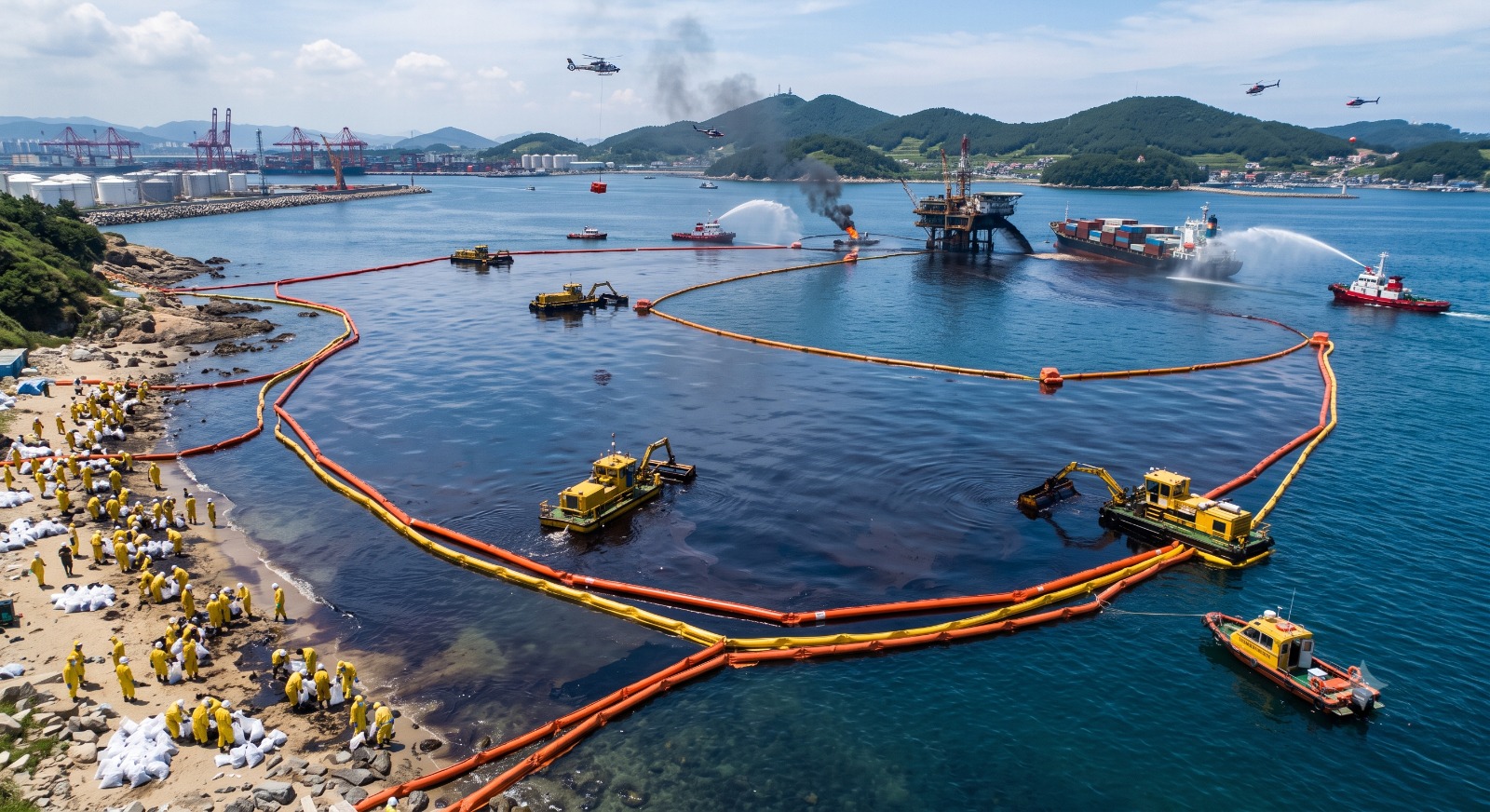
An oil spill boom only gets one shot at doing its job. There's no second attempt once oil is already spreading across open water, and there's no room for a fabric that looks fine on paper but fails under real conditions. That's why the fabric behind a containment boom matters just as much as the design of the boom itself — and it's why buyers evaluating suppliers need to know what actually separates a dependable product from one that just looks the part.
This guide walks through what containment fabric needs to deliver, and what to look for when choosing a supplier you can rely on.
Get In TouchWhy Oil Spill Containment Fabric Is a Different Category Altogether
Most industrial fabrics are built to handle one or two demanding conditions — abrasion, UV, maybe some chemical exposure. Oil spill containment fabric has to handle all of it at once, usually in open water, often in rough conditions, and always with zero tolerance for failure mid-response.
The fabric sits at the waterline, exposed to constant wave action, floating debris, sun, and direct contact with crude oil, refined fuels, or other hydrocarbons. It has to stay flexible enough to flex with wave motion without cracking, tough enough to resist tearing from debris and handling, and chemically resistant enough that the oil it's containing doesn't degrade the very material holding it back.
That combination is exactly why generic tarpaulin-grade material has no place in this application, and why coated technical textiles built specifically for marine and hydrocarbon exposure are the standard.
Core Standards a Containment Fabric Needs to Meet
Oil and hydrocarbon resistance. The fabric has to resist swelling, softening, or breaking down on prolonged contact with crude oil, diesel, and other petroleum products. PVC and PVDF coated fabrics are widely used here because the coating forms a barrier that hydrocarbons can't easily penetrate or degrade.
Tensile strength and tear resistance. Booms get towed, anchored, and pulled against current and wave force. A fabric with weak tensile strength will stretch, sag, or tear under that load, and a compromised boom stops containing anything.
Seam and weld integrity. As with any coated fabric structure, the seams are the most likely failure point. Properly welded seams — not just stitched or glued — are essential, since a boom is only as strong as its weakest joint.
UV and weathering resistance. Booms are stored for long stretches and then deployed with little notice. Fabric that degrades from UV exposure while sitting in storage or during extended open-water use won't perform when it's actually needed.
Flexibility in cold and warm conditions. Spill response doesn't wait for ideal weather. Fabric that stiffens in cold water or softens excessively in heat puts the whole containment effort at risk.
Buoyancy and low water absorption. The fabric needs to stay lightweight and resist water absorption, so the boom keeps floating properly and doesn't become waterlogged and difficult to handle over time.
Flame resistance where required. Certain containment and response applications call for fire-resistant fabric, particularly where in-situ burning may be used as part of the spill response.
Where This Fabric Gets Used
- Harbor and port oil spill response booms
- Offshore marine containment systems
- Inland waterway and river spill barriers
- Industrial site containment around refineries and storage terminals
- Emergency response kits maintained by ports, shipping companies, and environmental agencies
- Training and drill equipment used by response teams to practice deployment
What to Look for in a Fabric Supplier
Buyers sourcing containment fabric, whether for boom manufacturing or in-house fabrication, should be looking past the surface pitch and asking about the fundamentals:
- Can the supplier show real hydrocarbon and chemical resistance testing, not just general durability claims?
- Are seams welded to a proven, consistent standard rather than left to vary batch to batch?
- Does the fabric hold its flexibility across a wide temperature range, not just under lab conditions?
- Is there consistency in coating weight and quality across rolls, so one batch doesn't perform differently from the next?
- Can the supplier support both standard specifications and custom requirements for boom size, coating type, or color coding?
This is where working with an established Fabrics Manufacturers and Supplier makes a real difference. LUCKY-TECH Membranes supplies PVC and PVDF coated fabric engineered for exactly this kind of demanding, zero-margin-for-error application, and works directly with boom manufacturers, fabricators, and response equipment suppliers to get the base material right.
Sourcing PVC Fabric for Oil Spill Booms
For anyone specifically searching for Oil Spill Boom fabric Manufacturers, the shortlist should always come back to the same questions: hydrocarbon resistance, seam-weldability, tensile strength, and UV stability. A supplier that can speak clearly to all of these, rather than leaning on generic marketing language, is one worth taking seriously.
LUCKY-TECH Membranes works with vendors, dealers, and manufacturers who need that level of consistency, supplying coated fabric that's built to hold up in the field, not just on a spec sheet.
FAQs
What fabric is used for oil spill containment booms?
PVC and PVDF coated fabrics are the most widely used, chosen for their hydrocarbon resistance, strength, and flexibility.
Why is seam quality so important in boom fabric?
Seams are typically the weakest point in a boom. A poorly welded seam can fail even when the base fabric is strong.
Can containment fabric handle both crude oil and refined fuels?
Quality coated fabric is engineered to resist a broad range of hydrocarbons, including crude oil, diesel, and other refined fuels.
Does the fabric need to be fire-resistant?
Not always, but some containment applications, particularly those involving in-situ burning, do require flame-resistant fabric.
Who supplies coated fabric for oil spill boom manufacturing?
LUCKY-TECH Membranes supplies PVC and PVDF coated fabric built for oil spill containment and marine boom applications.
Get Your Free Quote Today!