
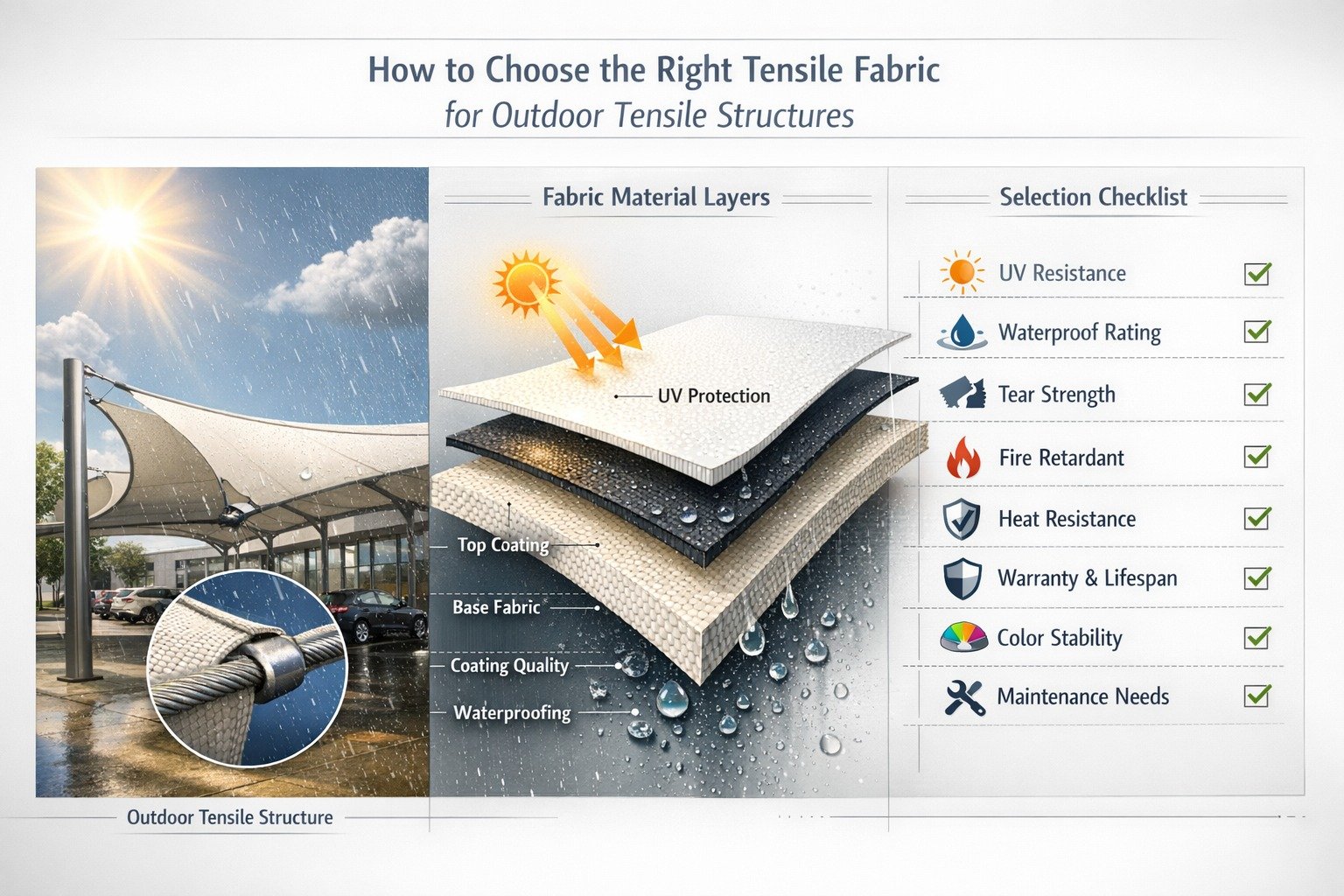
How to Choose the Right Tensile Fabric for Outdoor Tensile Structures
How to Choose the Right Tensile Fabric for Outdoor Tensile Structures
Outdoor tensile structures are becoming extremely popular across India—from parking shades and entrance canopies to stadium roofs and walkway covers. They look modern, cover large spans, and install faster compared to conventional roofing.
But here’s the important part: the success of any tensile structure depends heavily on the tensile fabric used. Many people focus only on design and steel work, but the membrane quality decides durability, safety, and long-term appearance.
In this blog, we’ll explain how to choose the righttensile fabric for outdoor use, and what key properties you must check before selecting a tensile membrane for your project.
Table Of Contents:
- Why Fabric Selection Matters in Outdoor Tensile Structures
- Key Factors to Check Before Choosing Tensile Fabric
- Common Outdoor Applications of Tensile Structures
- LUCKY-TECH MEMBRANES: Premium Tensile Fabric in India
Why Fabric Selection Matters in Outdoor Tensile Structures
A tensile membrane is constantly exposed to:
harsh sunlight and UV rays
heavy rain and monsoon humidity
dust, pollution, and heat
wind load and tension forces
That means the fabric must perform like a technical material—not like a regular tarpaulin. A low-grade membrane may look fine initially, but within 1–2 years it can start cracking, fading, leaking, or losing tension.
So, choosing the right tensile fabric is not an expense—it’s a long-term investment.
Key Factors to Check Before Choosing Tensile Fabric
1) Tensile Strength (Warp & Weft)
This is the most important technical property. Tensile strength determines how well the fabric handles pulling force and structural tension.
For large tensile roofs and high-wind zones, you need a membrane with strong and balanced tensile strength in both directions. Weak fabric leads to sagging and shape distortion over time.
2) Coating Quality (PVC Coated Fabric Matters)
Most tensile membranes used in India are made from PVC coated fabric. But not all PVC coatings are equal.
A high-quality coating provides:
better weather protection
higher durability
improved waterproofing
longer life under sunlight
Coating adhesion is also important. Poor adhesion can cause peeling, cracking, or surface damage.
3) UV Resistance for Indian Climate
India’s outdoor conditions are tough. A good tensile fabric must be UV stabilized so it can resist:
yellowing
brittleness
surface cracking
loss of strength
UV resistance directly affects the lifespan of tensile structures, especially in open parking areas and industrial zones.
4) Waterproofing & Weather Performance
For tensile roofs, waterproofing is a must. A proper tensile membrane should be:
water-tight
resistant to fungal growth
stable in monsoon humidity
Also check whether the fabric has a protective top lacquer, which helps with stain resistance and easy cleaning.
5) Fire Retardant Properties (Recommended)
For public places like malls, airports, metro stations, or stadiums, fire retardancy is often required.
A certified fire-retardant tensile membrane improves safety and supports compliance with project requirements.
6) Weldability & Seam Strength
A tensile structure is only as strong as its seams. Even if the fabric is premium, poor seam welding can cause:
leakage
seam opening
reduced lifespan
Always ensure the tensile fabric supports strong hot-air or high-frequency welding and is suitable for long-term tension.
7) Life Expectancy & Warranty
A good tensile fabric supplier will clearly specify:
expected life
technical specifications
test values
warranty support
This is important for large tensile roofs where replacement cost is high.
Common Outdoor Applications of Tensile Structures
Choosing the right tensile membrane becomes even more important depending on the application:
entrance canopies
parking shades
walkway tensile roofs
stadium and sports roofing
warehouses and industrial sheds
resorts and outdoor seating areas
Each requires a different balance of strength, coating, and surface performance.
LUCKY-TECH MEMBRANES: Premium Tensile Fabric in India
AtLUCKY-TECH MEMBRANES, we manufacture high-quality PVC coated tensile fabric in India for outdoor tensile structures. We also have an exclusive partnership with Sioen Industries (Belgium), known globally for advanced coated textile technology.
Our tensile membranes are designed for Indian weather conditions and engineered for durability, strength, and long-term performance.
📞 Get the Right Tensile Fabric for Your Project
Need help choosing the best tensile membrane for your project?
📞 Call/WhatsApp: +91-86553 57854 / +91-9820325057
🌐 Website: https://luckytech.in/
📧 Email: info@luckytech.in
Get Your Free Quote Today!