
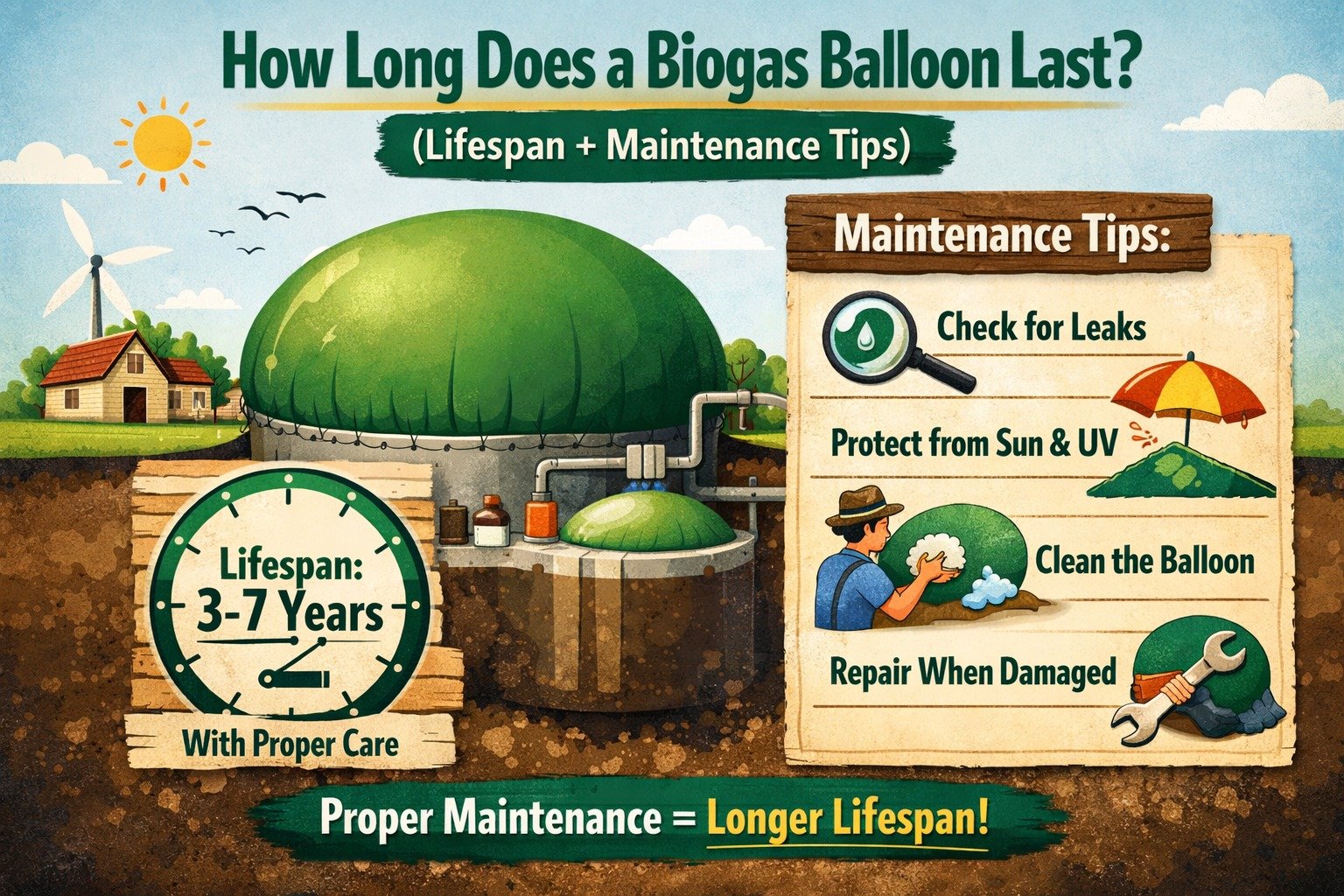
How Long Does a Biogas Balloon Last? (Lifespan + Maintenance Tips)
How Long Does a Biogas Balloon Last? (Lifespan + Maintenance Tips)
Biogas plants are growing rapidly across India as industries and farms shift toward clean energy. And with this growth, one important component is gaining more attention: the biogas balloon.
A biogas balloon (also called a flexible gas holder) is used to store biogases like methane and CO₂ produced in biogas plants. It is a practical and cost-effective solution compared to rigid tanks, especially for medium to large biogas setups.
But one question is asked in almost every project discussion:
Table Of Contents:
- How long does a biogas balloon last?
- Typical Lifespan of a Biogas Balloon
- What Affects the Lifespan of Biogas Balloons?
- Maintenance Tips to Increase Biogas Balloon Life
- LUCKY-TECH MEMBRANES: Premium Fabric for Biogas Balloons in India
How long does a biogas balloon last?
The answer depends on the quality of the membrane, installation, and maintenance. In this blog, we’ll explain the typical lifespan of a biogas balloon and share practical maintenance tips to increase its service life.
Typical Lifespan of a Biogas Balloon
A well-manufactured biogas balloon made with high-quality PVC coated fabric typically lasts:
✅ 5 to 10 years (average)
In many cases, premium membranes with proper installation and care can last even longer.
However, low-grade materials may start showing issues within 1–3 years, such as surface cracking, seam leakage, or loss of flexibility.
What Affects the Lifespan of Biogas Balloons?
1) Quality of PVC Coated Fabric
The biggest factor is the fabric itself. A biogas balloon operates under pressure and constant movement, so the membrane must be engineered for:
high tensile strength
strong coating adhesion
gas tightness
UV resistance
chemical resistance
Poor fabric quality is the #1 reason biogas balloons fail early.
2) UV Exposure & Outdoor Conditions in India
Most biogas plants in India install balloons outdoors. This means the surface is continuously exposed to:
strong sunlight
high temperatures
dust and pollution
heavy monsoon rain
If the fabric is not UV-stabilized, it can become brittle and crack, reducing lifespan drastically.
3) Biogases and Chemical Exposure
Biogases often contain traces of:
hydrogen sulphide (H₂S)
ammonia
moisture and vapours
Over time, these can affect low-quality coatings. A good membrane must be resistant to chemical attack from inside.
4) Welding & Seam Strength
Even with good fabric, poor welding can cause:
seam leakage
seam opening under pressure
frequent patch repairs
Seams are the most stressed areas in biogas balloons, so welding quality is critical.
5) Installation & Anchoring
Incorrect anchoring can cause uneven tension, which leads to:
abnormal stretching
fabric stress points
early failure near edges
Proper installation helps the membrane distribute load evenly.
Maintenance Tips to Increase Biogas Balloon Life
A biogas balloon doesn’t require complicated maintenance, but basic care can easily extend its life.
✅ 1) Keep the Surface Clean
Dust and organic deposits can reduce coating life over time. Clean the balloon surface periodically using mild cleaning methods.
Avoid harsh chemicals or strong scrubbing tools.
✅ 2) Inspect Seams and Weld Lines
Check seams every few months for:
minor leakage
peeling edges
weak weld points
Early repair is much easier than handling a major failure later.
✅ 3) Protect from Sharp Objects
Ensure the balloon area is free from:
sharp stones
metal scrap
exposed bolts
animal damage risks
Many punctures happen due to poor site housekeeping.
✅ 4) Monitor Gas Pressure
Over-pressurizing can stress the membrane and seams. Use proper pressure control systems so the balloon operates within recommended limits.
✅ 5) Prevent Water Pooling
Water pooling increases load and can deform the structure. A good balloon design prevents this, but regular checks during monsoon help.
LUCKY-TECH MEMBRANES: Premium Fabric for Biogas Balloons in India
At LUCKY-TECH MEMBRANES, we manufacture high-performance PVC coated fabric in India for demanding applications like biogas balloons and gas storage systems.
We also have an exclusive partnership with Sioen Industries (Belgium), allowing us to deliver premium membrane quality designed for durability, safety, and Indian operating conditions.
📞 Need a Long-Life Biogas Balloon Fabric? Contact Us
📞 Call/WhatsApp: +91-86553 57854 / +91-9820325057
🌐 Website: https://luckytech.in/
📧 Email: info@luckytech.in
Get Your Free Quote Today!