
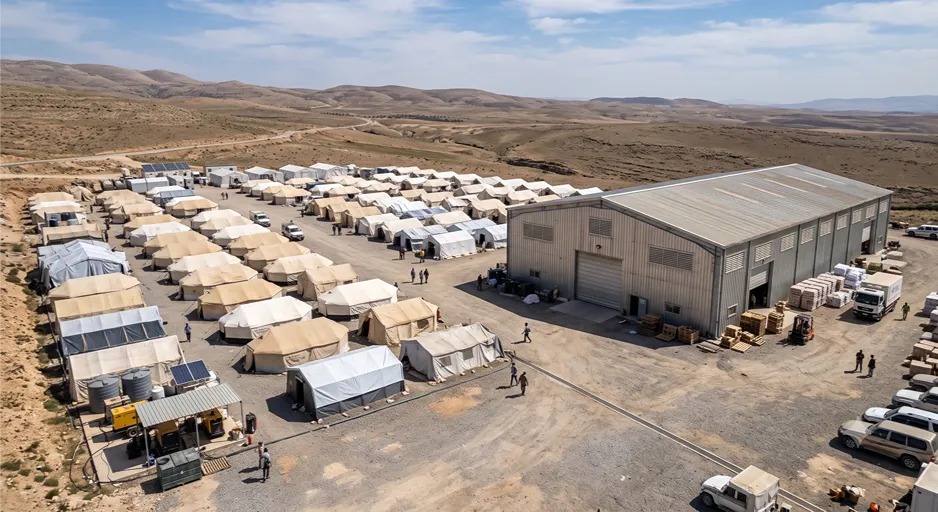
Best Fabric for Temporary Shelters and Aluminium Hangar Structures
Best Fabric for Temporary Shelters and Aluminium Hangar Structures
Temporary shelters and aluminium hangar structures require fabric that can provide durability, weather resistance, flexibility, and reliable performance while allowing fast installation. Choosing the right fabric for temporary shelters is important because the membrane acts as the primary protective layer against sunlight, rain, wind, and changing outdoor conditions.
Get In TouchFor applications such as industrial storage, event spaces, warehouses, aircraft shelters, construction sites, and temporary facilities, PVC and PVDF coated fabrics are commonly used because they combine strength with flexibility and practical installation.
What Makes a Good Fabric for Temporary Shelters?
A good temporary shelter fabric should be lightweight enough for practical handling while providing sufficient mechanical strength for the intended structure. It should also withstand outdoor exposure without significant loss of performance.
Important characteristics include:
- High tensile strength
- Good tear resistance
- UV and weather resistance
- Reliable welding performance
- Dimensional stability
- Flexible handling and fabrication
- Consistent coating quality
- Suitable surface protection
The fabric specification should always be selected according to the structure's size, location, expected loading, and duration of use.
Why Is PVC Coated Fabric Used for Temporary Shelters?
PVC coated fabric is widely used for temporary roofing and shelter applications because it provides a practical combination of strength, flexibility, and weather resistance.
The fabric can be fabricated into large membrane panels and welded to create continuous roofing surfaces. This makes it suitable for temporary structures where quick installation and efficient fabrication are important.
PVC-coated fabrics can be used for industrial tents, temporary warehouses, storage shelters, event structures, and other covered spaces.
What Is the Right Fabric for Aluminium Hangar Structures?
Aluminium hangar fabric needs to work effectively with the supporting aluminium frame while providing protection for the enclosed area. The fabric should have appropriate tensile strength, flexibility, dimensional stability, and resistance to outdoor conditions.
Aluminium-framed hangars are often designed for applications where portability, modular construction, and quick installation are important. The membrane fabric should therefore complement the structure and fabrication system.
For larger hangars, fabric selection should consider wind exposure, span, structural design, panel dimensions, connection details, and expected service conditions.
Why Is PVDF Coated Fabric Suitable for Long-Term Outdoor Use?
PVDF coated fabric includes a protective surface coating designed to improve resistance to environmental exposure. It can help maintain the surface appearance and performance of the membrane when exposed to sunlight, rain, dust, and other outdoor conditions.
For temporary structures that may remain installed for extended periods, PVDF-coated options can be considered where additional surface protection and long-term appearance are required.
What Are the Benefits of Quick-Install Tent Fabric?
Quick install tent fabric is designed to support efficient fabrication, handling, and installation. When combined with a modular aluminium structure, the membrane can help create a shelter that can be assembled and dismantled more efficiently than many conventional permanent structures.
This makes such systems useful for:
- Temporary warehouses
- Construction site shelters
- Industrial storage areas
- Event and exhibition spaces
- Emergency and relief shelters
- Aircraft and equipment storage
- Temporary production areas
The actual installation time depends on the structure size, site conditions, frame design, fabrication method, and installation team.
What Is Portable Hangar Fabric Used For?
Portable hangar fabric is used where enclosed space is required without constructing a conventional permanent building. It can provide covered space for aircraft, vehicles, machinery, equipment, materials, and industrial operations.
The fabric membrane can be designed around modular frames, allowing the structure to be relocated or expanded according to project requirements.
Why Is Fabric Quality Important for Industrial Tents?
Industrial tent fabric needs to withstand repeated exposure to environmental conditions while maintaining its structural and functional properties.
Fabric quality can influence:
- Service life
- Seam performance
- Weather resistance
- Appearance
- Installation and handling
- Maintenance requirements
A suitable fabric should have documented technical properties and be matched to the intended application rather than selected only based on price.
How Should You Select Fabric for Temporary Roofing?
When selecting temporary roofing fabric, consider the environment where the structure will be installed. A shelter located in a high-sunlight area may require strong UV resistance, while structures exposed to heavy rain or wind require appropriate material and structural specifications.
The fabric's weight, tensile strength, tear strength, coating type, weldability, and weather resistance should be reviewed before final selection.
The supporting frame and membrane should also be considered together because the fabric's performance depends on the overall structural system.
PVC vs PVDF Coated Fabric for Temporary Structures
PVC and PVDF-coated fabrics can both be considered for temporary and semi-permanent structures, but the appropriate option depends on the project's requirements.
PVC-coated fabric offers a practical solution for many temporary shelters and industrial applications, providing flexibility, strength, and weather resistance.
PVDF-coated fabric provides additional surface protection and can be considered when enhanced resistance to environmental exposure and long-term appearance are priorities.
The right choice should be based on project duration, environmental conditions, design requirements, fabrication method, and performance expectations.
Where Can Temporary Shelter Fabric Be Used?
Fabric membrane systems can be used across a wide range of applications, including temporary warehouses, industrial shelters, aircraft hangars, vehicle storage, construction facilities, event structures, logistics areas, and temporary workspaces.
Their lightweight construction and modular nature can make them suitable when speed, flexibility, and relocatability are important.
Why Choose LUCKY-TECH Membranes for Temporary Shelter Fabric?
LUCKY-TECH Membranes manufactures PVC and PVDF coated fabrics for tensile membrane and architectural applications.
The fabrics are designed for applications where strength, durability, weather resistance, weldability, and consistent coating performance are important. Depending on the project requirements, suitable fabric specifications can be considered for temporary shelters, aluminium hangars, industrial structures, and other membrane applications.
Frequently Asked Questions
What fabric is commonly used for temporary shelters?
PVC-coated polyester fabric is commonly used for temporary shelters because it offers a combination of tensile strength, flexibility, weather resistance, and weldability.
What fabric is used for aluminium hangars?
PVC and PVDF-coated fabrics can be used with aluminium-framed hangars. The appropriate specification depends on the hangar design, span, environmental conditions, and expected service life.
Is PVC fabric suitable for temporary roofing?
Yes. PVC-coated fabric can be used for temporary roofing applications where strength, flexibility, weather resistance, and efficient fabrication are required.
What is the difference between PVC and PVDF coated fabric?
PVC is the primary coating used to provide strength, flexibility, and weather resistance, while PVDF can provide an additional protective surface layer for improved resistance to environmental exposure and surface ageing.
How long can temporary shelter fabric last?
The service life depends on fabric quality, coating system, environmental exposure, installation, maintenance, and how the structure is used. Manufacturers' technical specifications should be reviewed for the intended application.
Get Your Free Quote Today!