
Geodesic Domes Explained: What They Are and How They're Built
Geodesic Domes Explained: What They Are and How They're Built
Geodesic domes are one of the most interesting shapes in modern construction. They look futuristic, but they are also strong, simple, and easy to build. In this guide, we explain what a geodesic dome is, how it works, and why fabric plays such an important role in building one.
Get In TouchWhat Is a Geodesic Dome?
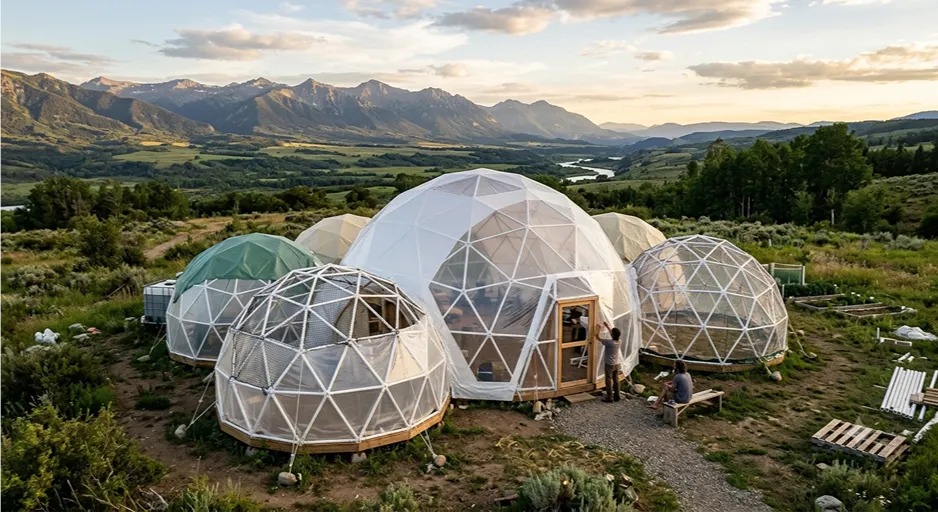
A geodesic dome is a curved structure made of many small triangles joined together to form a round shape, almost like a ball cut in half. Instead of using large flat walls, the dome is built from a network of straight bars or beams arranged in triangles.
This simple idea creates a very strong and stable shape. Because the weight of the dome is spread evenly across all the triangles, no single part carries too much load. This is what makes a geodesic structure so efficient compared to a normal square or rectangular building.
How Does a Geodesic Dome Work?
The strength of a geodesic dome comes from its triangle pattern. Triangles do not bend or twist easily under pressure, unlike squares or rectangles. When many triangles are joined together in a curved shape, they support each other and share the load.
This is why geodesic domes can:
- Cover large open spaces without needing pillars in the middle
- Handle wind, rain, and snow better than many flat-roofed buildings
- Use less material while still being strong
- Stay stable even in large sizes
This combination of strength and light weight is why geodesic domes are used for greenhouses, event spaces, storage structures, and even emergency shelters.
The Parts of a Geodesic Dome
A geodesic dome usually has two main parts:
The frame – This is the skeleton of the dome, made from metal or wood beams joined in a triangle pattern.
The covering – This is the outer layer that closes the frame and protects the inside from weather. This is usually where fabric comes in.
The frame gives the dome its shape and strength. The covering gives it protection, insulation, and a finished look.
The Role of Fabric in Geodesic Domes
While the frame gives a geodesic dome its shape, the fabric covering is just as important. A good fabric membrane protects the structure from rain, sun, and wind, while still keeping the dome lightweight.
This is where PVC and PVDF coated fabric plays a big role. These fabrics are designed to be:
- Weather resistant, so they can handle sun, rain, and changing temperatures
- Flexible enough to stretch over curved dome frames smoothly
- Durable, so the dome stays protected for a long time
- Easy to clean and maintain
Because a geodesic dome has a curved, triangular surface, the fabric needs to be cut and fitted precisely to match each panel. This is a specialised job that requires good fabric quality and accurate fabrication.
Where Are Geodesic Domes Used?
Geodesic domes are a popular choice across many industries because of their strength and flexible design. Some common uses include:
- Greenhouses and agricultural structures
- Event domes and exhibition spaces
- Storage and industrial covers
- Eco-resorts and outdoor stays
- Recreational and community spaces
Their round shape also makes them naturally good at managing airflow and temperature, which is useful for both agricultural and event-based structures.
Why Fabric Quality Matters for Geodesic Domes
The frame of a geodesic dome can be strong, but if the fabric covering it is weak, the whole structure suffers. Poor quality fabric can tear, fade, or wear out quickly under sun and rain. This is why choosing the right PVC or PVDF coated fabric is one of the most important decisions when building a geodesic dome.
Good quality coated fabric helps the dome:
- Stay protected in all seasons
- Keep its appearance for longer
- Perform well in both hot and wet climates
This is why working with an experienced PVC Fabrics Manufacturers and Supplier matters. The right fabric partner understands how to prepare, coat, and finish material so it performs well on curved dome structures.
As a trusted Geodesic Dome Manufacturer and fabric partner, LUCKY-TECH Membranes works with quality PVC and PVDF coated fabric to support strong, weather-ready dome structures.
FAQs
1. What makes a geodesic dome so strong?
Its triangle pattern spreads weight evenly across the whole structure, so no single point takes too much pressure.
2. What type of fabric is used for geodesic domes?
PVC and PVDF coated fabrics are commonly used because they are weather resistant, flexible, and durable.
3. Are geodesic domes suitable for outdoor use?
Yes. With the right coated fabric covering, geodesic domes handle rain, sun, and wind well, making them ideal for outdoor and long-term use.
4. Can geodesic domes be customised in size?
Yes. The triangle-based design can be scaled up or down, making geodesic domes suitable for small garden domes as well as large event or agricultural structures.
Get Your Free Quote Today!