
Geodesic Domes for Glamping and Eco-Resorts: A Growing Trend in India
Geodesic Domes for Glamping and Eco-Resorts: A Growing Trend in India
Why Glamping Sites Are Choosing Geodesic Domes
Fast to install and built to last a season or a decade, here's why eco-resorts and glamping sites across India are switching to fabric domes.
India's hospitality industry is experiencing a quiet architectural shift. From the pine forests of Himachal to the backwaters of Kerala and the deserts of Rajasthan, more and more resort owners are moving away from concrete cottages and canvas tents toward a structure that offers the best of both: the geodesic dome.
If you've scrolled through Instagram lately and seen a striking spherical tent glowing against a starlit sky, chances are it was a geodesic dome. This isn't just a passing aesthetic trend — it's a practical, business-savvy decision that hospitality entrepreneurs across the country are making, and for good reason.
Get In TouchWhat Makes a Geodesic Dome Different
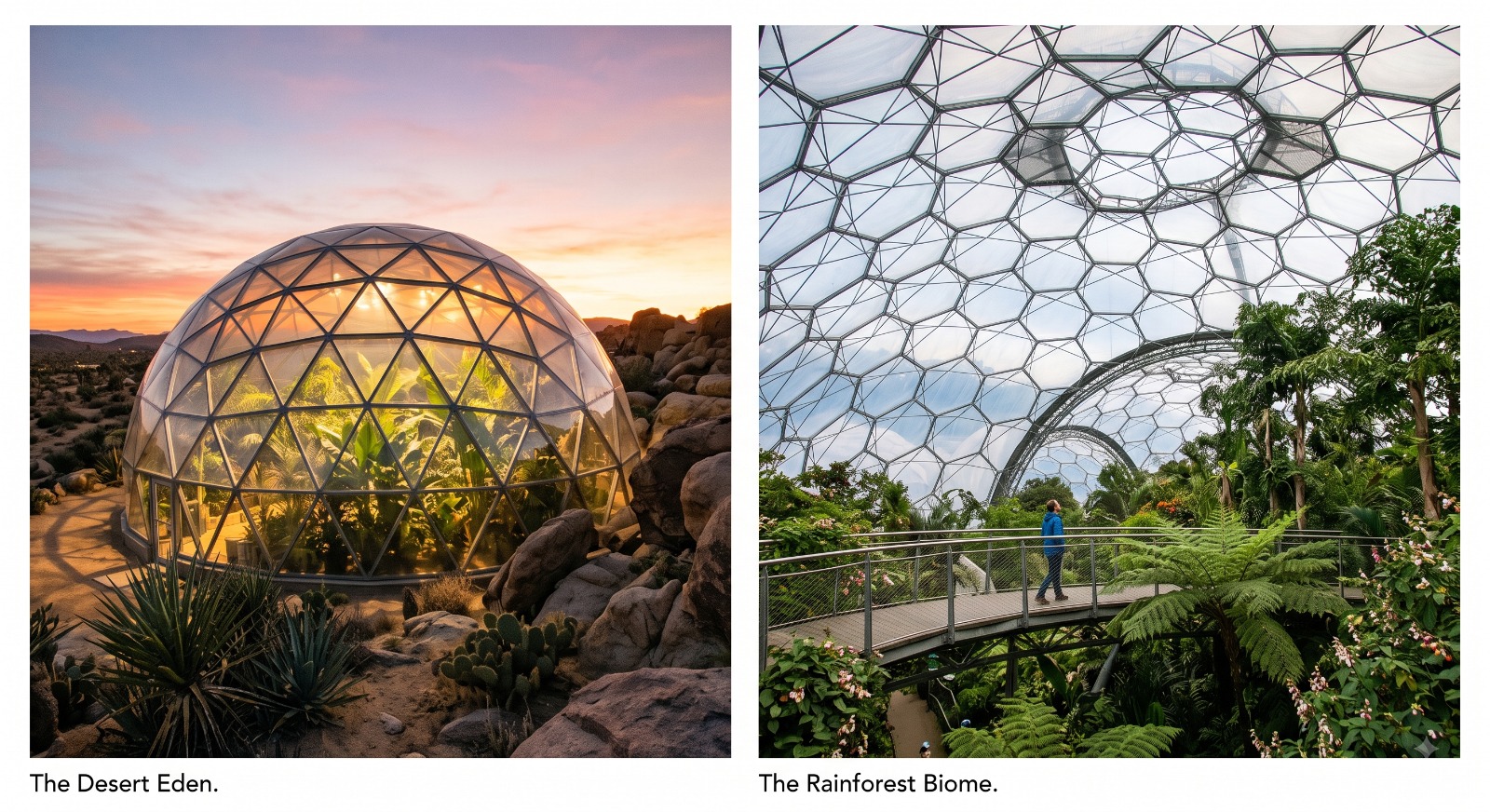
A geodesic dome is a hemispherical structure built from a network of triangles that distribute structural stress evenly across the entire surface. This design, popularized by Buckminster Fuller, results in a shape that is remarkably strong for its weight, using far less material than a conventional building while covering the same amount of space.
For glamping dome India projects, the frame is typically galvanized steel or aluminium, wrapped in a weatherproof fabric membrane — usually PVC or PVDF-coated polyester. The result is a structure that looks futuristic, feels spacious inside, and can be assembled on almost any terrain without heavy civil work.
Why Eco-Resorts and Glamping Sites Are Making the Switch
1. Speed of installation A traditional cottage or brick-and-mortar villa can take months to build and requires permanent foundations, masons, and a long construction timeline. A geodesic dome, by comparison, can be assembled by a small crew in a matter of days. For resort owners looking to open a new site before peak season, this speed is often the deciding factor.
2. Lower environmental footprint This is where the eco resort dome structure approach really shines. Because domes use a lightweight steel skeleton and fabric skin rather than concrete, brick, and wood, they require far fewer raw materials and generate significantly less construction waste. Many sites can be installed with minimal excavation, preserving root systems and natural drainage — a major advantage for resorts built around forests, riverbanks, or hillsides where disturbing the land isn't an option.
3. Built to last a season or a decade One of the biggest misconceptions about fabric structures is that they're temporary or flimsy. In reality, a well-engineered sustainable dome structure using UV-stabilized, fire-retardant, and weatherproof membrane fabric can comfortably withstand monsoon rain, high winds, and years of continuous sun exposure. Resort owners can choose seasonal setups for pop-up glamping experiences, or permanent installations designed to run for a decade or more — the same dome architecture scales to both.
4. Striking guest experience Domes offer curved, uninterrupted interior space with panoramic views — something a boxy cottage simply can't replicate. Skylight panels let guests stargaze from bed, and the acoustic insulation of quality membrane fabric keeps interiors comfortable through both heat and cold. For a fabric dome resort, this translates directly into higher tariffs and stronger repeat bookings.
5. Lower long-term maintenance Because the membrane is treated for UV resistance, water repellence, and mould resistance, domes need far less upkeep than painted masonry structures exposed to India's monsoon humidity. Panels can be individually replaced rather than requiring a full structural overhaul.
Where Geodesic Domes Are Being Used Across India
Glamping domes are increasingly common in:
- Hill station retreats (Himachal Pradesh, Uttarakhand, Sikkim)
- Riverside and forest eco-resorts (Madhya Pradesh, Karnataka, Kerala)
- Desert and heritage glamping circuits (Rajasthan, Gujarat)
- Coastal boutique resorts (Goa, Maharashtra, Tamil Nadu)
In each case, the appeal is the same: a distinctive, Instagram-worthy structure that can be deployed quickly, blends with the natural landscape, and meets sustainability expectations that today's travellers actively look for.
Choosing the Right Fabric and Manufacturer
The performance of a geodesic dome comes down almost entirely to the quality of its membrane fabric and the precision of its fabrication. A dome is only as durable as the material stretched across its frame, which is why resort developers are increasingly working directly with established fabric manufacturers and suppliers in India rather than generic contractors.
This is where Lucky-Tech Membranes comes in. As one of the established geodesic dome manufacturers in India, Lucky-Tech engineers domes using high-grade PVC and PVDF-coated architectural fabric, built for tropical and monsoon conditions, UV exposure, and long-term structural performance. Whether a resort needs a single accent dome or a multi-unit glamping cluster, working with a manufacturer that controls both the fabric and the fabrication ensures consistent quality and a structure engineered for India's climate — not just imported and adapted.
Is a Geodesic Dome Right for Your Resort?
If you're evaluating dome structures for a glamping or eco-resort project, a few questions are worth asking upfront:
- What's your installation timeline — seasonal pop-up or permanent structure?
- What climate conditions (monsoon load, wind speed, UV exposure) does the site face?
- Do you need custom sizing, insulation, or skylight configurations?
- Is your supplier also the fabricator, or are you working through multiple vendors?
Getting clear answers to these questions early — ideally directly from a manufacturer rather than a reseller — makes the difference between a dome that performs for one season and one that performs for a decade.
Frequently Asked Questions
Q: How long does it take to install a geodesic dome for glamping?
A: Depending on size and site conditions, most glamping domes can be installed within a few days to a couple of weeks, significantly faster than conventional construction.
Q: Are geodesic domes suitable for India's monsoon climate?
A: Yes, when built with UV-stabilized, waterproof PVC or PVDF membrane fabric and a properly engineered steel frame, domes are designed to handle heavy rain and wind loads.
Q: Can geodesic domes be customized for size and interior layout?
A: Yes. Diameter, height, door and window placement, insulation, and skylight panels can all be customized to match the resort's design and climate needs.
Q: Are fabric domes a permanent structure or a temporary one?
A: Both are possible. The same core design can be configured as a seasonal, semi-permanent installation or engineered for years of continuous, permanent use.
Get Your Free Quote Today!