
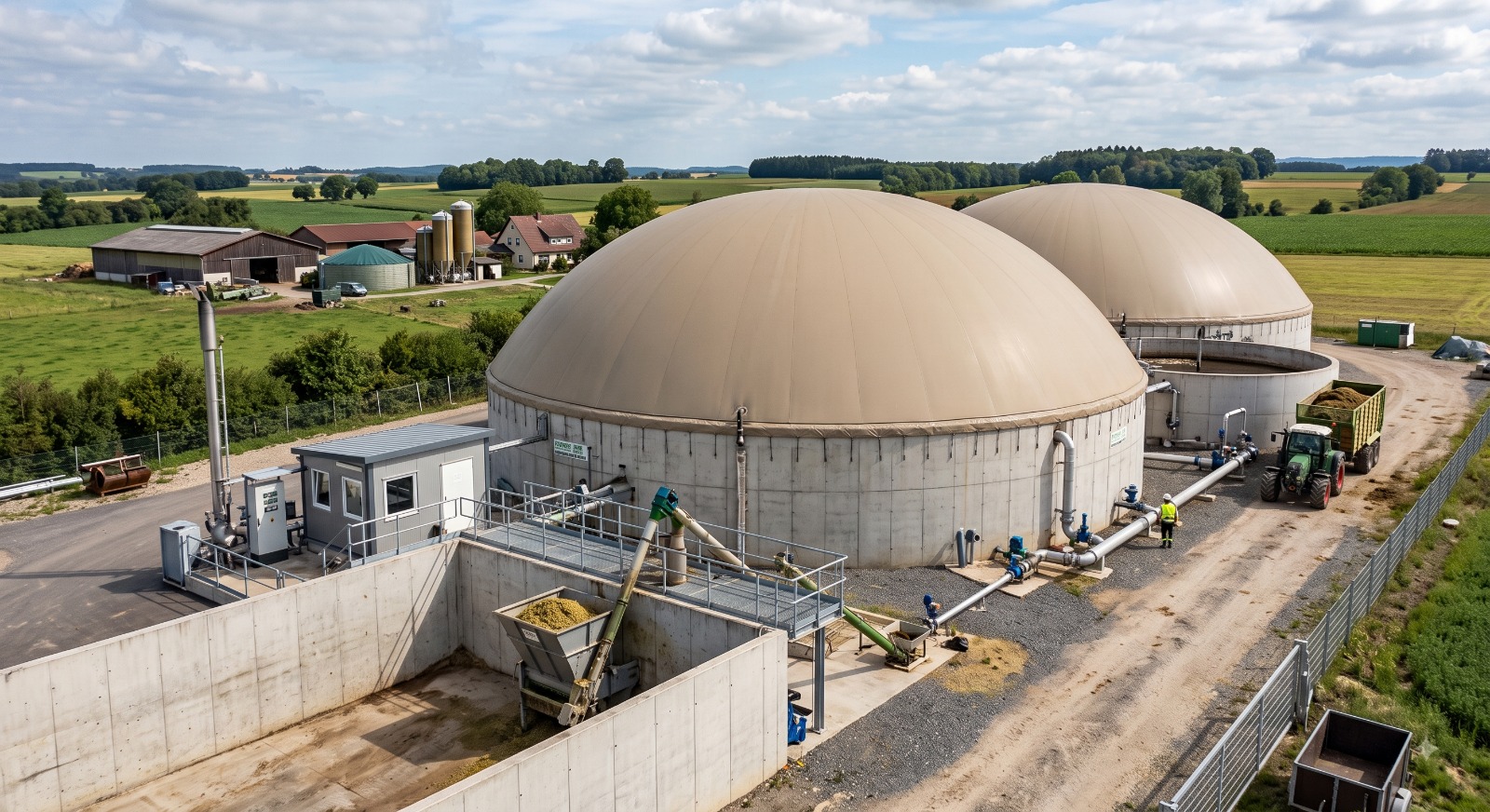
Does Fabric Thickness Really Affect Biogas Dome Life?
Does Fabric Thickness Really Affect Biogas Dome Life?
How Geodesic Domes Are Built: Frame, Fabric and Engineering Explained
Walk past a geodesic dome and the first thing you notice is how little material it seems to be made of. No heavy beams, no visible columns holding up the roofline — just a lattice of triangles wrapped in fabric, standing up to wind, rain, and sun with almost no effort. That's not an accident of design. It's geometry doing the structural work that steel and concrete usually do.
This is why geodesic domes have become a go-to structure for events, exhibitions, glamping sites, and semi-permanent installations across India — they combine architectural strength with a lightweight fabric skin that's fast to install and easy to relocate.
Get In TouchHow Geodesic Domes Are Built
A geodesic dome is built from a network of interlocking triangles arranged over the surface of a sphere or partial sphere. Unlike a traditional dome, which relies on curved arches and continuous compression rings, a geodesic structure distributes load across thousands of small triangular faces.
The build process typically follows three stages:
- Frame assembly — Lightweight aluminum or steel struts are connected at hub points to form the triangulated skeleton. Because the frame is modular, it can be assembled on-site without heavy machinery.
- Fabric membrane installation — A PVC or PVDF-coated fabric skin is stretched and tensioned over the frame. The coating gives the membrane its weatherproofing, UV resistance, and structural rigidity once tensioned.
- Tensioning and sealing — Panels are pulled taut and sealed at the seams, so the fabric works in tension rather than compression — which is what allows the structure to stay lightweight while still bearing significant load.
The result is a self-supporting shell where every triangle shares the load with its neighbors, so no single point carries a disproportionate amount of stress.
Why the Triangle Is the Key to Strength
Triangles are the only polygon that can't be deformed without changing the length of its sides. Squares and rectangles can rack (skew into a parallelogram) under lateral force, but a triangle holds its shape. When thousands of triangles are locked together into a spherical lattice, the entire structure behaves like a single rigid shell — strong in every direction, not just vertically.
This is what allows a geodesic dome to:
- Handle wind loads from any angle without needing directional bracing
- Distribute snow or rain load evenly across the surface instead of pooling weight in one section
- Achieve a high strength-to-weight ratio, since less framing material is needed per square meter of covered area compared to conventional structures
Where Lightweight Fabric Comes In
The frame gives a geodesic dome its shape, but the fabric membrane is what makes it functional as a structure people can actually use. Most PVC fabric dome structures rely on PVC or PVDF-coated fabric as the standard choice for dome skins because they offer:
- Weather resistance — coated membranes shed rain and resist UV degradation far longer than uncoated textiles
- Flexibility under tension — the fabric needs to stretch taut across curved triangular panels without wrinkling or sagging
- Low weight — a fabric skin adds a fraction of the load that rigid panelling (glass, metal sheeting, polycarbonate) would add to the same frame
- Translucency options — many coated fabrics allow diffused daylight through, reducing the need for artificial lighting inside the dome during the day
This fabric-and-frame combination is exactly why geodesic domes have become popular with businesses looking for a structure that can be shipped, assembled, taken down, and reused across multiple sites — something a fixed masonry structure simply can't do.
Common Applications Across India
Geodesic dome structures are increasingly used for:
- Event and exhibition spaces — an event dome structure suits trade shows, product launches, and pop-up venues that need a distinctive, weatherproof structure without a long construction timeline
- Hospitality and glamping — resorts and eco-tourism operators use dome units as guest accommodation, valued for their unusual architecture and quick deployment
- Retail and pavilion structures — malls, expos, and public spaces use domes as semi-permanent kiosks or feature installations
- Agricultural and storage domes — the same triangulated-shell principle is used for covered storage structures where a lightweight, self-supporting roof is needed over a large clear span
As demand for fast-build, reusable architecture grows, geodesic dome design in India is shifting from a novelty structure to a practical choice for businesses that need flexible infrastructure.
Why the Manufacturing Partner Matters
The strength of a geodesic dome depends as much on the quality of its fabric membrane as it does on the frame geometry. A poorly coated or under-specified fabric will stretch unevenly, degrade faster in UV exposure, or fail at the seams under tension undermining the very engineering advantage the dome shape is supposed to provide.
Working with an established fabrics manufacturer and supplier in India ensures the membrane is matched correctly to the frame design, local climate conditions, and intended use case whether that's a short-term event structure or a semi-permanent installation expected to last several seasons. Lucky-Tech Membranes is one such manufacturer, working with PVC and PVDF-coated fabrics used in dome, tensile, and structural membrane applications. Reputable geodesic dome manufacturers in India also handle the technical detailing — panel patterning, seam welding, and tensioning specifications — that determines whether a dome performs as designed or develops problems within its first monsoon season.
FAQs
Q: Are geodesic domes permanent structures?
They can be either. Many are designed as semi-permanent or relocatable structures, but with the right frame and foundation detailing, geodesic domes can also serve as long-term architecture.
Q: What size can a geodesic dome fabric structure reach?
Because the triangulated frame distributes load so efficiently, geodesic domes can span much larger clear areas than conventional tensile structures of similar weight — making them suitable for anything from a small event pod to a large exhibition hall.
Q: Is PVC or PVDF-coated fabric better for a geodesic dome?
PVC-coated fabric is a cost-effective option for shorter-term or seasonal structures. PVDF-coated (or PVDF-topcoated) fabric offers better long-term UV and weathering resistance, making it the preferred choice for structures meant to stay up for multiple years.
Q: How long does it take to install a geodesic dome?
Installation time depends on size, but the modular frame and fabric tensioning system typically allow for much faster assembly than conventional construction — often a matter of days rather than weeks.
Biogas Dome Fabric: Why Thicker Isn't Always Better
If you've ever compared quotes for a biogas dome, you've probably noticed something strange. Two suppliers quote you two very different fabrics, both claiming to be "heavy duty," and both priced miles apart. Naturally, the instinct is to go with whichever one feels thicker in hand or has a bigger GSM number on the spec sheet.
But here's the thing — thicker isn't always better. In fact, chasing thickness alone is one of the most common (and expensive) mistakes plant owners make when choosing bio gas dome fabric thickness. Longevity depends on a lot more than how many grams per square metre the roll weighs.
Let's break down what actually matters.
GSM Is Just One Number, Not the Whole Story
GSM (grams per square metre) tells you the weight of the fabric, not its strength, flexibility, or resistance to weather. A heavier fabric can still fail early if the base yarn is weak, if the weave is loose, or if the coating isn't bonded properly.
What you really want to look at is the combination of:
- Base fabric strength — the tensile and tear strength of the woven core, usually polyester
- Coating type and thickness — PVC or PVDF coating on both sides, and how evenly it's applied
- Lamination quality — whether the coating actually fuses with the fabric or just sits on top and eventually peels
A biogas balloon material with a mid-range GSM but excellent coating adhesion will almost always outlast a heavier fabric with a weak bond between layers. This is exactly why, when we talk to customers, we push them to ask for lab test reports rather than just comparing GSM figures on a brochure.
Why UV Resistance Matters More Than People Think
Biogas domes sit outdoors, exposed to sun, rain, and temperature swings, every single day, for years. UV degradation is quietly one of the biggest reasons domes lose flexibility and start cracking at the seams.
An UV resistant biogas fabric typically has a top coat or additive layer designed to absorb or reflect UV radiation before it breaks down the polymer chains in the coating. Without this protection, even a thick fabric turns brittle within a couple of seasons, especially in regions with intense sun exposure.
If your supplier can't tell you what UV stabilizers or additives are used in the top coat, that's a fair question to keep asking until you get a clear answer.
Gas Dome Durability Is About the Whole System
Gas dome durability isn't just a fabric question — it's a system question. The fabric has to work well with:
- The seam welding method (RF welding vs hot air welding)
- The anchoring and fixing points around the dome base
- The gas pressure it's designed to hold
- Local weather patterns — heavy monsoon regions need different specs than dry, high-UV zones
A fabric that's perfect for one climate or one digester size might be overkill (or underkill) for another. This is where working with an experienced manufacturer rather than a generic trader makes a real difference, because they can actually match the fabric spec to your site conditions instead of selling you a one-size-fits-all roll.
Simple Biogas Dome Maintenance Tips That Extend Life
Even the best fabric needs a bit of care. Some basic biogas dome maintenance habits go a long way:
- Inspect seams every few months for early signs of separation or wear
- Keep the surface clean — dust and organic buildup can trap moisture against the fabric
- Check anchor points and ropes after heavy storms
- Avoid sharp contact — tools, ladders, or debris resting against the dome can cause slow abrasion
- Watch for discoloration, which often signals UV wear starting underneath the surface
Catching small issues early is far cheaper than replacing a whole dome cover later.
Choosing the Right Partner Matters as Much as the Fabric
This is really the heart of it: fabric thickness is one input, not the whole answer. The right decision comes from understanding GSM alongside coating quality, UV protection, weld strength, and how the dome will actually be used on-site.
We work as one of the established Bio gas Dome & Balloon Fabric Manufacturers, and we've seen firsthand how much confusion exists around "thicker equals stronger." At Lucky-Tech Membranes, our approach is to walk customers through actual test data — tensile strength, coating adhesion, UV resistance ratings rather than letting a GSM figure do all the talking. Being among the trusted Bio gas Dome fabric manufacturers also means standing behind the material years after installation, not just at the point of sale.
For anyone comparing options, it also helps to work with Fabrics Manufacturers and Supplier in India who manufacture in-house rather than resell imported rolls, simply because it gives you more visibility into what's actually inside the fabric you're buying.
FAQs
Q1. Is a higher GSM fabric always better for a biogas dome?
Not necessarily. GSM reflects weight, not performance. Coating quality and UV resistance often matter more than raw thickness.
Q2. How long should a good biogas dome fabric last?
With proper coating and maintenance, quality fabric typically lasts 8–12 years, depending on climate and usage conditions.
Q3. What's the difference between PVC and PVDF coated fabric?
PVDF coatings generally offer better UV and weathering resistance, making them suited to harsher outdoor exposure, while PVC is a cost-effective option for moderate conditions.
Q4. Can I repair a damaged biogas dome instead of replacing it?
Small tears and seam issues can often be repaired if caught early. Widespread UV degradation or coating failure usually means replacement is more practical.
Q5. How do I know if a supplier's fabric is genuinely UV resistant?
Ask for UV resistance test certificates or accelerated weathering test data — not just a claim on the product sheet.
Get Your Free Quote Today!