
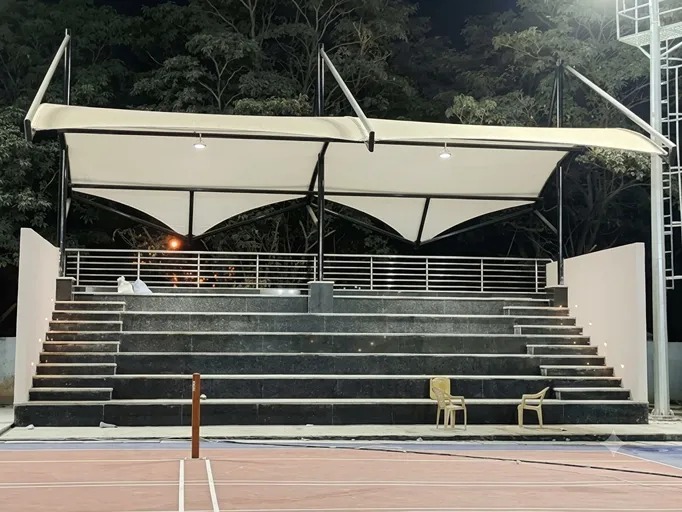
Fabric Roofs for Sports Stadiums: Pros and Cons
Fabric Roofs for Sports Stadiums: Pros and Cons
Walk into a modern stadium and look up. Many of the best-looking roofs are not made of steel sheets or concrete. They are made of fabric. Smooth, curved and bright, a fabric roof gives a stadium a clean look. It also does real work: it keeps rain off the fans and lets in natural light.
But is a fabric roof right for every stadium? Let's look at the good points, the limits, and what to check before you choose one.
Get In TouchWhat Is a Fabric Roof?
A fabric roof uses a strong, coated textile stretched into a curved shape. The fabric carries the load through tension, so it can cover a large area with very little material. This is why these roofs are often called tensile roofs.
The most common choices for stadiums are PVC and PVDF coated fabrics. A polyester base gives strength, and the coating protects it from sun, rain and dirt. Choosing the right tensile roof fabric manufacturer matters a lot here, because the fabric is the part of the roof that fans and weather meet every day.
Pros of Fabric Roofs for Sports Stadiums
1. Lightweight Design
Coated fabric weighs far less than metal sheets or concrete slabs. A lighter roof puts less load on the supporting frame and the foundation. This makes it easier to cover wide seating areas, even for large stadiums.
2. Natural Daylight
Many stadium fabrics let soft, diffused light pass through. Fans enjoy a bright, open feel, and the playing area gets even light without harsh shadows. For grass pitches, natural light also helps the turf stay healthy. At the same time, the roof cuts down on daytime lighting needs.
3. Weather Protection
A good fabric roof shields fans from rain and strong sun. Coated PVC and PVDF fabrics are waterproof and built for outdoor use. Fans stay dry and comfortable, and the event can go on.
4. Freedom in Shape and Design
Fabric can be cut and welded into curves, waves, cones and bold forms that are hard to make with rigid materials. This lets architects create a roof that becomes the face of the stadium. Colours and finishes can match a team's brand, too.
5. Long Spans With Fewer Supports
Because fabric is light and strong in tension, roofs can cover big spans. This means fewer columns blocking the view. Every fan gets a clear line of sight to the action.
6. Faster Build Time
Fabric panels are made in a factory and cut to exact patterns. They arrive ready to fit. This often shortens the time spent on site compared with building a large roof from heavy, rigid materials.
7. Easy Cleaning and Low Upkeep
Quality PVC and PVDF coatings have smooth, protective surfaces. Dust and dirt do not stick easily, and routine washing keeps the roof looking fresh. Regular checks are simple and quick.
8. Fire-Rated Options
Stadiums hold thousands of people, so safety comes first. Fire-retardant PVC and PVDF fabrics are available to meet safety needs. Always ask for the right test certificates for your project.
9. Strong, Lasting Performance
Coated fabrics are made to handle sun, wind and rain. A good coating protects the base cloth from UV rays and moisture. With proper care, the roof stays strong and keeps its look through many seasons.
Cons of Fabric Roofs for Sports Stadiums
Every material has limits. Knowing them early helps you plan better and get the best result.
1. Sound Behaviour
Fabric is thin, so rain can be heard under the roof during a heavy shower. Fabric can also reflect crowd noise in some shapes. The good news is that this can be planned for. Designers can use acoustic layers, shape the roof carefully and add sound-absorbing parts where needed.
2. Heat Control
A single layer of fabric does not insulate like a thick rigid roof. In hot weather, some heat can pass through. Light-coloured fabrics and reflective coatings reduce this a lot. Double-layer designs can add even more comfort when needed.
3. Wind and Snow Loads
Fabric roofs must be designed for local wind and, in cold regions, snow. The curved shape and pre-tension help the roof handle these loads, but this needs careful engineering. This is a design task, so work with experienced teams and use fabric made for the load.
4. Not All Fabrics Are Equal
This is the most important point. A low-grade fabric can fade, crack or lose strength sooner. Two fabrics may look the same on day one and perform very differently later. That is why the choice of supplier is so important for a stadium roof.
5. Surface Dirt in Some Locations
Stadiums near busy roads, industry or dusty areas can see dirt build up faster. Top-coat finishes help the surface stay cleaner, and a simple washing routine solves the rest.
6. Planning Is Needed Early
A fabric roof works best when the fabric choice is made early in the design. Panel patterns, seams, edge details and the fabric all work together. Leaving fabric decisions to the last stage can limit the result.
What to Look For in Stadium Roof Fabric
Here is a simple checklist to use when you talk to suppliers:
- Strong base cloth with a high-quality coating on both sides
- UV protection so the colour and surface last outdoors
- Top-coat finish that resists dirt and is easy to clean
- Good weldability, so seams are clean and strong
- Fire-retardant options with proper test reports
- Colour choices to suit the stadium design
- Consistent quality from roll to roll, so every panel matches
Your Fabric Partner: LUCKY-TECH Membranes
For a stadium roof, the fabric is the heart of the project. LUCKY-TECH Membranes works as a trusted PVC Fabrics Manufacturers and Supplier for roofing and membrane projects across India.
The coated PVC and PVDF textiles come from SIOEN Industries of Belgium, a name known worldwide for engineered technical fabrics. LUCKY-TECH Membranes then designs, cuts and welds the fabric in-house to your exact size and drawing. This means you get clean panels, strong seams and a fit that matches your plan.
Here is what the team brings to a stadium project:
- Engineered PVC and PVDF coated fabrics made for outdoor roofing
- Precision cutting and high-strength welding of every panel
- Fabric made to customer specifications
- Support in choosing the right fabric grade, finish and colour
- A wide product range across the technical fabric field, giving them deep knowledge of how coated fabrics behave
If you are looking for a Tensile roof fabric manufacturer who understands both the material and the way it is shaped into finished panels, LUCKY-TECH Membranes is a name worth talking to.
Where Fabric Roofs Work Best
Fabric roofs suit many kinds of sports venues:
- Large stadiums for football, cricket and athletics
- Grandstands and spectator seating areas
- Tennis courts and indoor-outdoor arenas
- Practice grounds and academies
- Entry plazas, walkways and gate canopies
For open grandstands, a fabric canopy gives shade and rain cover without making the venue feel closed in. For big arenas, a light fabric roof keeps the interior bright and inviting.
FAQs
1. Which fabric is best for a stadium roof?
PVC and PVDF coated fabrics are popular choices. They are strong, waterproof, UV-protected and available in fire-retardant grades.
2. Are fabric roofs strong enough for sports stadiums?
Yes. When the fabric is chosen well and the roof is designed for local wind and weather, it performs reliably.
3. Can a fabric roof block heat and rain noise?
It can reduce both. Light-coloured or reflective coatings help with heat, and acoustic layers or smart shaping help with rain noise.
4. How do I keep a stadium fabric roof clean?
Regular washing with mild soap and water is usually enough. Top-coat finishes help dirt rinse off easily.
5. Are fire-retardant fabrics available for stadium roofs?
Yes. Fire-retardant PVC and PVDF fabrics are available. Ask your supplier for the test reports that match your project's needs.
Get Your Free Quote Today!