Coated Fabric Strength for Membrane Architecture
Coated Fabric Strength for Membrane Architecture
Tensile Strength and Tear Resistance: What They Mean for Membrane Architecture
If you've ever looked up at a tensile canopy or a stadium roof and wondered how a piece of fabric can hold that much shape and weight, the answer comes down to one thing: strength. Not just any strength — tensile strength, tear resistance, and how well the fabric handles constant pulling and stretching over years of use.
At LUCKY-TECH Membranes, we work with PVC and PVDF coated fabric every day, and one question we hear often from architects, contractors, and vendors is simple: how do you know a coated fabric is strong enough for a membrane structure? Here's a straightforward look at what tension and strength actually mean for these fabrics, and why they matter so much in membrane architecture.
Get In TouchWhat "Tensile Strength" Really Means
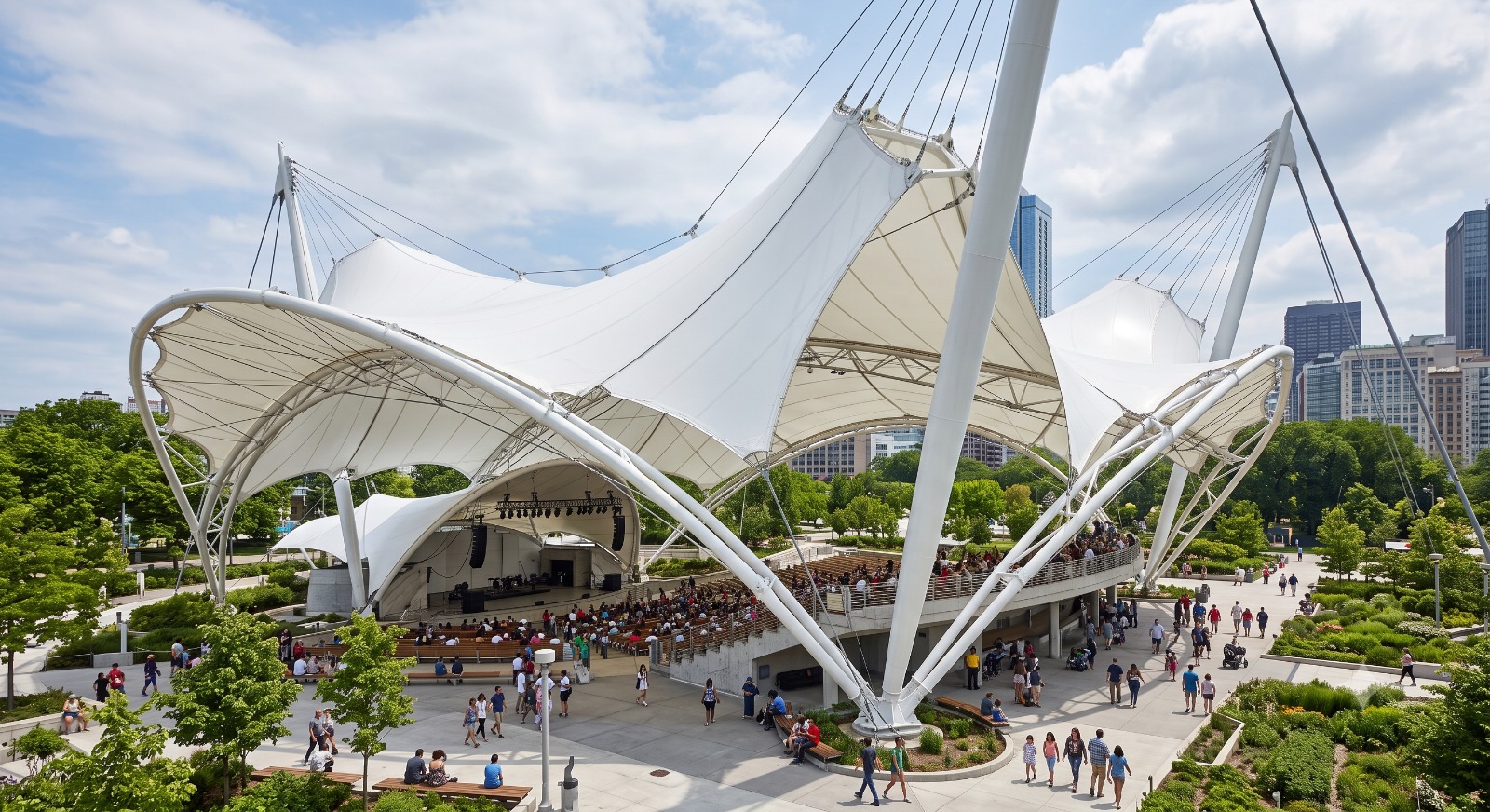
Membrane architecture works differently from a regular roof. Instead of resting on beams, the fabric itself is stretched tight and held in place by cables, frames, or anchors. That means the fabric is under constant tension — pulling in multiple directions at once — for as long as the structure stands.
Tensile strength is simply how much pulling force a fabric can handle before it stretches out of shape or fails. In coated fabric, this strength comes from the base textile (usually a woven polyester yarn), while the PVC or PVDF coating protects that yarn from weather, UV rays, and general wear.
A high tensile fabric supplier will always test this property carefully, because a membrane that's under-strength in tension can sag, ripple, or lose its intended shape over time — even if it looks fine on day one.
Why Tear Resistance Is Just as Important
Tensile strength tells you how a fabric handles even, spread-out pulling force. Tear resistance tells you something different: how well the fabric resists ripping once a small cut, puncture, or weak point develops.
This matters a lot in real-world conditions. Wind gusts, debris, or even a small installation nick can create a starting point for a tear. Fabric with good tear resistance stops that small point from spreading into a larger problem, which keeps the whole membrane structure safe and functional for longer.
Load bearing fabric used in architectural applications is generally tested for both properties together, since a fabric can score well on one and still underperform on the other.
How Strength Testing Works
Fabric tensile strength testing usually involves stretching a fabric sample in a controlled way and measuring exactly how much force it takes before it stretches, tears, or breaks. Testing is typically done in two directions — along the length of the fabric (warp) and across its width (weft) — since coated fabric doesn't always perform identically in both directions.
This kind of testing helps confirm that a batch of architectural textile is consistent, predictable, and ready for the kind of long-term tension that membrane structures place on it. It's also part of what separates a dependable PVC & PVDF coated fabric manufacturer from one that skips quality checks.
What This Means for Membrane Architecture
Membrane structures rely on the fabric holding its shape under constant, active tension — not just sitting in place like a traditional roof. That's why strength and tear resistance directly shape:
- How large a single membrane panel can be without extra seams or supports
- How the fabric is cut and tensioned during installation
- How long the structure holds its form before re-tensioning is needed
- How well it performs in wind, rain, and temperature swings across seasons
A fabric with the right strength profile gives architects more freedom to design bold, curved, and lightweight shapes, because the material itself can handle the load these designs place on it.
Choosing the Right Coated Fabric
Every membrane project has its own load requirements, span, and climate exposure, so the right fabric strength depends on the specific structure being built. This is where working with an established fabrics manufacturer and supplier makes a real difference — someone who understands both the technical side of tensile performance and the practical side of getting the right fabric to the right project.
At LUCKY-TECH Membranes, our PVC and PVDF coated fabrics are engineered to meet these tension and strength requirements, giving membrane architecture the durability it needs to perform well for years. You can explore our full range of coated fabric solutions at LUCKY-TECH Membranes.
FAQs
What is tensile strength in coated fabric?
It's the amount of pulling force a fabric can handle before it stretches out of shape or fails — a key property for any fabric under constant tension.
Why does tear resistance matter for membrane structures?
It stops small cuts or punctures from spreading into larger tears, which keeps the structure safe over its lifespan.
How is fabric tensile strength tested?
Samples are stretched in controlled conditions, usually in both the warp and weft directions, to measure the force needed before stretching or failure occurs.
Does fabric strength affect the design of a membrane structure?
Yes — stronger, well-tested fabric allows for larger panels, bolder curves, and longer-lasting shapes in architectural design.
Get Your Free Quote Today!