
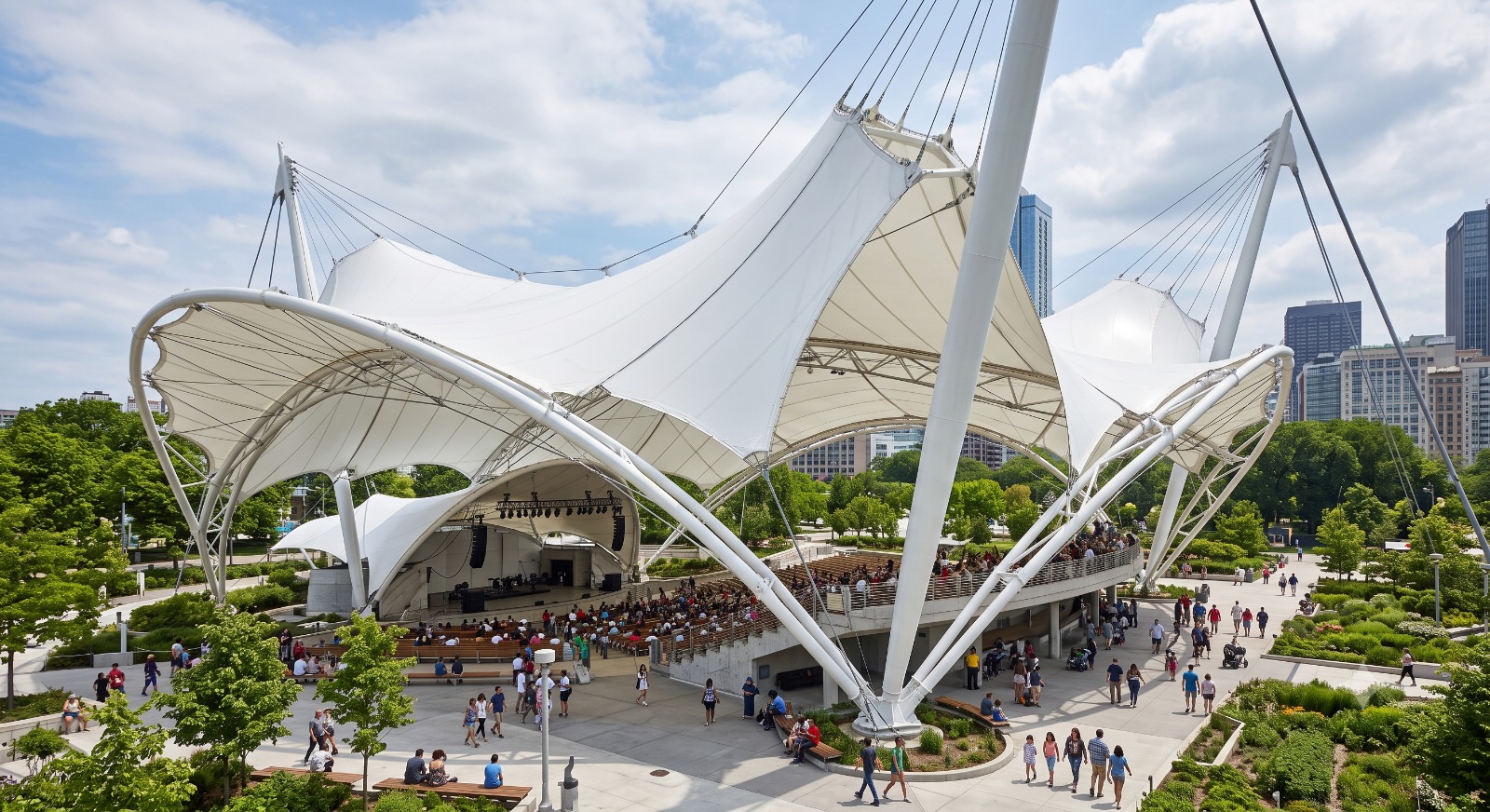
Why Coated Fabric Is the Backbone of Large-Span Hanger and Tent Structures
Why Coated Fabric Is the Backbone of Large-Span Hanger and Tent Structures
Walk past any airport and you will probably see a huge, curved building standing without a single visible pillar in the middle. That is an aircraft hangar. Walk into a big wedding function or a trade fair, and you will see the same idea on a smaller scale — a tent that covers a massive open area, again with barely any support columns breaking up the space.
Both of these structures look completely different in size and purpose, but they share one thing in common: the material stretched across the frame. That material is coated fabric for hanger and tent structures, and it is doing far more work than most people realise.
Get In TouchThe Real Challenge Behind Large Spans
When you build something small, like a car shed or a garden canopy, almost any fabric will hold up fine. The problem starts when the span gets bigger. A large hangar or event tent has to cover hundreds or even thousands of square metres without breaking up that space with poles and beams.
This means the fabric stretched over the frame has to:
- Carry its own weight over a huge, unsupported area
- Resist wind pressure that builds up across a large surface
- Handle rain load without sagging or pooling water
- Stay flexible enough to be shaped into curves and domes
- Hold its shape season after season, indoors or outdoors
A regular tarpaulin or canvas sheet simply was not built for this kind of job. This is exactly the gap that PVDF fabric large span structures and PVC coated fabric were designed to fill.
What Makes Coated Fabric Different
At its core, coated fabric is a woven textile base — usually polyester yarn — that is coated on both sides with a layer of PVC or PVDF. Think of it like a strong fishing net that has been sealed and reinforced with a protective outer skin.
The woven base gives the fabric its strength and tear resistance. The coating adds weather protection, keeps water out, and gives the surface the smoothness needed to shed rain and dust easily. Put together, you get a material that behaves nothing like plain fabric — it becomes a proper structural membrane.
This is why coated fabric, and not any ordinary sheet material, has become the standard choice for aluminium hangars, tension tents, and large event structures.
Why It Works So Well for Hangars and Tents
1. Strength across a wide, open area Aircraft hangars and large tents need a covering that can span wide distances without tearing or stretching out of shape — a true large span textile. The tightly woven yarn inside coated fabric spreads the load evenly, so the material stays taut and stable even under wind and weight.
2. Weather resistance Coated fabric is built to face sun, rain, and humidity without breaking down. The outer coating stops water from soaking into the fabric and helps the surface stay clean, so the structure keeps its look and performance over time.
3. Flexibility for curved and tensioned designs Hangars and tents are rarely flat. They use curves, arches, and tensioned shapes to stay strong without heavy framing. Coated fabric can be cut and welded into these shapes while still holding tension evenly across the surface — something a stiff or brittle material could never do.
4. Lightweight compared to rigid materials Because the fabric is lightweight, the overall structure needs less support to hold it up. This makes large-span hangars and tents easier to design, transport, and put together, especially for structures that may need to be moved or reused at another site.
5. Long, low-maintenance life Coated fabric does not need painting, sealing, or heavy upkeep. A simple wash is usually enough to keep the surface performing well, which matters a lot for hangars and tents that are expected to be in use for a long stretch of time.
PVC and PVDF Coated Fabric — Two Reliable Options
At LUCKY-TECH Membranes, we work with both PVC and PVDF coated fabric, and each one has its place depending on the project.
PVC coated fabric offers dependable strength and weather resistance, making it a practical choice for a wide range of hangar and tent applications.
PVDF coated fabric brings extra surface protection against dirt, UV exposure, and weathering, keeping the fabric looking clean and performing well for longer, especially in structures that face harsher outdoor conditions.
Both options are supplied and fabricated to match the exact shape and size of the structure, so the fabric fits the frame precisely rather than being adjusted on-site.
Where This Fabric Is Used
Coated fabric built for large spans shows up in more places than people realise:
- Aircraft hanger fabric for aviation maintenance structures
- Aluminium tent and hangar frameworks for events
- Warehousing and large storage shelters
- Exhibition and trade fair tents using event tent material
- Wedding and banquet event structures
- Sports and recreational covered arenas
In every one of these, the same principle applies — the frame gives the shape, but the coated fabric is what actually covers, protects, and holds everything together visually and structurally.
Choosing the Right Fabric Manufacturer and Supplier
Because so much depends on the fabric itself, working with an experienced tent fabric supplier makes a real difference. The right partner understands panel layout, seam welding, tension points, and how the fabric will behave once it is stretched across a large frame.
LUCKY-TECH Membranes works as a dedicated Fabrics Manufacturers and Supplier, specialising as one of the trusted Aluminium Tent & Hangers fabric Manufacturers, cutting and welding each panel to the exact specification needed for the structure. Every project is different, so the fabric is prepared to match the design rather than forced to fit afterward.
Frequently Asked Questions
Q1: What fabric is used for aluminium hangars and tents?
PVC or PVDF coated fabric is the standard choice. It combines a strong woven base with a weatherproof coating, giving hangars and tents a covering that holds up under wind, rain, and long-term outdoor use.
Q2: Can the same coated fabric be used for both aircraft hangars and event tents?
Yes. The same PVC and PVDF coated fabric range works across aircraft hangars, warehousing structures, and event or wedding tents. The panel size and fabrication are simply adjusted to match each structure's design.
Q3: How does coated fabric handle wind and rain load on a large hangar or tent?
The woven yarn base spreads the load evenly across the surface, while the coating keeps water out and stops it from pooling. This keeps the structure stable even across a wide, unsupported span.
Q4: Is coated fabric suitable for temporary event tents as well as permanent hangars?
Yes. It works well for both. Its light weight and durability make it easy to fabricate for permanent hangar structures as well as temporary or relocatable event tents.
Q5: How long does coated fabric used in hangars and tents typically last outdoors?
With minimal upkeep — usually just a simple wash — coated fabric keeps performing well outdoors over a long stretch of use, holding its strength and appearance without painting or heavy maintenance.
Get Your Free Quote Today!