
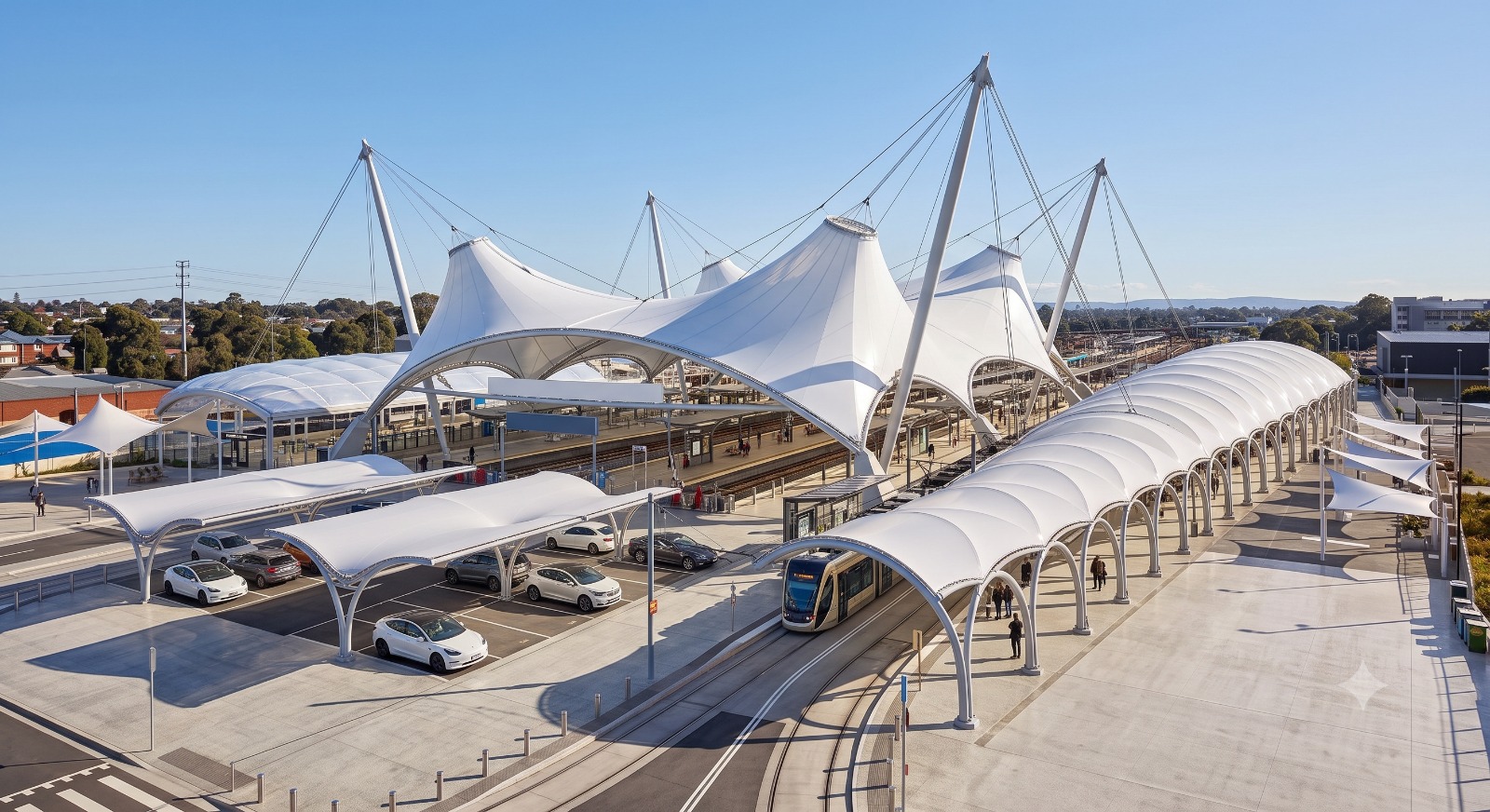
Car Parking Shades: How the Right Coated Fabric Cuts Heat and Extends Vehicle Life
Car Parking Shades: How the Right Coated Fabric Cuts Heat and Extends Vehicle Life
If you've ever opened a car door at 2 PM in peak summer and felt that blast of trapped heat hit you in the face, you already understand the problem car parking shades are trying to solve. What most people don't realize is that not all parking shades are built the same — and the fabric stretched over that frame is doing almost all of the real work.
The steel or aluminium structure just holds things up. The membrane is what actually fights the sun.
Get In TouchWhy Parking Shades Matter More Than People Think
A parked car sitting in direct sun for a few hours can see cabin temperatures climb well past ambient — sometimes 20°C higher or more. That heat doesn't just make the seats uncomfortable. Over time, it accelerates dashboard cracking, fades upholstery, degrades rubber seals, and puts extra strain on tyres parked on hot tarmac. Paint coats can dull faster too, especially on darker vehicles.
A well-built shade structure blocks direct UV exposure and knocks down radiant heat before it ever reaches the vehicle. But here's the part that gets overlooked — a shade is only as good as the fabric covering it.
What Actually Makes a Good Shade Fabric
This is where coated fabric quality separates a shade that lasts five years from one that lasts fifteen.
A proper parking shade membrane needs to do a few things at once:
- Block UV radiation without breaking down under constant sun exposure
- Reflect heat rather than absorbing and re-radiating it
- Stay waterproof through monsoon seasons without seams failing
- Resist tearing under wind load, since a shade structure behaves almost like a sail
- Hold its shape without sagging, stretching, or going brittle over years of outdoor use
Most of this comes down to the base fabric and its coating. PVC-coated polyester fabric is the industry standard here because it strikes a practical balance — flexible enough to tension properly over a frame, strong enough to handle wind loads, and coated in a way that reflects a meaningful share of solar radiation rather than soaking it up like a dark tarp would.
Why the Coating Type Actually Matters
Not every coated fabric performs the same way in real outdoor conditions, and this is where a lot of buyers get caught out by cheaper alternatives.
A quality coating does more than waterproof the base fabric it's engineered with UV stabilizers and often a top-lacquer finish that resists dirt pickup and colour fading. Cheaper, uncoated or thinly-coated tarpaulin-style materials tend to yellow, stiffen, and crack within a couple of monsoon-summer cycles in Indian conditions. Once that happens, the shade isn't really shading anything anymore it's just sagging fabric with pinholes letting sun straight through.
This is also why sourcing from experienced Fabrics Manufacturers and Supplier teams matters more than it might seem at first glance. Fabric specification thickness, coating weight, weld strength at the seams needs to be matched to your local climate and the size of the structure, not treated as one generic roll-off-the-shelf product.
How It Actually Protects the Vehicle
Once you put good fabric on a well-tensioned frame, the benefits compound over time:
- Interior temperatures drop noticeably, which reduces stress on dashboards, seat foam, and electronics
- Paint and clear coat hold up longer since direct UV exposure is the biggest driver of oxidation and fading
- Rubber and plastic trim stays more flexible instead of drying out and cracking
- Battery health improves slightly too, since extreme heat cycles are hard on batteries sitting in a hot engine bay
None of this is dramatic on any single day. It's a slow, cumulative difference — the kind that shows up as a five-year-old car that still looks and drives like a three-year-old one.
Choosing the Right Manufacturer
If you're comparing options for a residential society, a commercial parking lot, or a fleet yard, the fabric spec should be the first thing you ask about not the last. Look for manufacturers who can speak specifically to UV resistance ratings, coating GSM, and seam-welding methods, rather than generic marketing language.
Working with established Car Parking Shade fabric Manufacturers who understand structural tensioning as much as they understand the fabric itself tends to make a real difference once a shade has been in the field through a few full seasons — not just on installation day.
Why Choose LUCKY-TECH MEMBRANES
LUCKY-TECH is partnered with SIOEN Industries, a stock-listed, Belgium-based technical textiles group, and brings decades of experience working specifically with PVC and PVDF coated fabrics so the fabric spec for a parking shade is treated as an engineering decision, not an off-the-shelf pick. At LUCKY-TECH MEMBRANES, this is the kind of groundwork we walk customers through before ever getting to a quote.
FAQs
Q1. How long does a good quality parking shade fabric typically last?
With proper UV-stabilized PVC-coated fabric, most parking shades last 10–15 years depending on climate exposure and maintenance.
Q2. Does shade fabric colour affect heat reduction?
Yes, lighter colours and reflective coatings generally reduce heat absorption better than darker fabrics, though the coating quality matters more than colour alone.
Q3. Can existing parking shade structures be re-covered with new fabric?
In most cases, yes — the frame can often be reused while just the membrane is replaced once it shows signs of wear.
Q4. Is PVC-coated fabric better than simple tarpaulin for parking shades?
Generally yes. PVC-coated fabric is engineered for UV resistance, tensile strength, and waterproofing in a way basic tarpaulin isn't designed to sustain long-term.
Q5. What size areas can a coated fabric parking shade cover?
These structures scale from single-car residential shades to large multi-bay commercial and fleet parking installations.
Get Your Free Quote Today!