
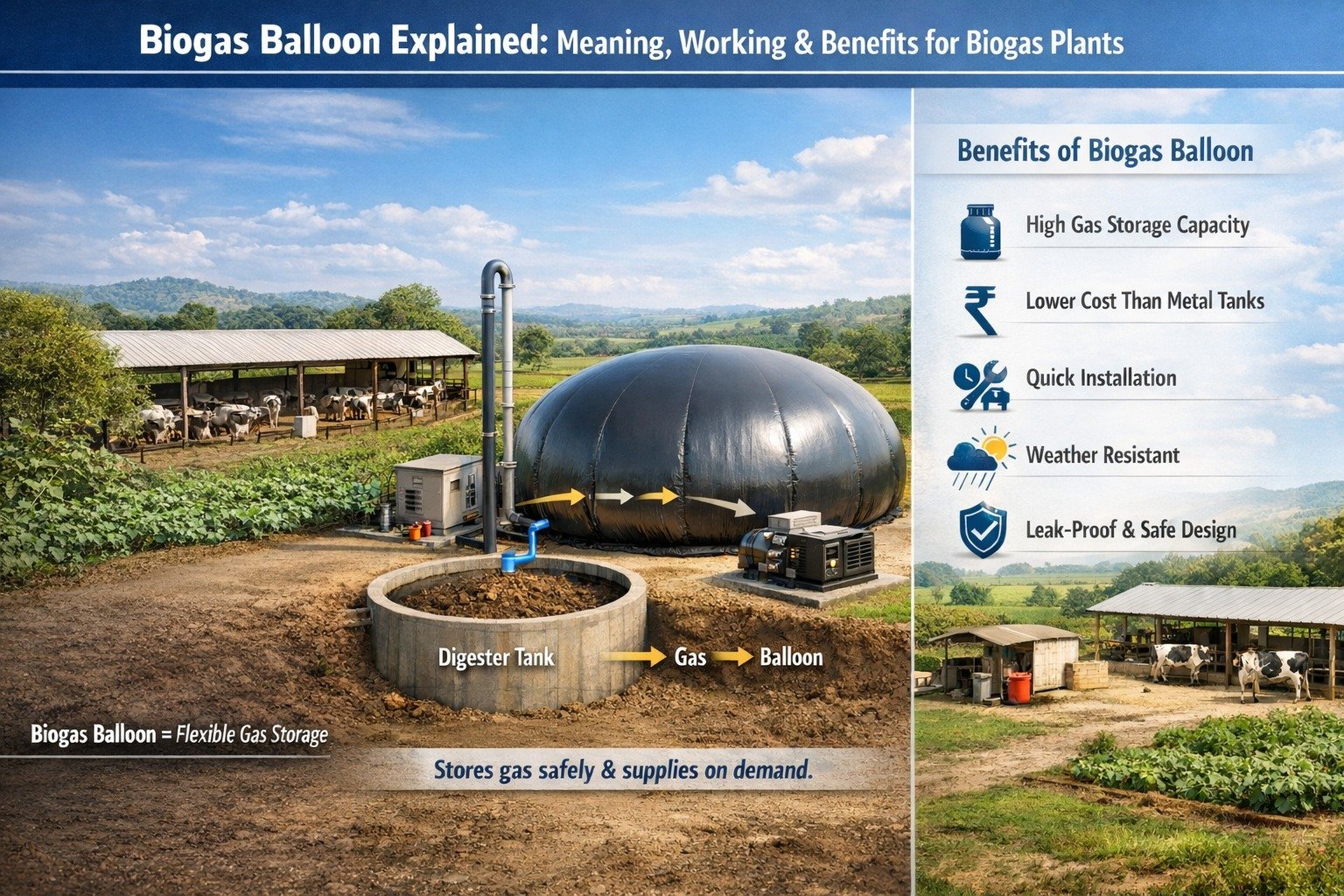
Biogas Balloon Explained: Meaning, Working & Benefits for Biogas Plants
Biogas Balloon Explained: Meaning, Working & Benefits for Biogas Plants
Biogas is quickly becoming one of the most practical renewable energy solutions in India. From dairy farms and food industries to distilleries and municipal waste plants, biogas projects are growing every year. But one key component that decides the performance and safety of a biogas plant is gas storage. This is where a biogas balloon plays an important role.
A
biogas balloon is a flexible, airtight gas storage system designed to hold biogas safely after it is produced in a digester. Unlike rigid steel tanks or heavy concrete domes, a biogas balloon uses engineered membrane material—commonly known as biogas balloon fabric—to store gas efficiently and handle pressure changes smoothly.
In this guide, we’ll cover what a biogas balloon is, how it works, where it is used, and what biogas plant owners should check before selecting one.
Table Of Contents:
- What Is a Biogas Balloon?
- How Does a Biogas Balloon Work?
- Why Biogas Balloons Are Preferred in Modern Biogas Plants
- What Is Biogas Balloon Fabric and Why Does It Matter?
- Where Biogas Balloons Are Used
- How to Choose the Right Biogas Balloon
- Final Thoughts
What Is a Biogas Balloon?
A biogas balloon (also called a biogas gas holder) is a sealed flexible structure that storesbiogas produced from organic waste. The balloon expands when gas production increases and contracts when gas is consumed.
The balloon is manufactured using special biogas balloon fabric, which is designed to be:
gas-tight
weather resistant
UV stable
durable for long-term outdoor use
Most modern biogas balloon fabric is made using a polyester base fabric coated with PVC, because it provides high strength and reliable sealing.
How Does a Biogas Balloon Work?
The working principle of a biogas balloon is simple but highly effective.
The biogas digester produces biogas.
The gas flows through piping into the balloon.
The balloon stores the biogas and maintains stable pressure.
When the gas is required for power generation or heating, the gas is drawn out and the balloon contracts.
Because it is flexible, a biogas balloon can handle fluctuations in gas volume without causing stress cracks—something that often happens in rigid storage systems.
Why Biogas Balloons Are Preferred in Modern Biogas Plants
Many biogas plant owners choose biogas balloons because they provide real operational benefits:
1) Cost-Effective Gas Storage
Compared to steel tanks, a biogas balloon is generally more affordable and requires less civil construction.
2) Faster Installation
A balloon-based system can be installed quicker, which helps reduce project timelines.
3) Better Pressure Handling
A flexible system naturally balances pressure changes, helping the plant operate more smoothly.
4) Ideal for Indian Weather
When made with high-quality biogas balloon fabric, these systems perform well in heat, rain, humidity, and dusty environments.
What Is Biogas Balloon Fabric and Why Does It Matter?
The most important factor in the performance of a biogas balloon is the quality of the fabric. Low-grade fabric can lead to:
gas leakage
coating cracks
seam failure
early replacement costs
High-performance biogas balloon fabric should have:
high tensile strength
excellent gas tightness
UV protection
anti-fungal properties
strong seam weld compatibility
resistance to chemicals and moisture
At LUCKY-TECH MEMBRANES, we manufacture premium PVC coated fabric in India and maintain an exclusive partnership with Sioen Industries, Belgium, ensuring reliable performance and consistent quality standards.
Where Biogas Balloons Are Used
Biogas balloons are widely used in:
distilleries and ethanol plants
dairy and food processing industries
agricultural and cattle farm digesters
municipal solid waste projects
sewage and wastewater treatment plants
In all these sectors, safe biogas storage is essential for stable energy production.
How to Choose the Right Biogas Balloon
If you are planning a biogas project, here are key points to check:
quality of biogas balloon fabric
gas tightness and coating strength
seam welding durability
UV and weather resistance
balloon capacity and design suitability
fittings, valves, and safety systems
expected lifespan and warranty
Choosing the right fabric and manufacturer makes a huge difference in long-term plant performance.
Final Thoughts
A biogas balloon is one of the most efficient solutions for storing biogas safely. But the real success depends on the quality of the biogas balloon fabric used. For biogas plant owners, investing in reliable materials is not just about durability—it’s about safety, performance, and long-term cost savings.
📞 Contact LUCKY-TECH MEMBRANES
For inquiries, samples, or technical specifications:
LUCKY-TECH MEMBRANES
📱 Phone: +91-86553 57854 / +91-9820325057
📧 Email: info@luckytech.in
🌐 Website: https://luckytech.in/
Get Your Free Quote Today!