
Inside an Air Dome: How PVC Fabric Creates Air Supported Structures
Inside an Air Dome: How PVC Fabric Creates Air Supported Structures
How Does an Air Dome Actually Stay Up?
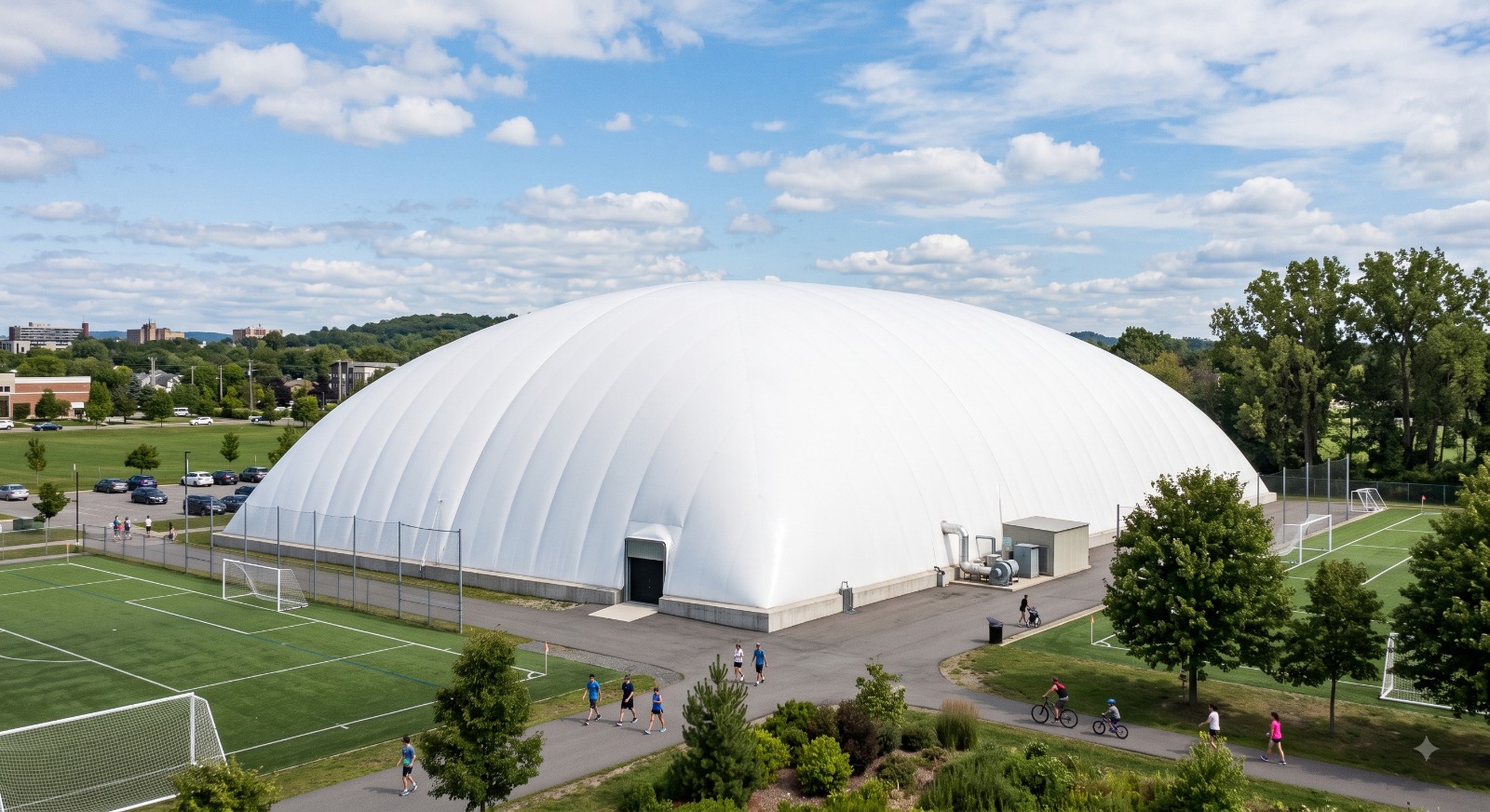
Picture a huge white dome covering a tennis court, a swimming pool, or even a full size stadium. No poles inside. No steel beams holding up the roof. Just fabric and air. It looks almost impossible until you understand the simple science behind it.
This blog breaks down how air supported structures actually work, why PVC fabric is the material behind almost every modern air dome, and how these buildings stay standing through storms, heavy rain, and years of daily use.
Get In TouchWhat Exactly Is an Air Dome?
An air dome, also called an inflatable dome structure, is a large building held up by air pressure alone. Blowers push air into the space and keep the inside pressure slightly higher than the outside pressure. That tiny difference is enough to lift and support a giant fabric roof over thousands of square meters.
There is no hidden frame doing the real work here. The fabric skin itself carries the load. This single fact is what makes air domes so different from every other type of building.
Why the Fabric Does All the Work
In a normal building, the roofing sheet sits on top of a frame. In an air dome, there is no frame to sit on. The membrane has to be strong enough to be the structure by itself. That is why the material used matters so much.
Most air domes use woven polyester fabric coated with PVC on both sides. This coating gives the fabric three important properties at once, strength, waterproofing, and resistance to sunlight.
Good sports dome fabric needs to handle a long list of demands:
- Carry tension evenly across a curved surface
- Stay completely waterproof through monsoon rain
- Resist UV damage so it does not crack or fade in a few years
- Stay flexible when it is cold and stable when it is hot
- Let in enough natural light so the inside does not feel closed off
Ordinary tarpaulin or tent fabric cannot handle this kind of job. It needs to be engineered specifically for structural use, which is where a serious PVC fabric manufacturer makes all the difference.
The Simple Physics of Air Pressure
The blower system in an air dome does not run at full power all the time. Once the dome is fully inflated, the blowers only need to replace air that slowly leaks out through doors and seams. The pressure difference inside is usually small, often just a few millimeters of water column, but across a roof spanning thousands of square meters, that small pressure adds up to a massive lifting force.
Every properly built air dome also has a backup blower and generator. If the main power fails, the backup system kicks in immediately so the dome never loses pressure or starts to sag.
Can an Air Dome Really Handle Wind and Rain?
This is the question almost everyone asks first. If the whole building depends on air pressure, what happens during a storm?
Air domes are actually built with wind and rain in mind from the very start of the design.
- The rounded shape spreads wind pressure evenly across the surface instead of catching it head on like a flat wall.
- Wind sensors can automatically raise the internal air pressure during strong gusts, adding extra strength exactly when it is needed.
- The base of the fabric is anchored into a strong foundation, usually a concrete ring beam or heavy cables, so the structure cannot shift or lift off.
- High grade PVC coated fabric has a very high tensile strength, so it stretches under load instead of ripping.
- Rain runs off naturally because of the curved shape, and the PVC coating keeps water from ever soaking into the fabric layers.
Why PVC Fabric Is the Standard Choice
Several coated fabrics exist, but PVC coated polyester remains the most trusted choice for air supported structures, and there are practical reasons behind that.
- Long service life: A properly made PVC membrane can last fifteen to twenty five years even under constant sun and weather.
- Strong welded seams: PVC panels can be heat welded together into airtight joints, which is critical for a structure that depends on holding pressure.
- Lower cost and faster build time: Compared to steel and concrete construction, PVC fabric domes cost far less and can be built in a matter of weeks.
- Design flexibility: The fabric can be shaped into domes of almost any size, from a small practice court cover to a stadium scale enclosure.
This is the kind of technical fabric that Lucky-Tech Membranes manufactures and supplies, working with PVC and PVDF coated textiles built for demanding outdoor applications. As more sports facilities and industrial projects move toward PVC Fabric Air Supported Structures, the quality of the base membrane becomes the single biggest factor in how long the building lasts.
Common Places You Will Find Air Domes
- Indoor sports facilities for tennis, badminton, and cricket practice
- Swimming pool enclosures that stay open through every season
- Warehousing and bulk material storage covers
- Event halls and exhibition spaces
- Agricultural storage domes
Every one of these uses a slightly different fabric grade, thickness, and coating type. This is exactly why choosing an experienced PVC fabric manufacturer, rather than a general tent supplier, makes such a big difference in durability. It is also why the demand for genuine Fabrics Manufacturers and Supplier in India and a dependable Air Dome Manufacturer in India keeps growing, as buyers move away from imported material toward local, quality tested options.
FAQ
1. What is a PVC fabric air supported structure?
It is a building where the roof and walls are made from a single coated fabric membrane, held up entirely by internal air pressure instead of a steel or wooden frame. PVC Fabric Air Supported Structures use polyester coated with PVC on both sides for strength and waterproofing.
2. How long does an air dome usually last?
A dome built with quality PVC coated fabric typically lasts between fifteen and twenty five years, depending on the climate, maintenance routine, and the grade of fabric used.
3. Can air domes survive strong wind and heavy rain?
Yes. The curved shape spreads wind load evenly, automatic pressure control adds extra strength during gusts, and the fabric is strong enough to stretch instead of tear. Rain simply runs off the curved surface without pooling.
4. What happens if the power goes out?
Every serious air dome design includes backup blowers and a generator. These keep the internal pressure steady during a power cut so the structure never loses shape.
5. Who are reliable fabrics manufacturers and supplier in India for air domes?
India now has a growing base of technical textile companies producing PVC and PVDF coated fabric for structures like these. Companies with real manufacturing experience, not just trading, usually offer better quality and stronger after sales support. Lucky-Tech Membranes is one such air dome manufacturer in India, working directly on PVC and PVDF membrane production for sports domes and similar projects.
6. Is a PVC fabric dome cheaper than a regular building?
In most cases yes, both in cost and build time. A fabric dome can go up in a matter of weeks and uses far less material and labor than a concrete or steel structure of the same size.
7. What thickness of PVC fabric is used for sports domes?
It depends on the size and location, but sports domes commonly use fabric between 850 and 1100 grams per square meter, chosen based on the span of the dome and local wind and snow load requirements.
Get Your Free Quote Today!